
Room 01
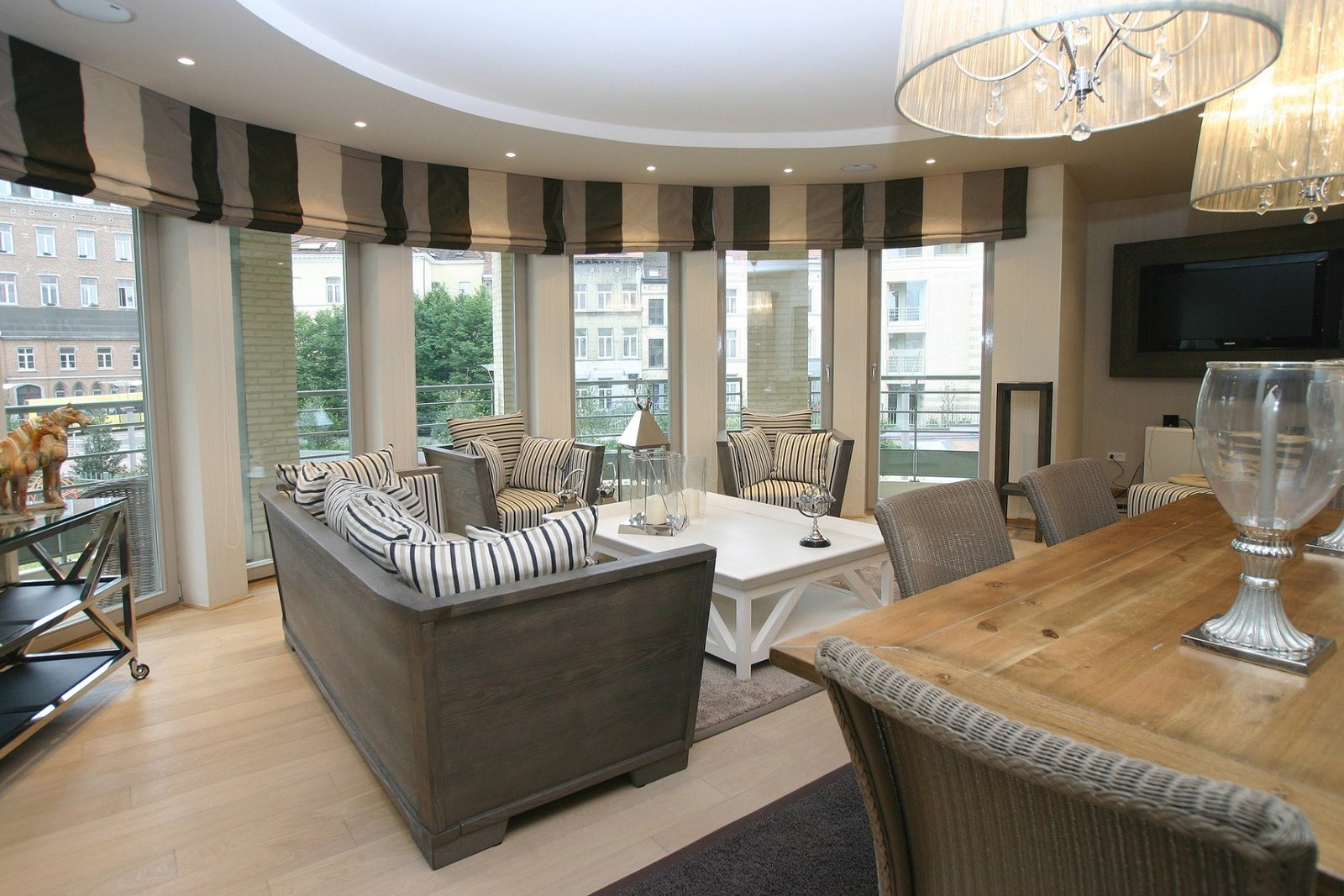
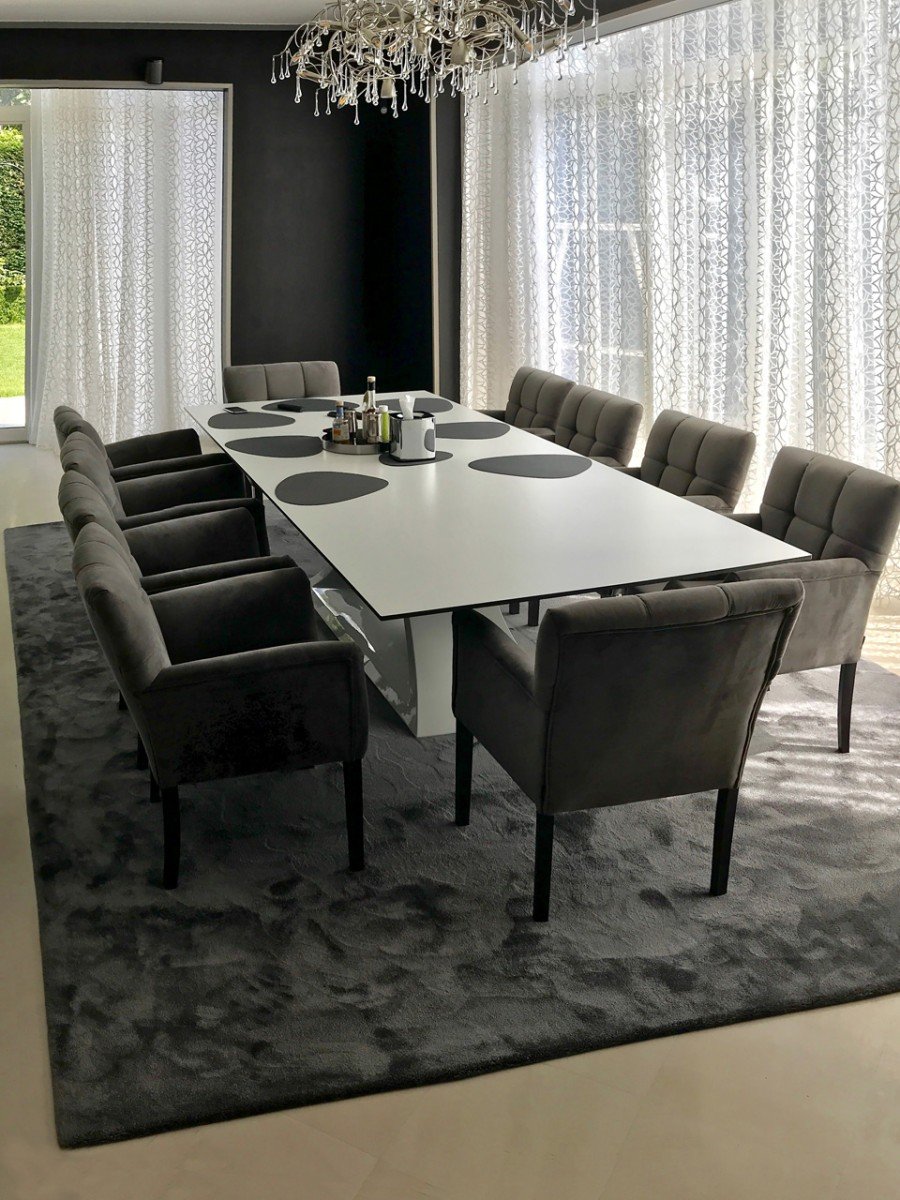
Under the dining table
Here wear resistance matters more than softness: chair legs slide over the same spot every day. A short, dense pile or a flat weave lasts longest and lets crumbs go.


Bespoke rugs
We measure your room, cut the rug to the centimetre and bind every edge. From the full JAB collection or from our own range, in wool or synthetic, in any size and any shape.
Request your made-to-measure rug →01/ 4
Approach
Bespoke rugs
A made-to-measure rug starts from your room, not from a standard size. We measure the space, draw the rug onto the plan of your living room or dining area and then cut it to the centimetre. Any size works, any shape works, and the edge is finished in the material you choose. So you never have to make do with a size that happened to be on the shelf.
We are the main distributor for JAB Anstoetz and we have our own collection alongside it. Of the JAB rug collection we carry the full range: more than sixty qualities, from flatwoven to long and curly, in almost five hundred colours. On top of that our webshop carries our own range of ready-made rugs in common sizes, with real product photographs and direct delivery.
The rug is chosen together with the rest of the interior. Colour is never judged in isolation. We lay the rug samples next to the fabric of your curtains, next to the upholstery of your sofa and next to your floor, and only then is the decision made. That way you do not end up with a rug that is beautiful on its own but jars in your room.
From country to contemporary. We specialise in the country style, but we just as readily furnish a classic, modern or contemporary country interior. The rug follows that choice: a curly, woolly surface in a country house, a taut flatwoven surface in an apartment.
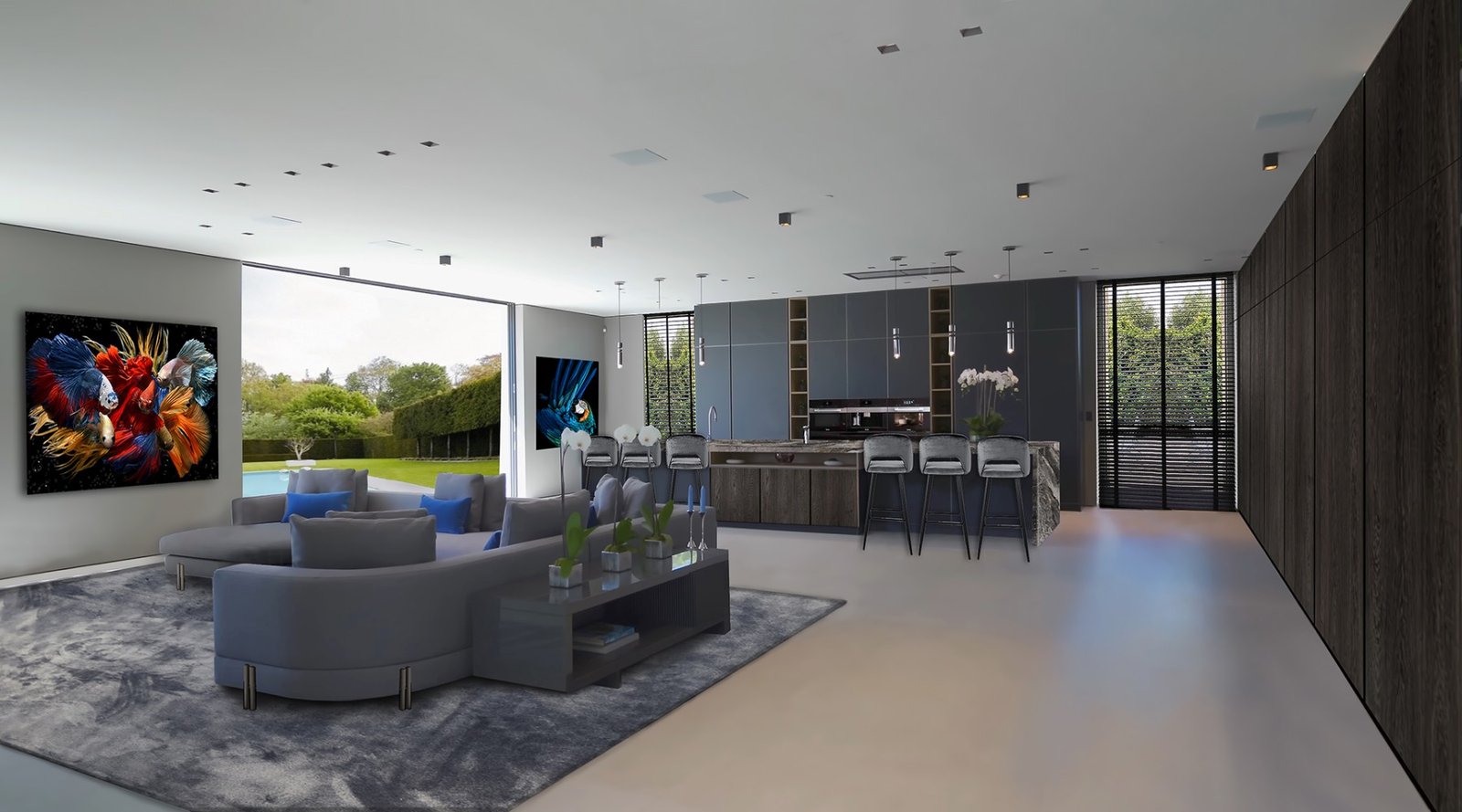
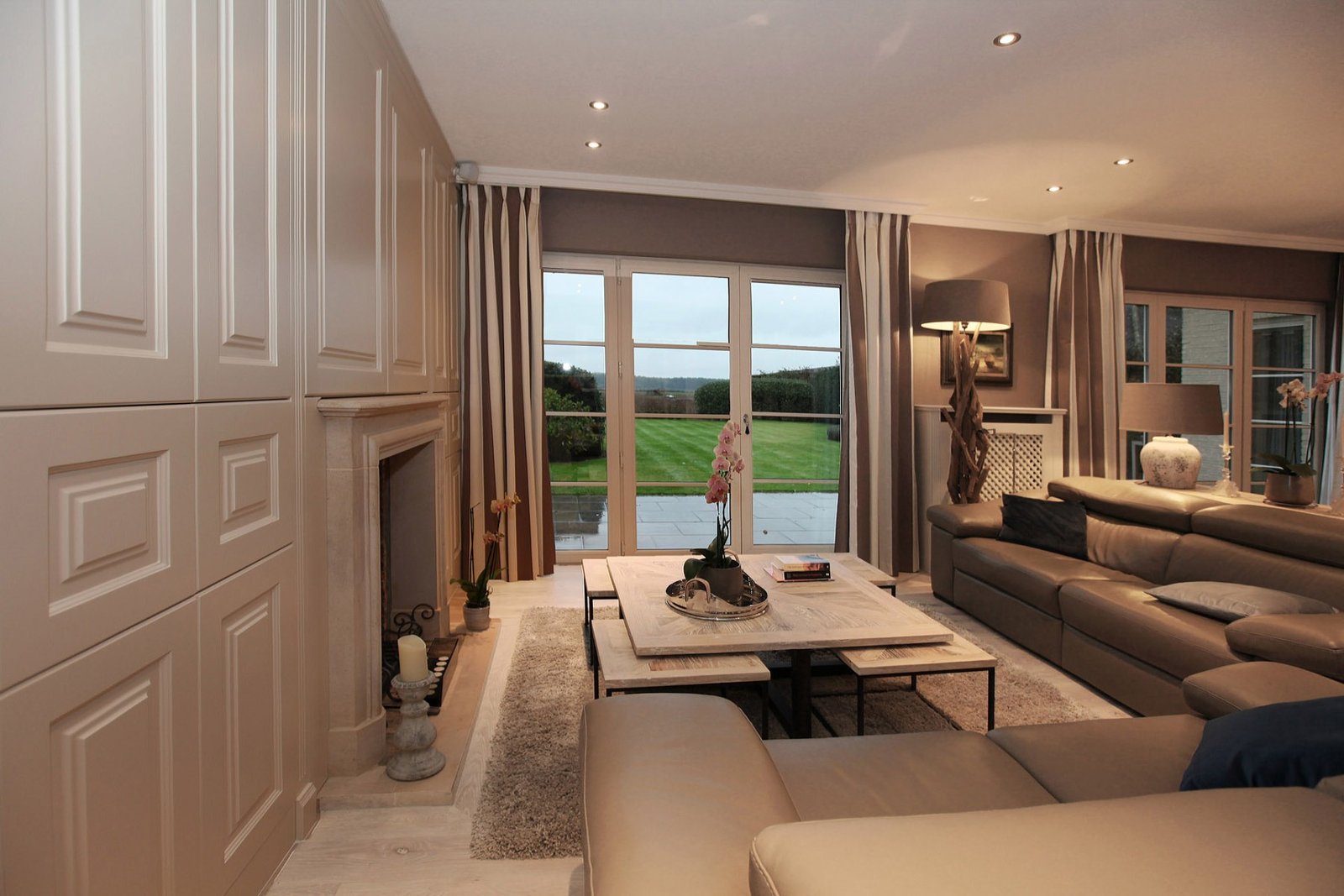
Our own projects
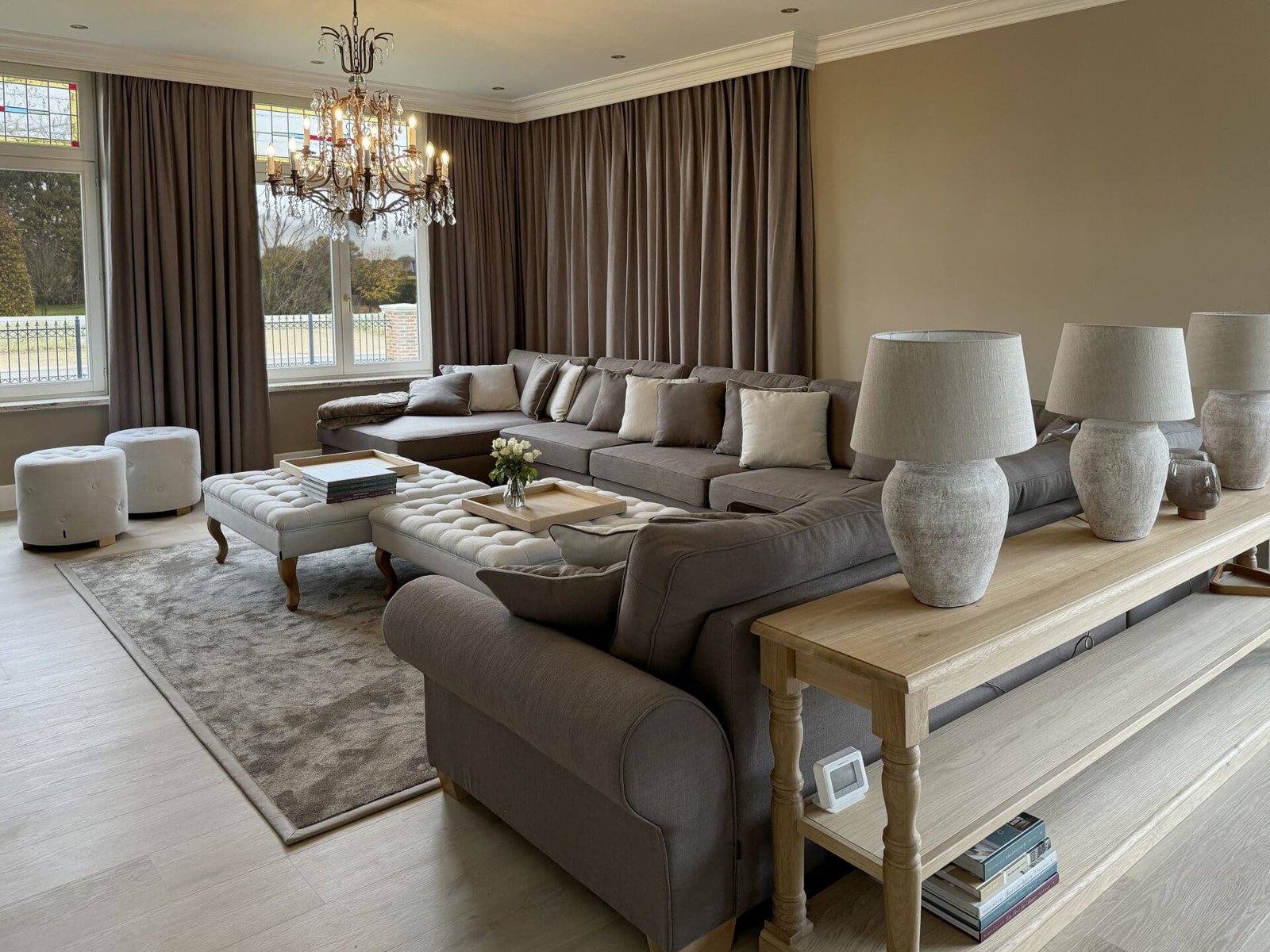
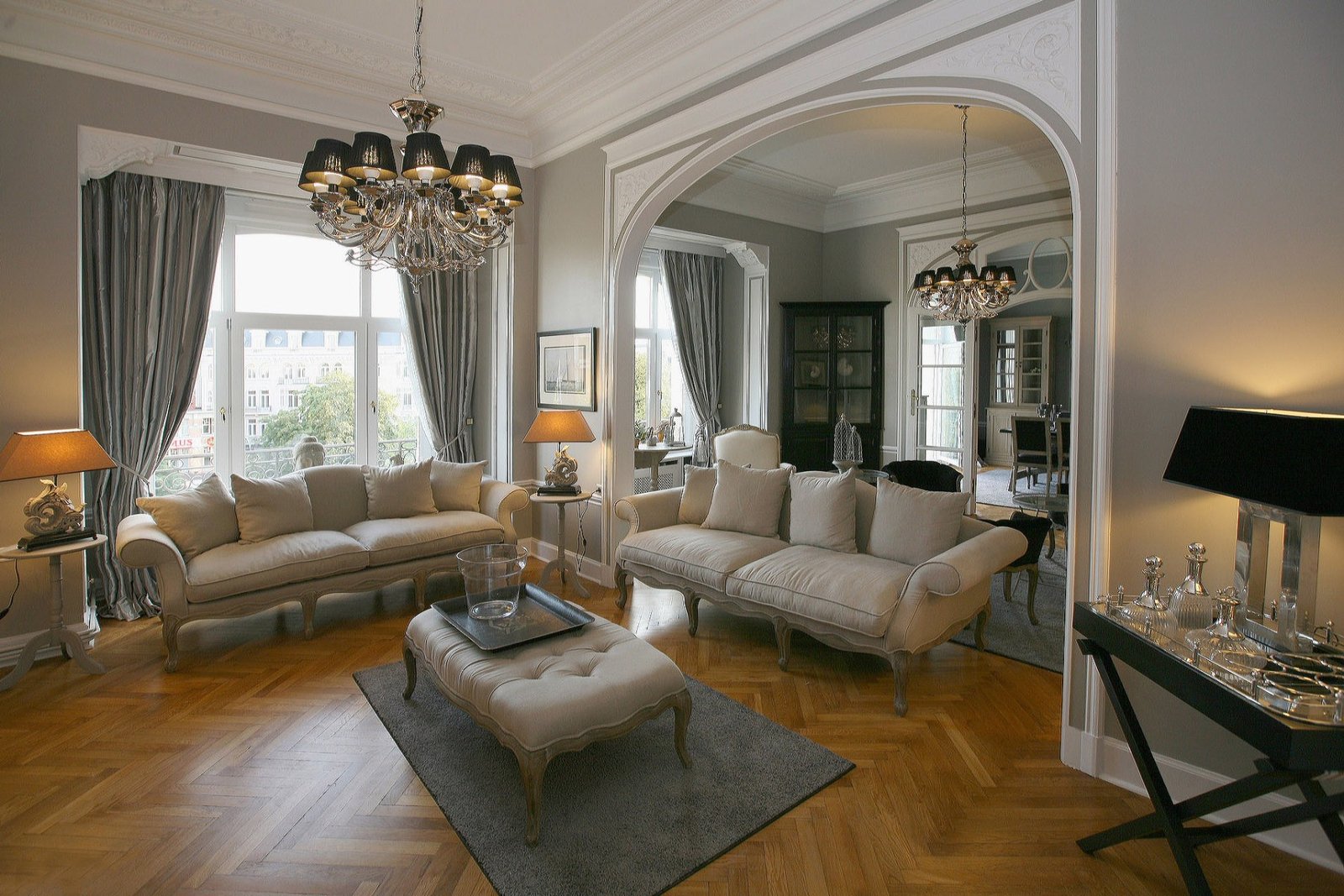
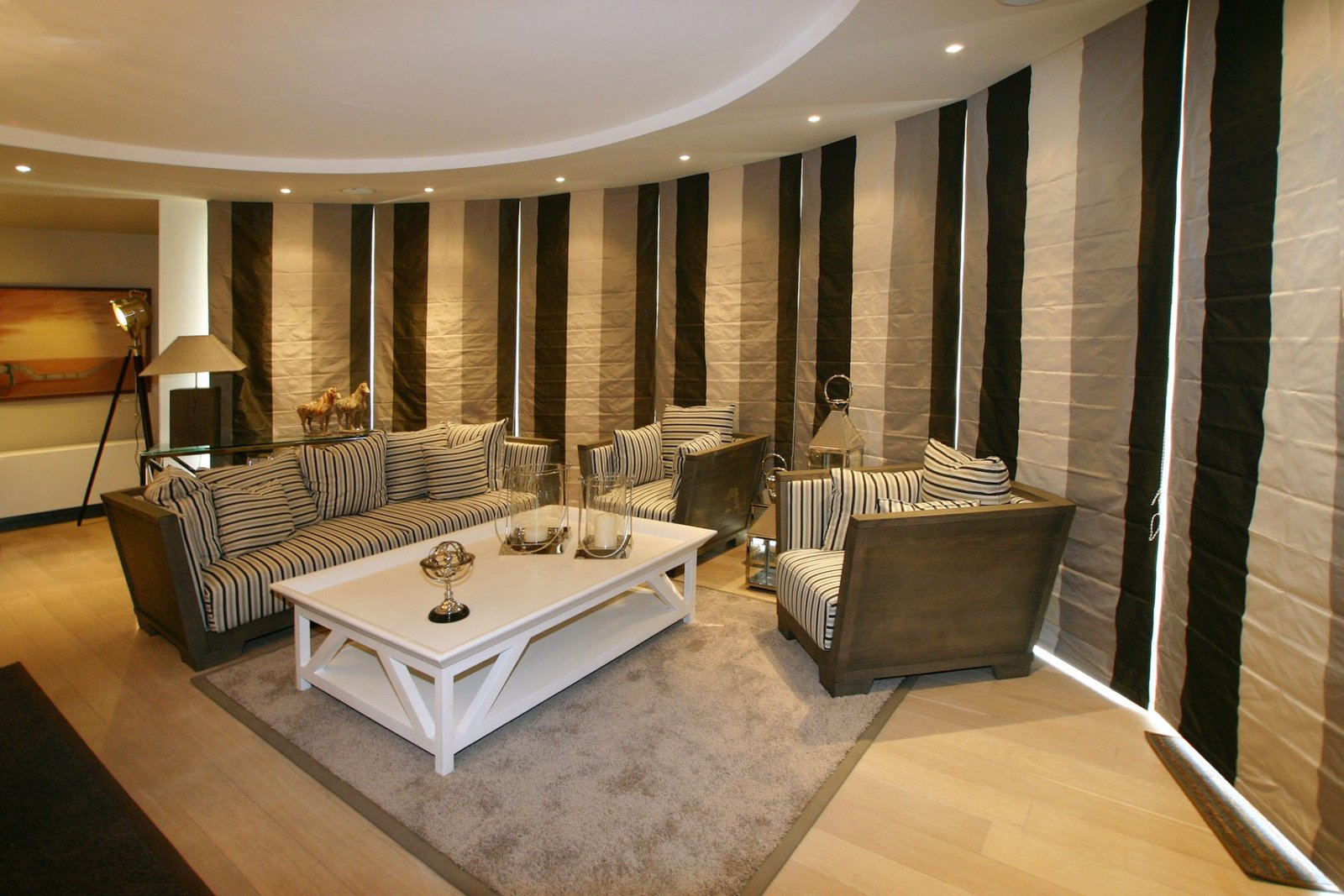
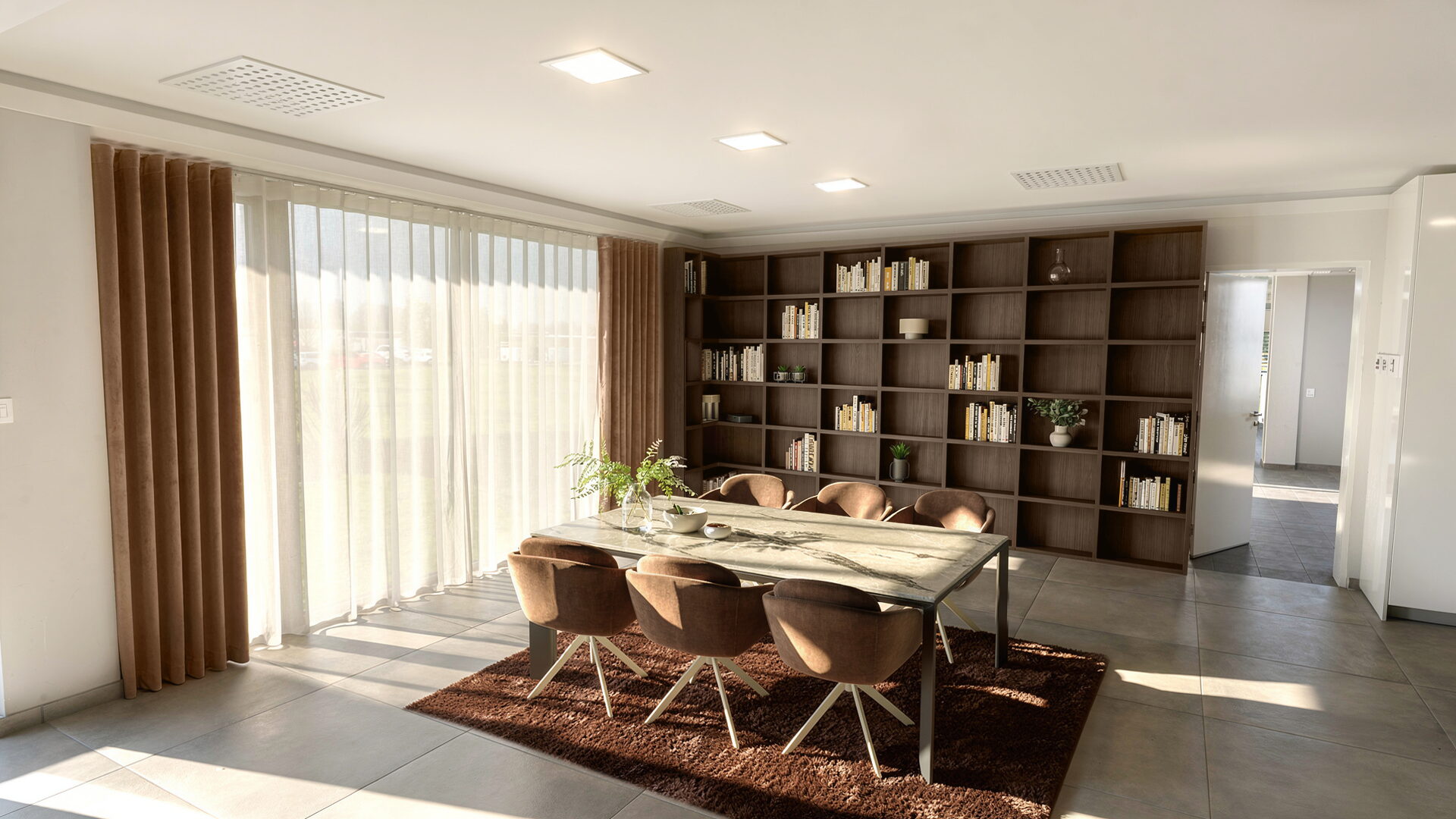
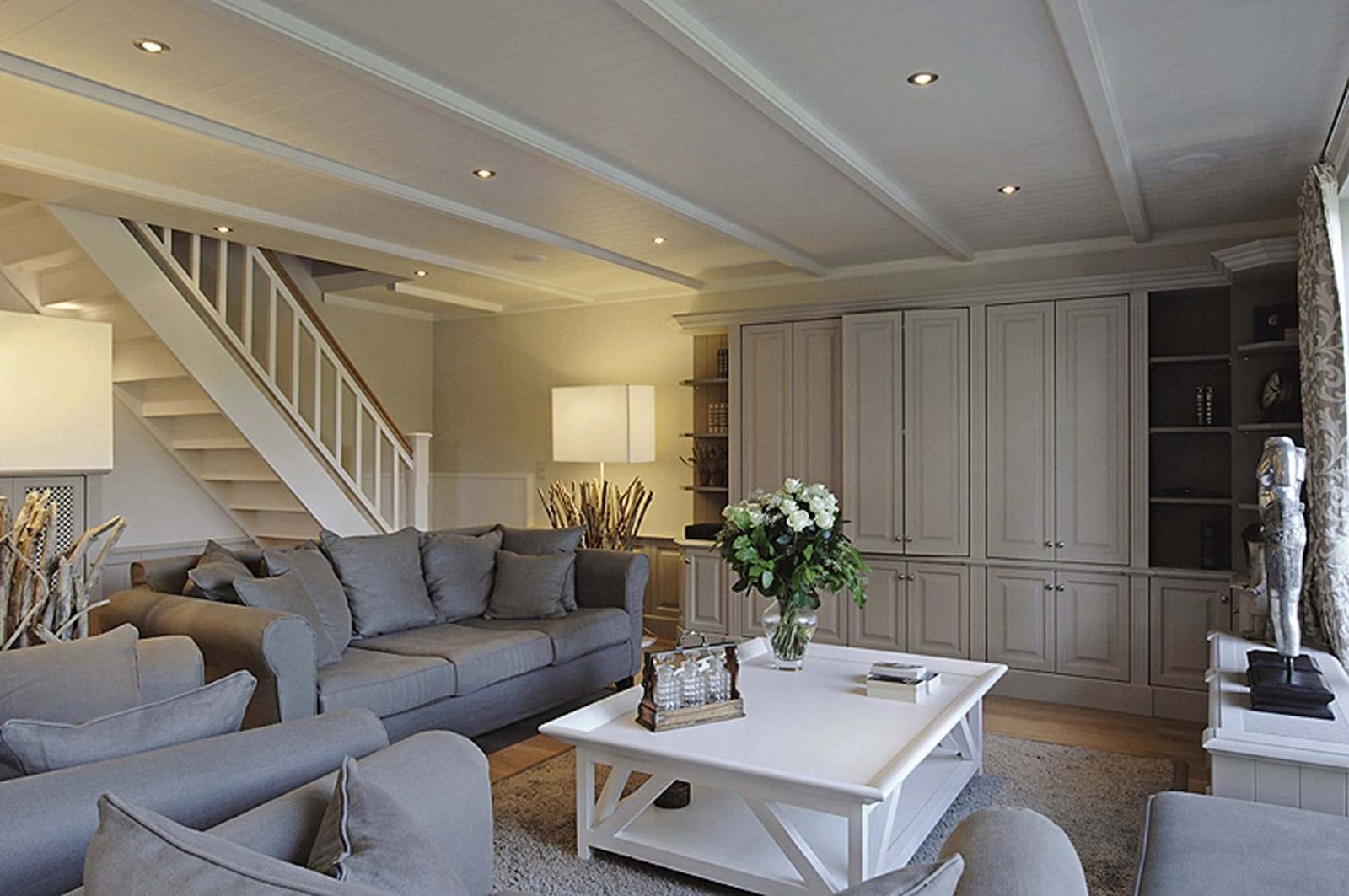
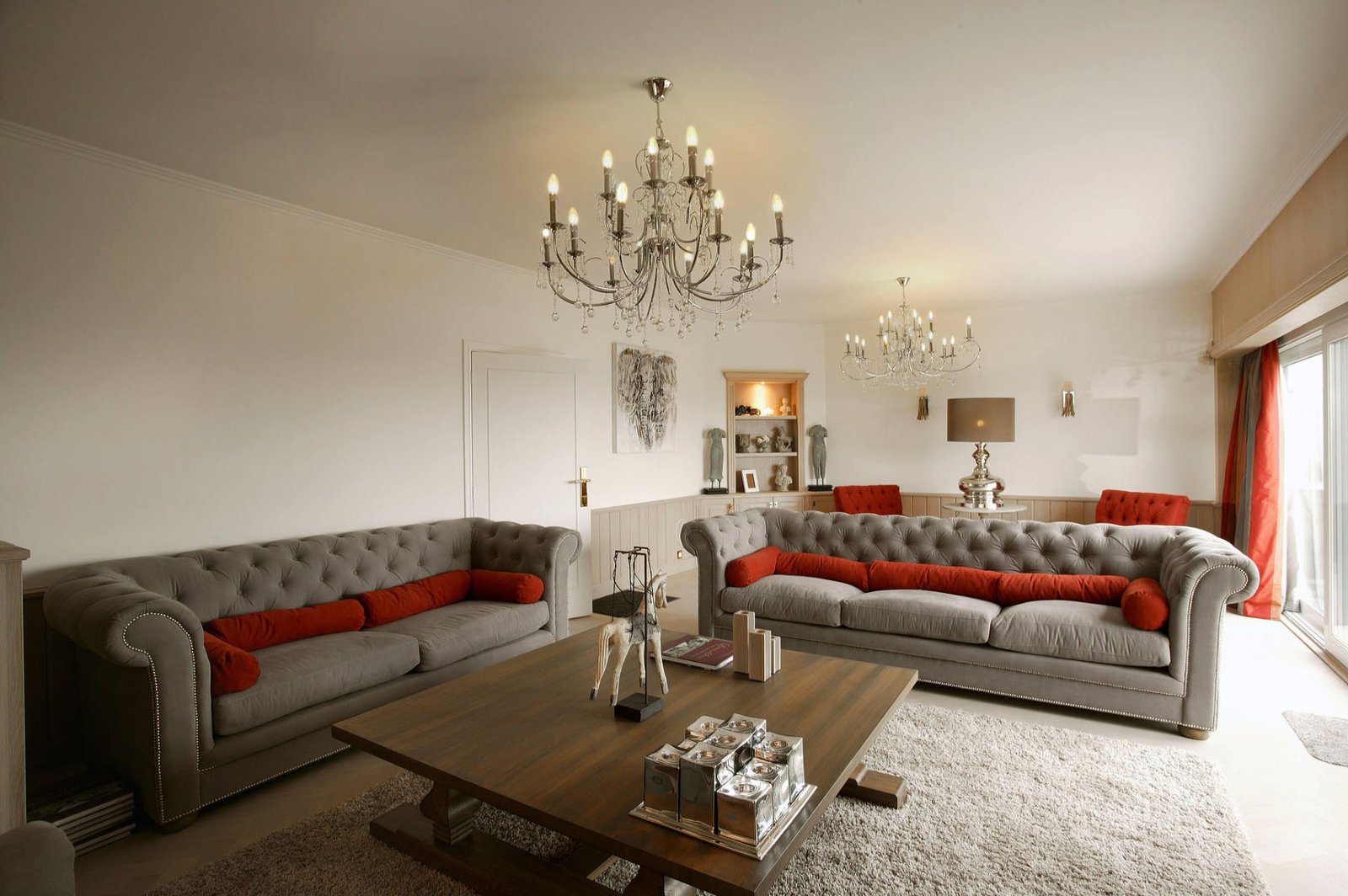
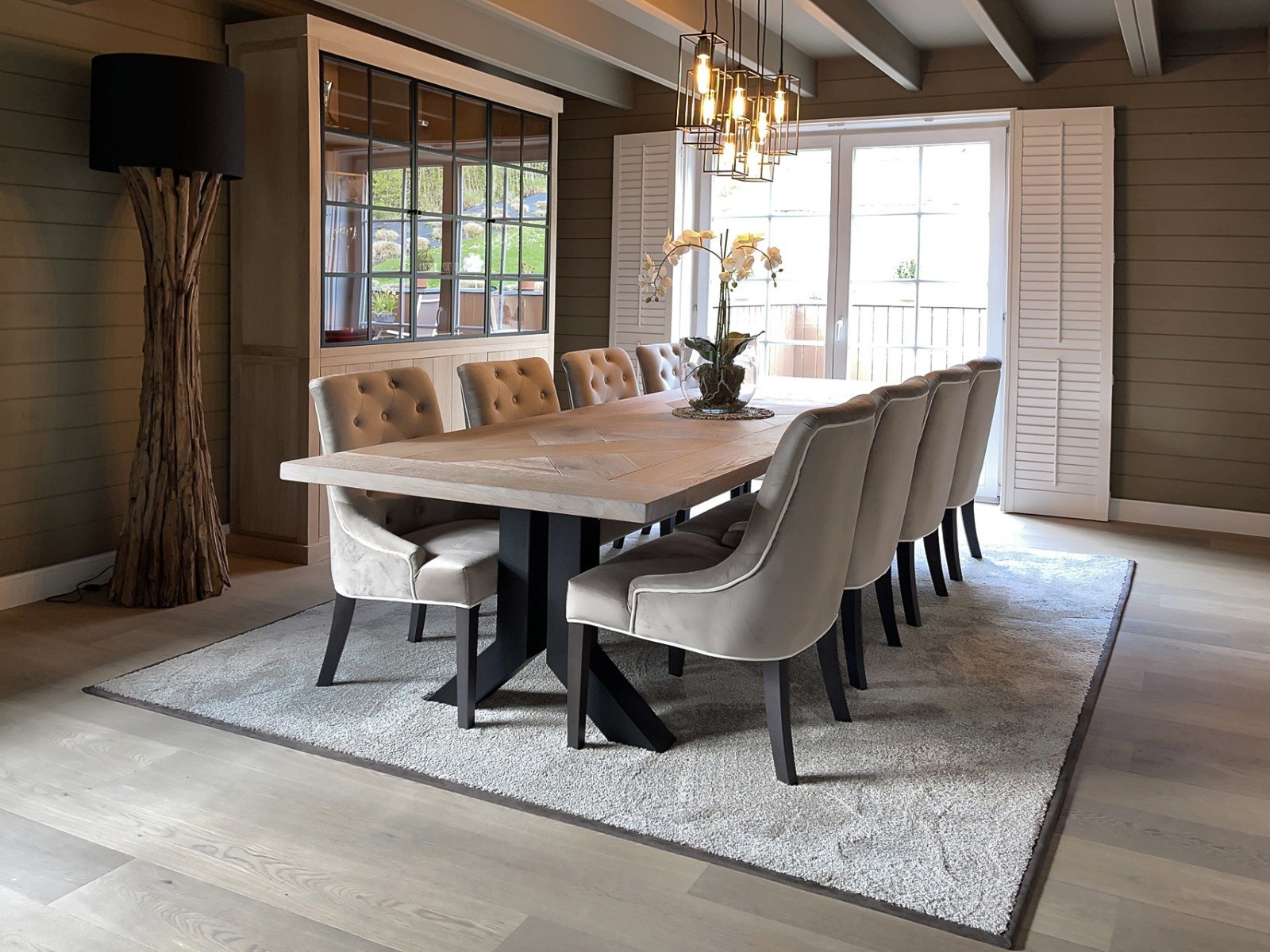
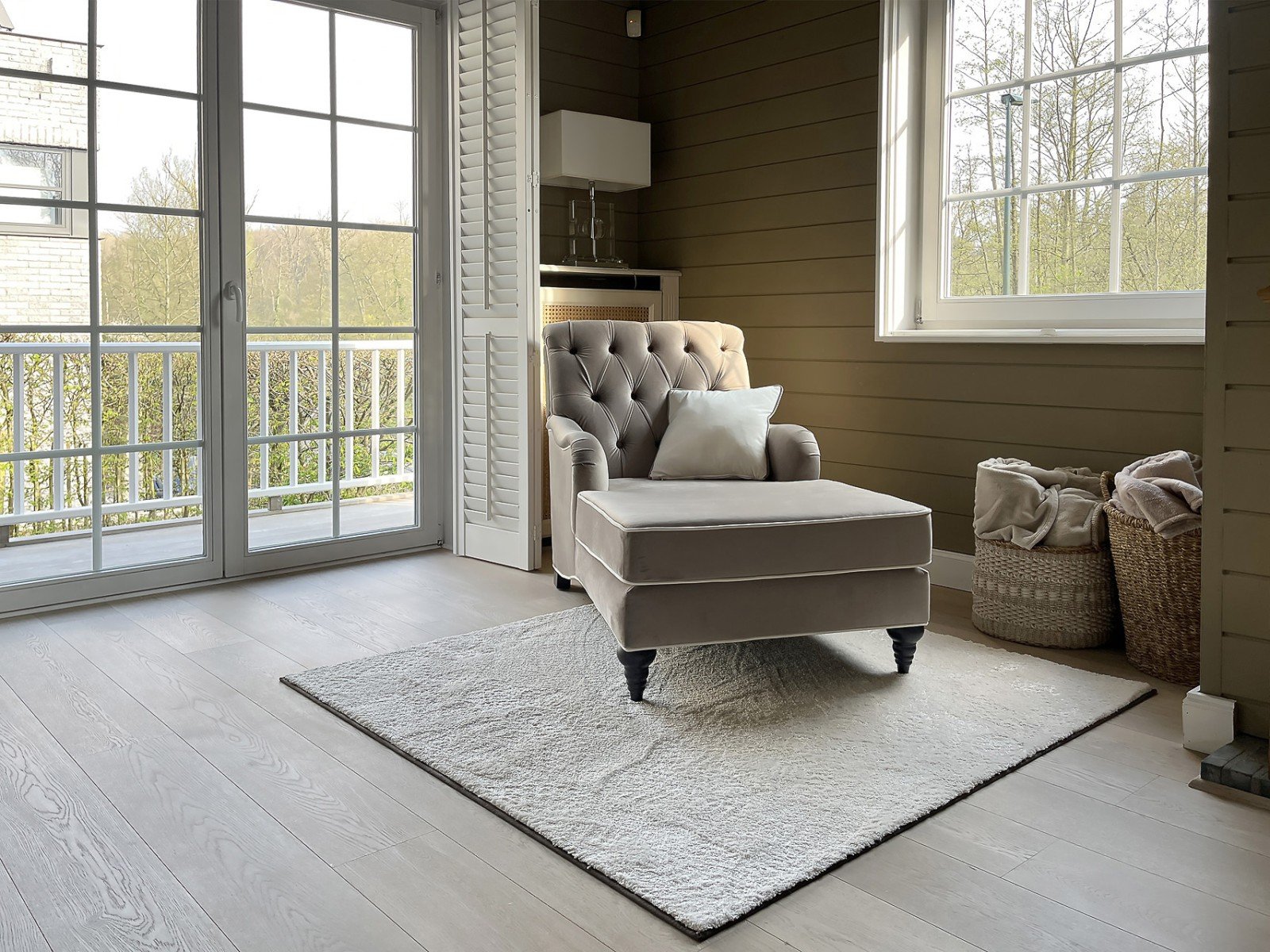
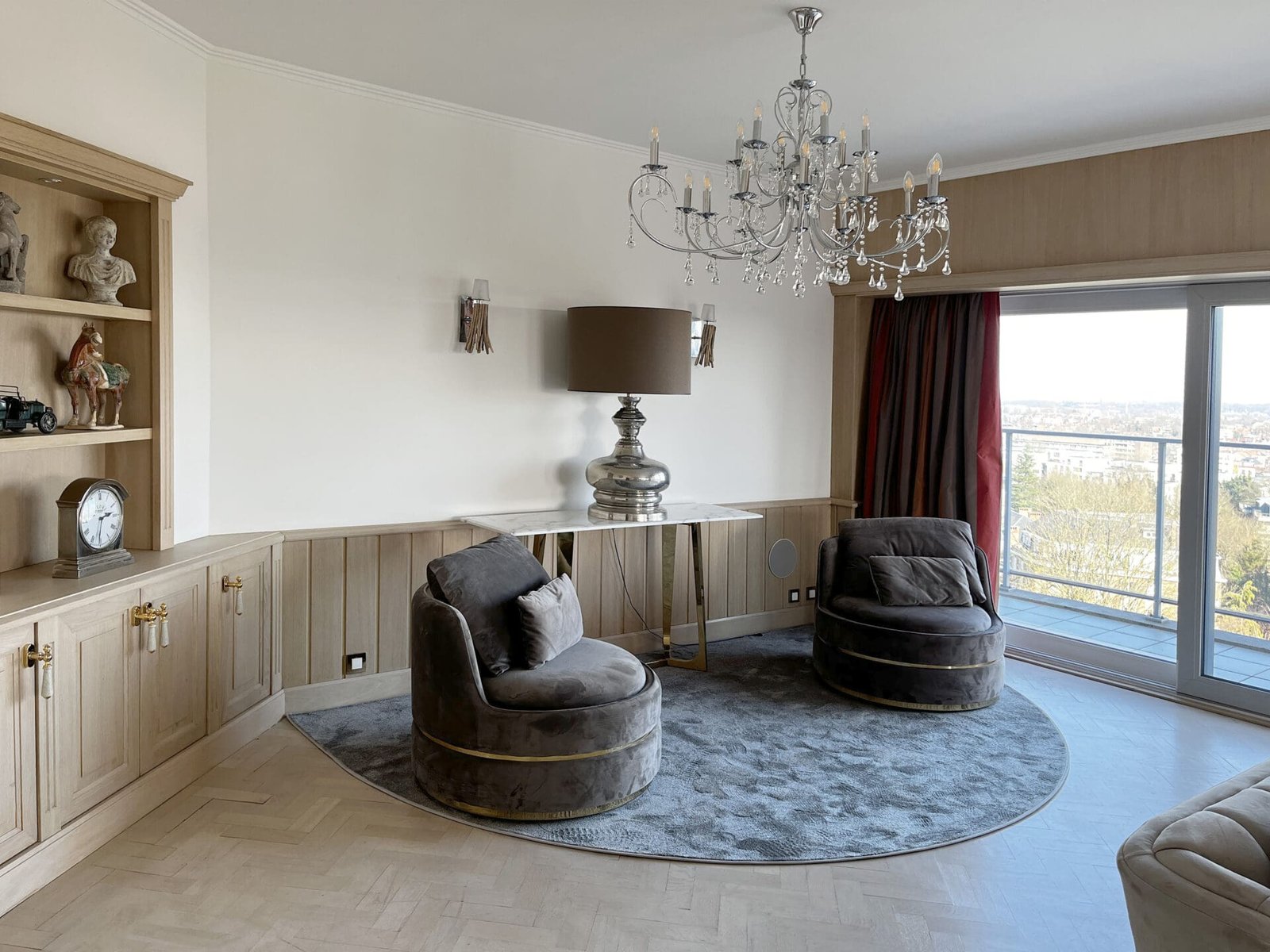
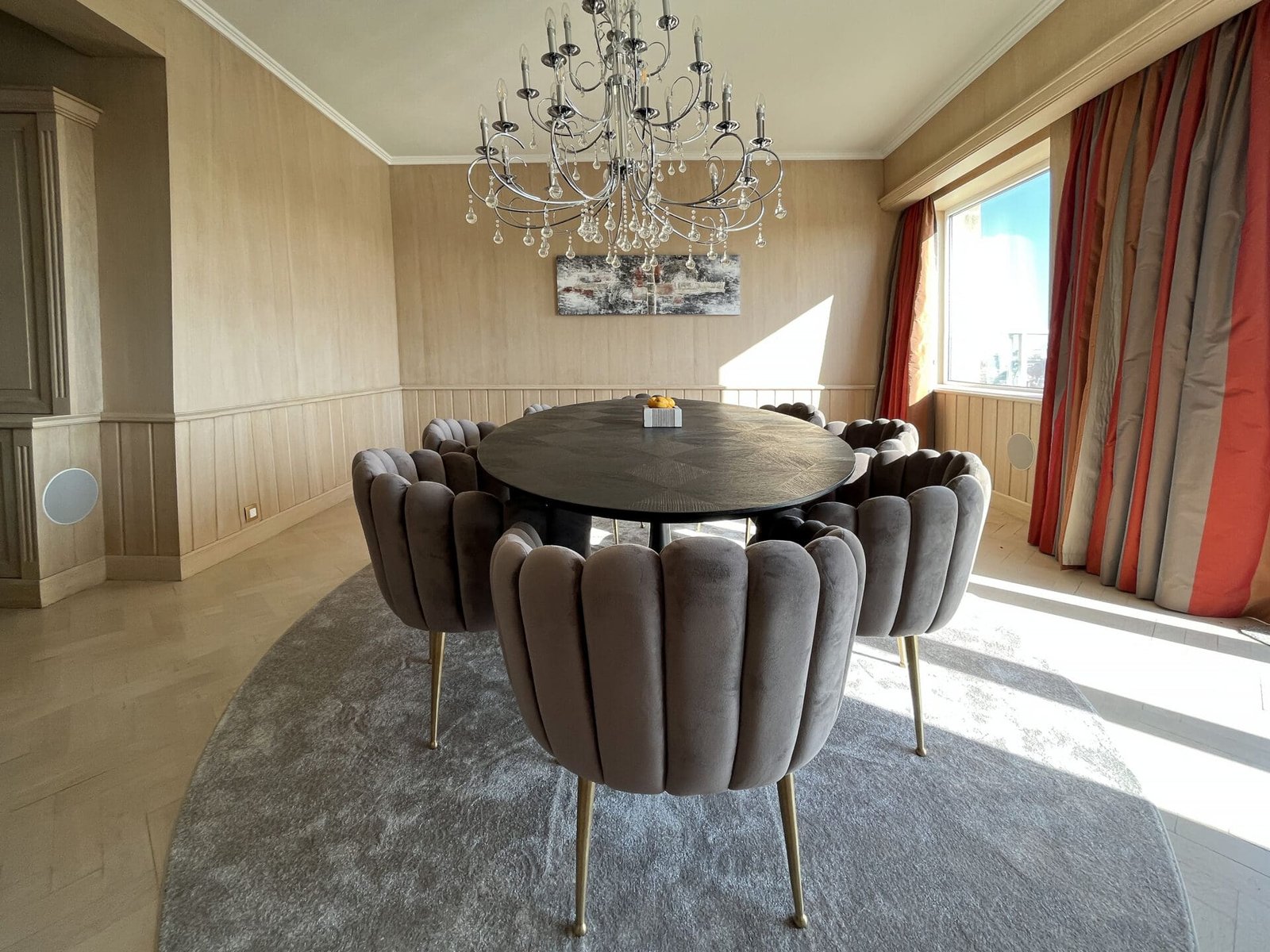
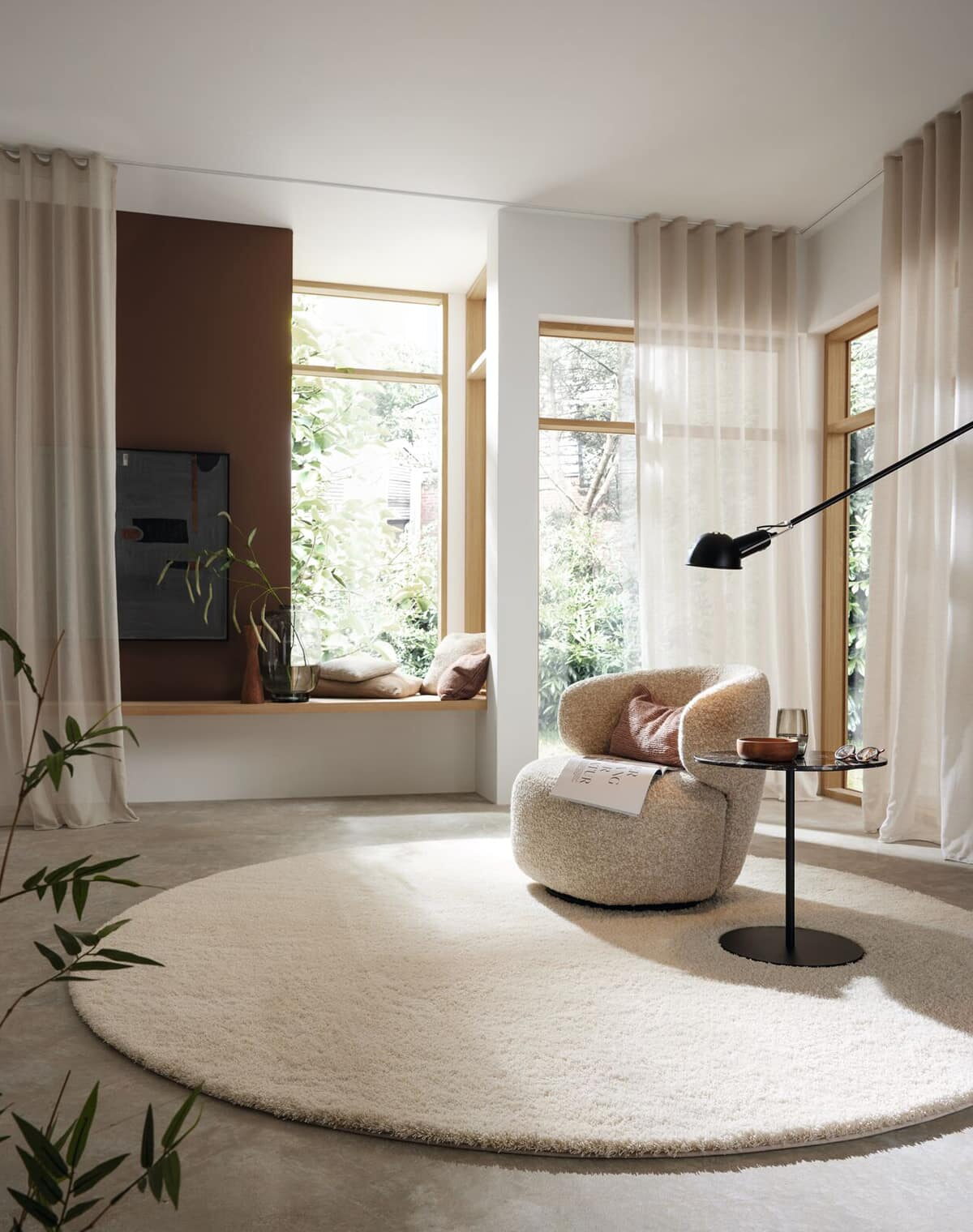
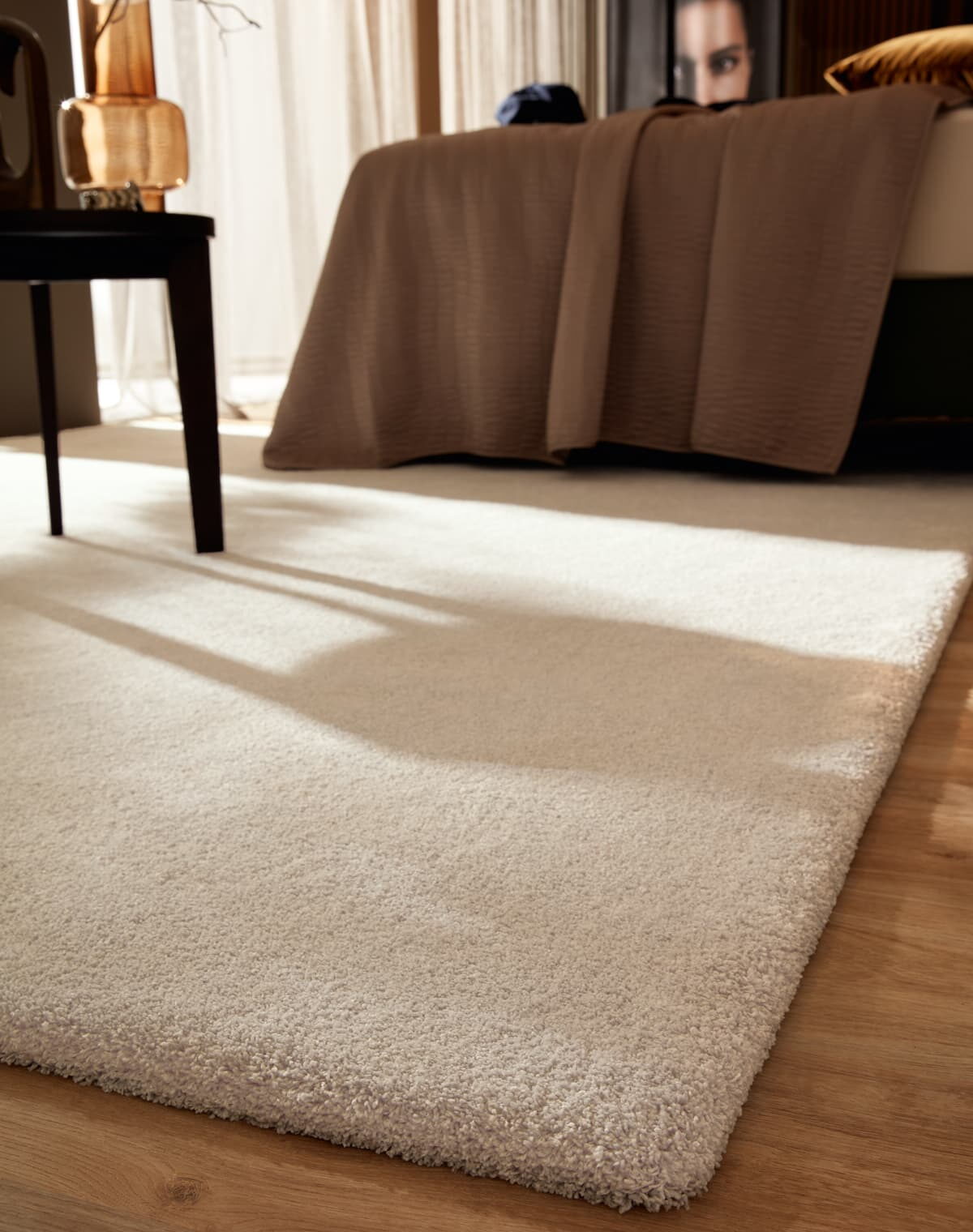
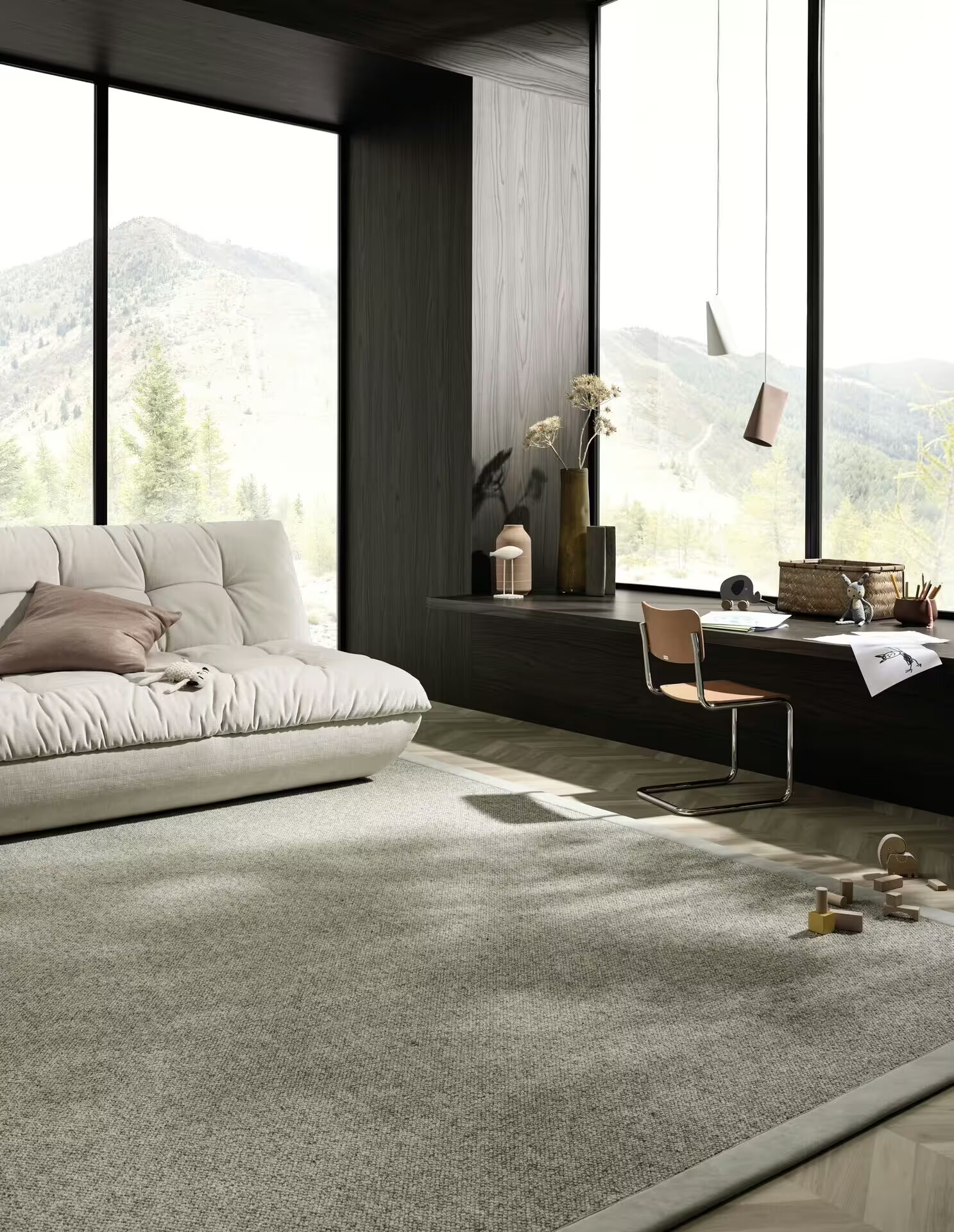
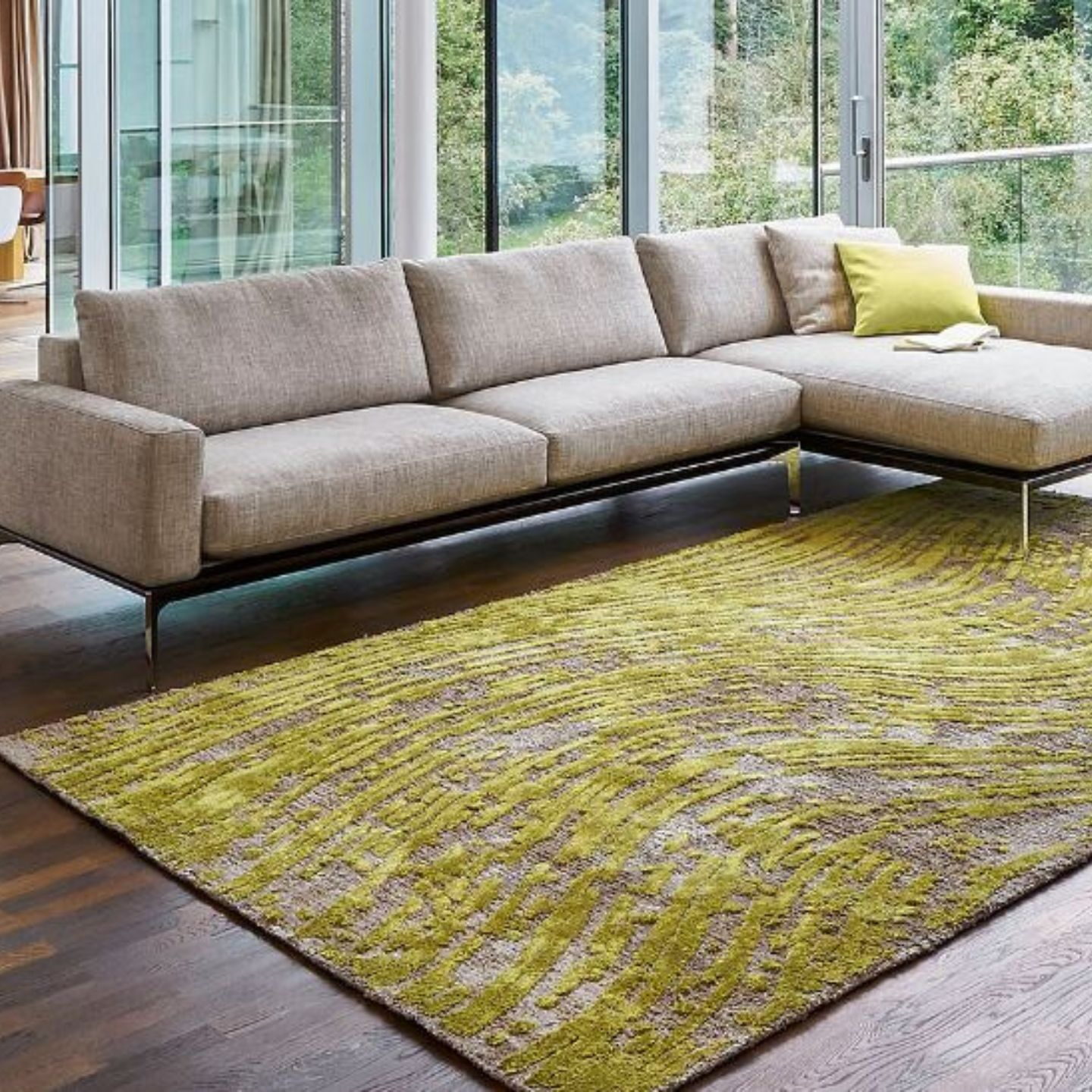
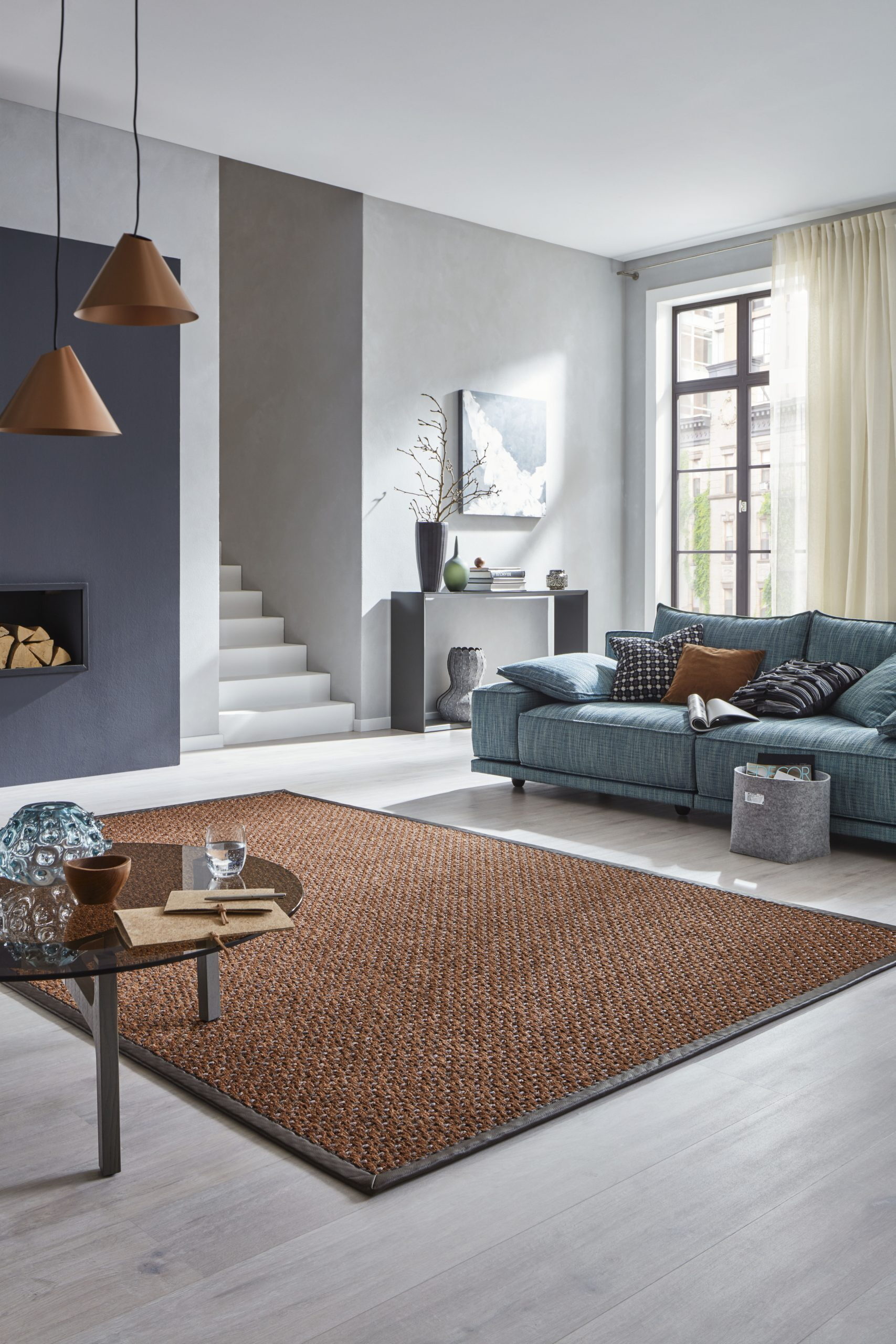
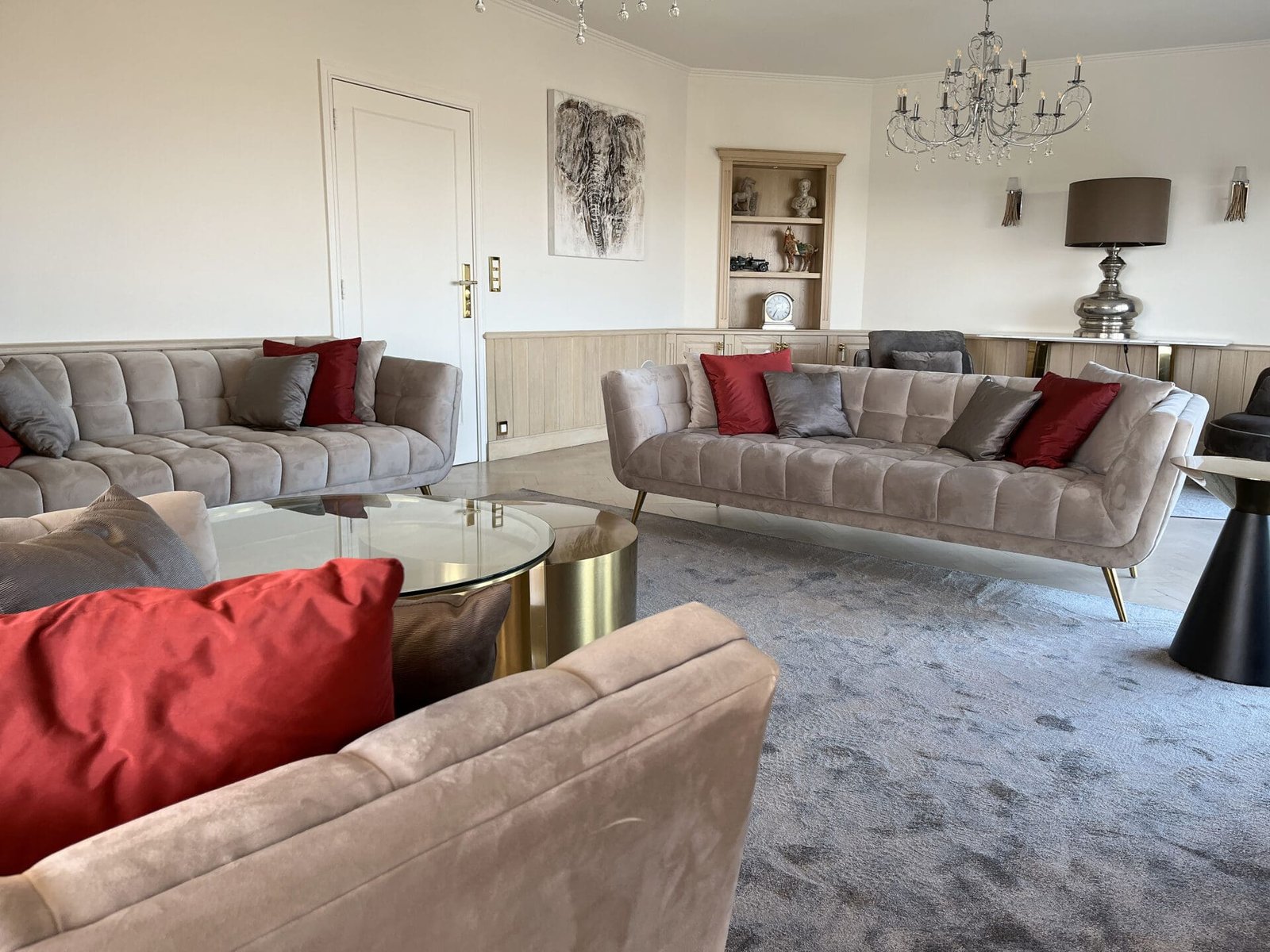
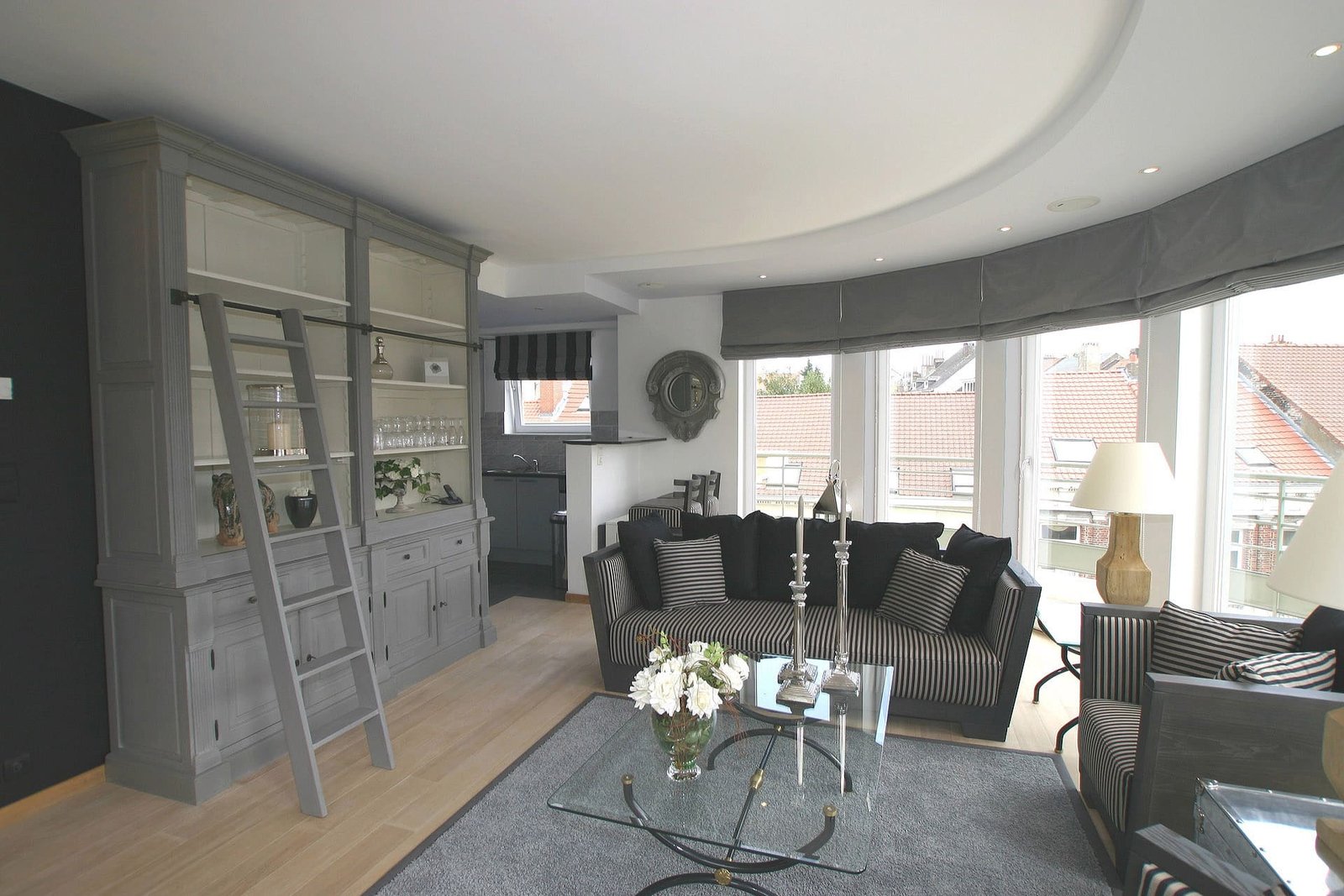
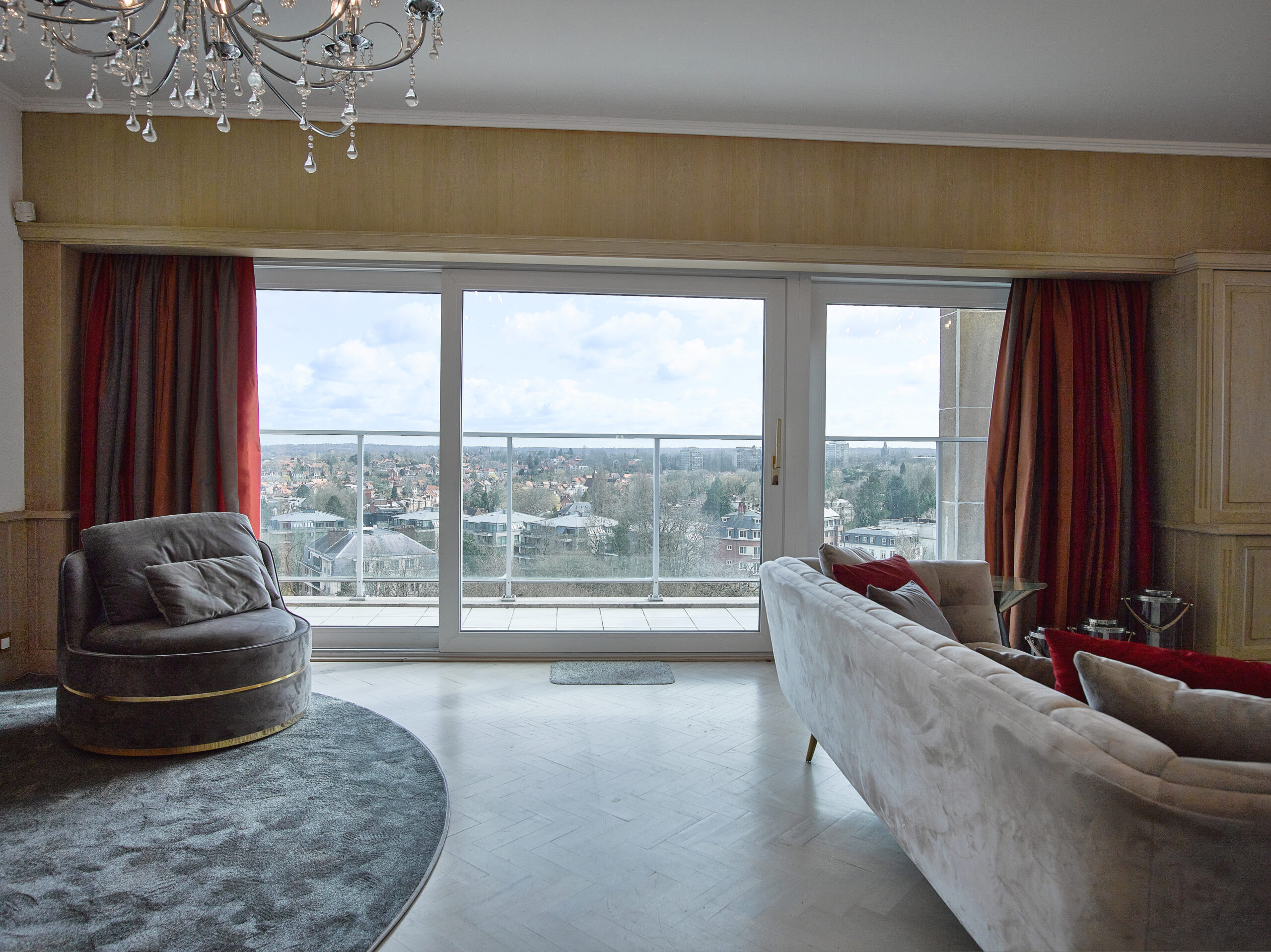
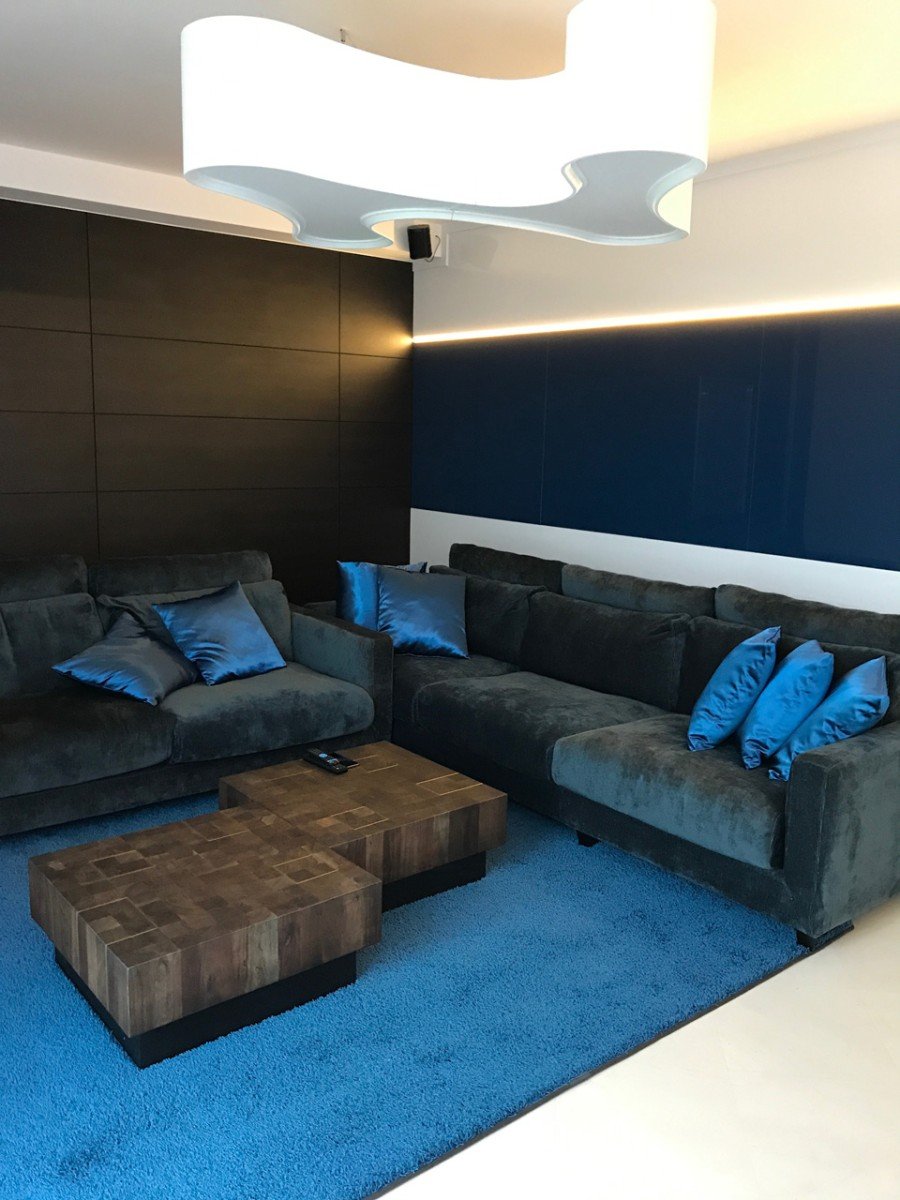
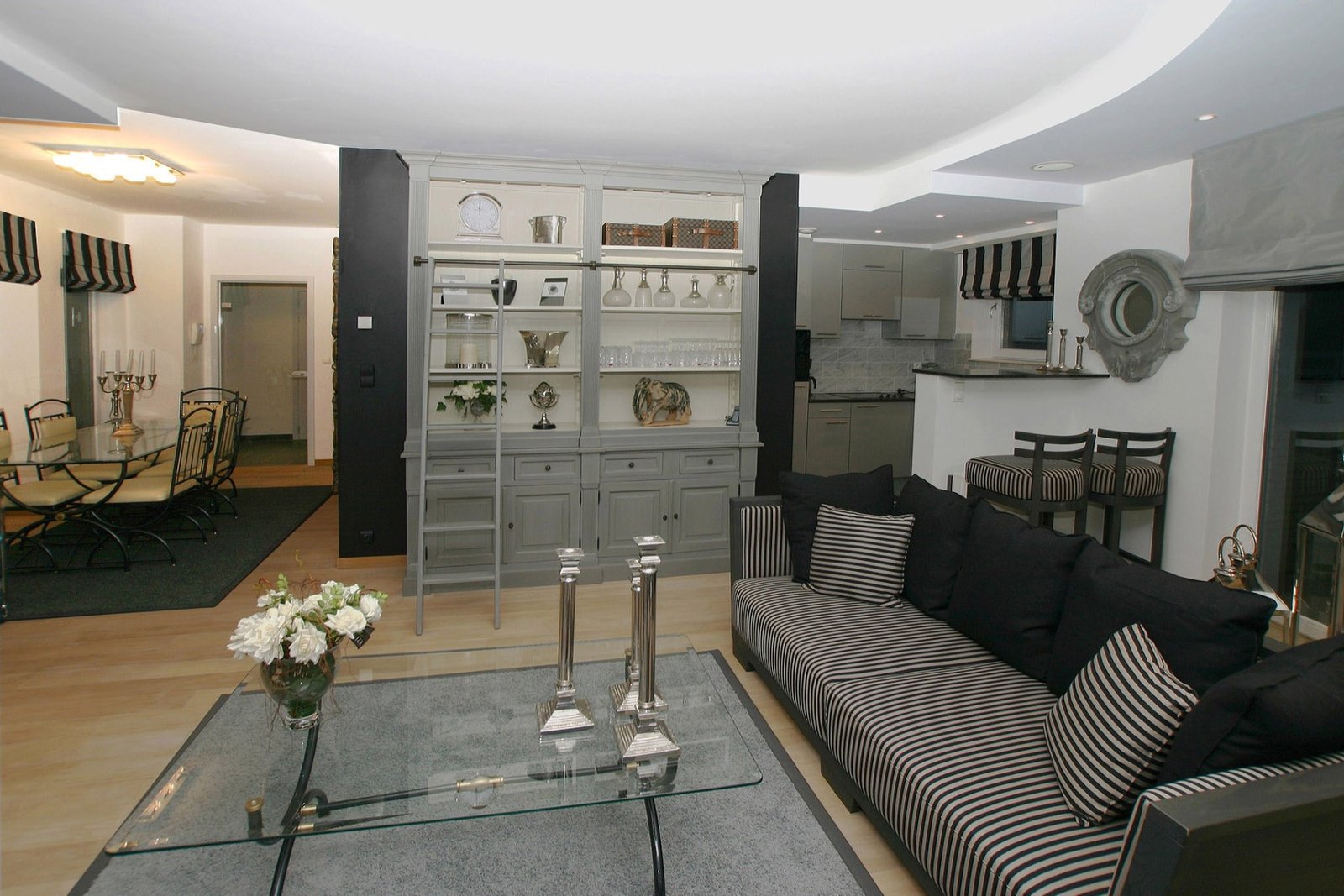
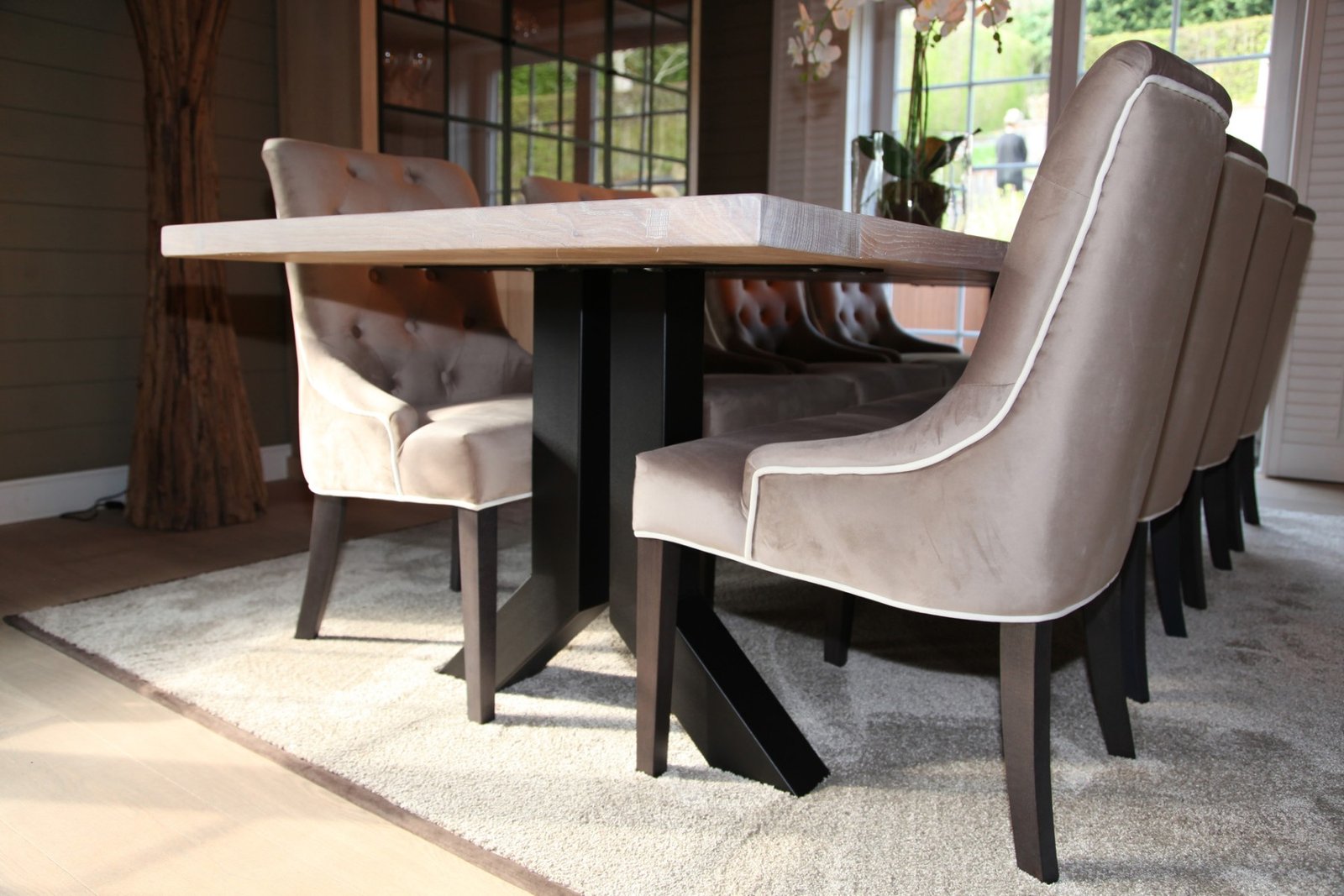
None of these rugs came off a shelf. Every one was cut for the room it lies in, and the colour was chosen next to the sofa, the curtains and the floor you see with it.
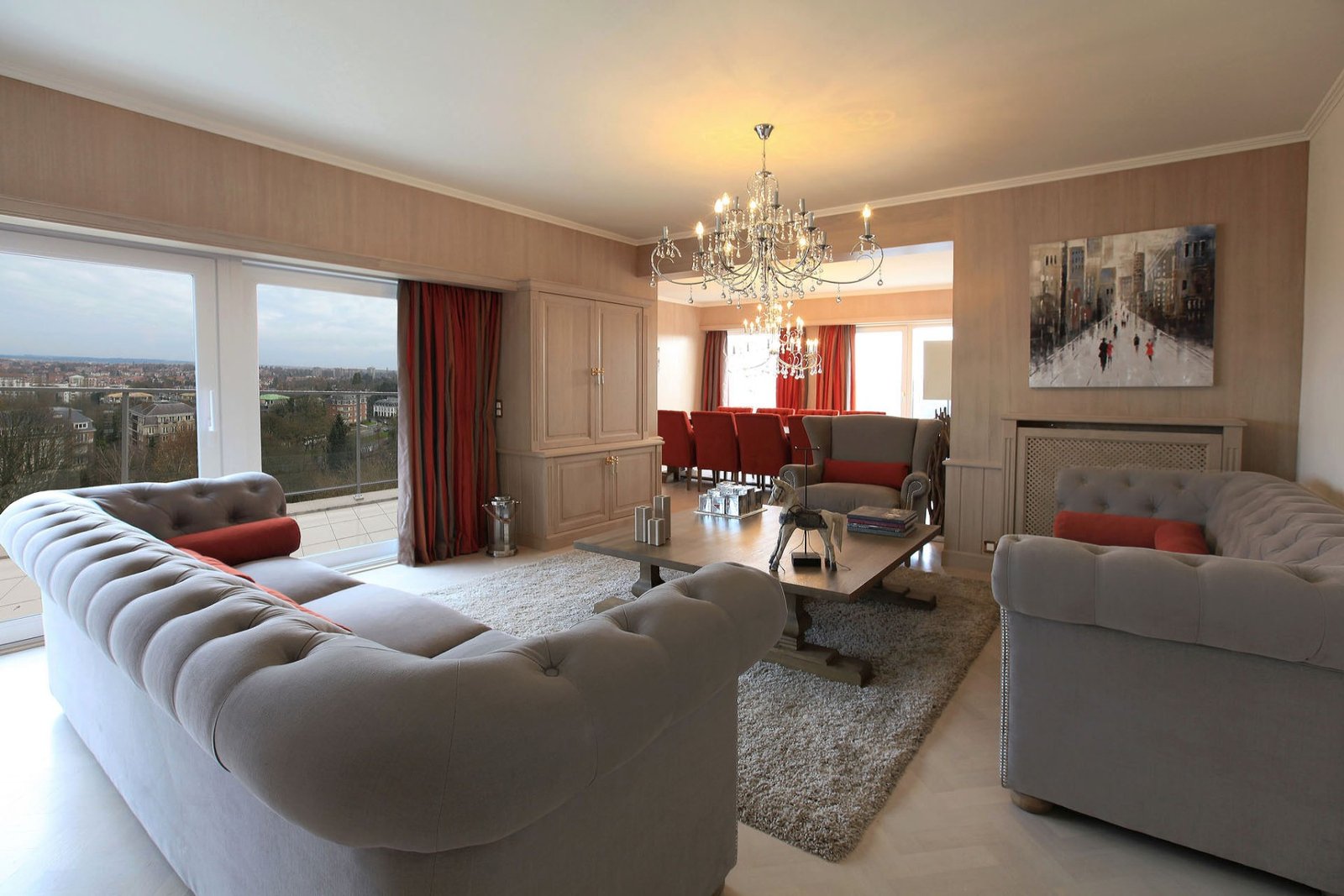



What you get from us
We come and measure on site and draw the rug onto your floor plan, with the walking lines marked. No fee is attached to that.
Colour is best judged on the spot. We bring the samples along and lay them next to your floor, your sofa and your curtain fabric.
A small rug for the reading corner is just as welcome as a whole house with a rug in every room. Small jobs are welcome.
The same person follows your file from the measuring through to delivery and laying. You never have to chase anyone.
Size and shape
The right size
Under a dining table it is the chair that counts, not the table. A rug the same size as the tabletop does not work: as soon as someone pushes back, the rear legs land on the floor and the chair tips over the edge. So allow a band all around the table on which a chair pushed back still stands completely. With a table for eight you quickly arrive at a rug considerably wider and longer than the top.
Under a seating area there are three workable solutions. Either all the furniture stands entirely on the rug, which makes the seating area read most strongly as one whole. Or only the front legs of the sofa and armchairs rest on it, which keeps the room visually larger. Or the rug stays entirely within the seating area and does not touch the furniture. The third solution demands the most discipline: too small and the rug starts to float like a stain in the middle of the room.
The distance to the wall determines how calm it looks. Leave an equal band of floor free all around and keep that band the same width everywhere. Uneven bands are noticed immediately, even when the difference is small. In a narrow room it often works better to run the rug up to the cupboard wall on one side than to keep a small, uneven strip everywhere.
We draw the size onto your plan before you decide anything. During the measuring we record the room, the furniture and the passageways, and draw the rug into that. So you see on paper how much floor is left, where the door swings over the rug and how the walking line runs to the kitchen, before anything has been cut.
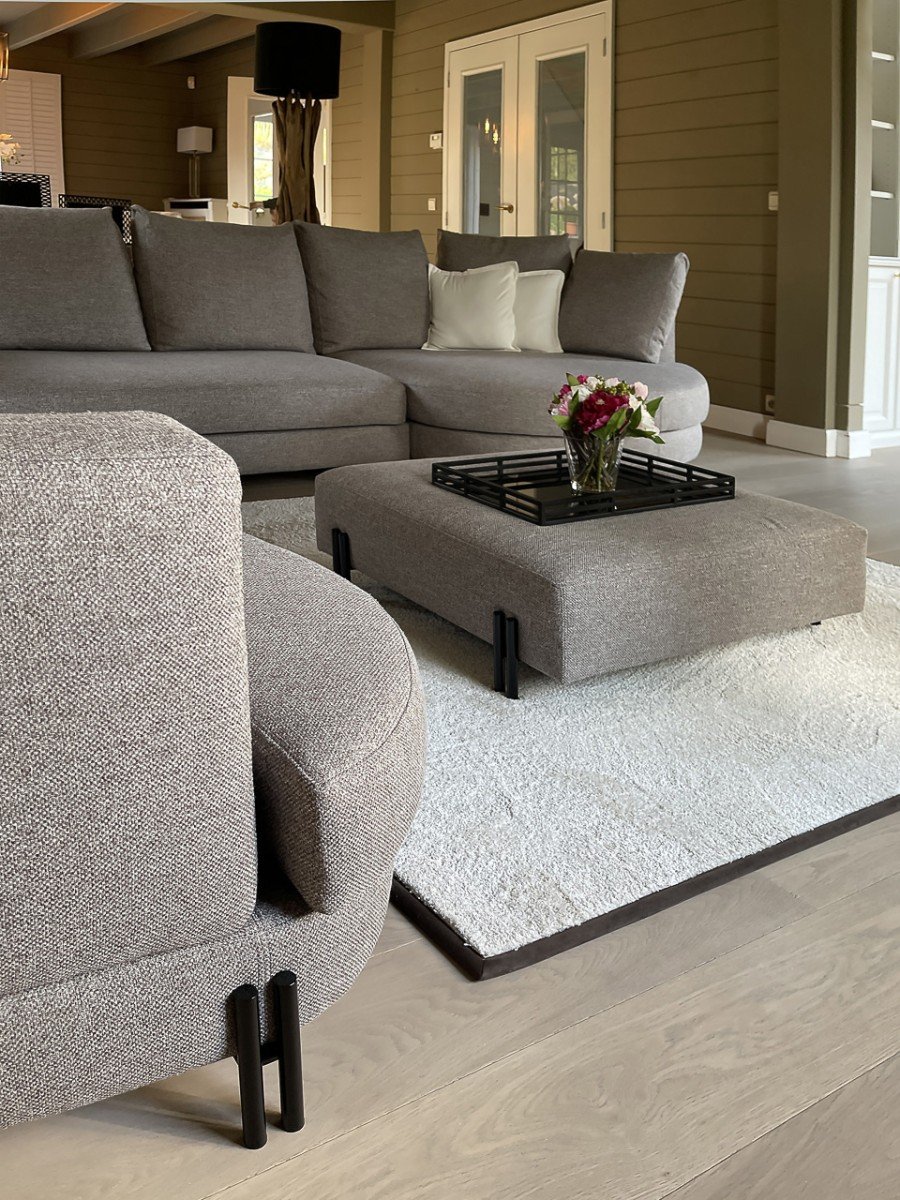
Room by room
A rug does something different in every room: it marks out an area, it dampens sound or it makes a hard floor bearable. Below you will find what we look at room by room.
Room 01
Here wear resistance matters more than softness: chair legs slide over the same spot every day. A short, dense pile or a flat weave lasts longest and lets crumbs go.

Room 02
Here what your feet feel in the morning is what counts most. A long, soft pile is fine here, because little furniture gets dragged about. A rug that runs under the bed on three sides gives a soft step down on both sides.
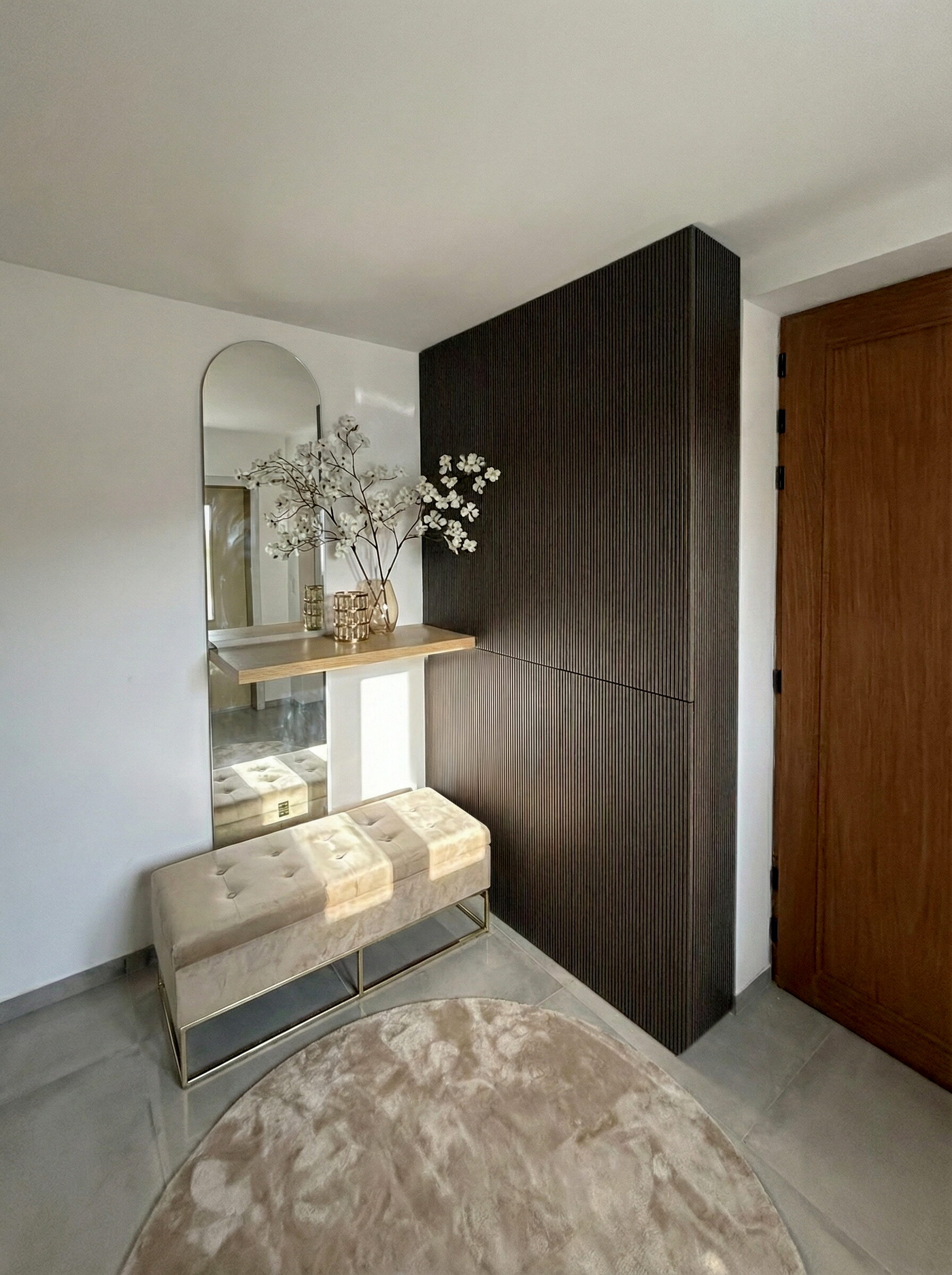
Room 03
The entrance catches the most dirt and moisture. Choose a darker or flecked colour here and a dense, short pile, and keep the shape simple so the door swings freely over it.
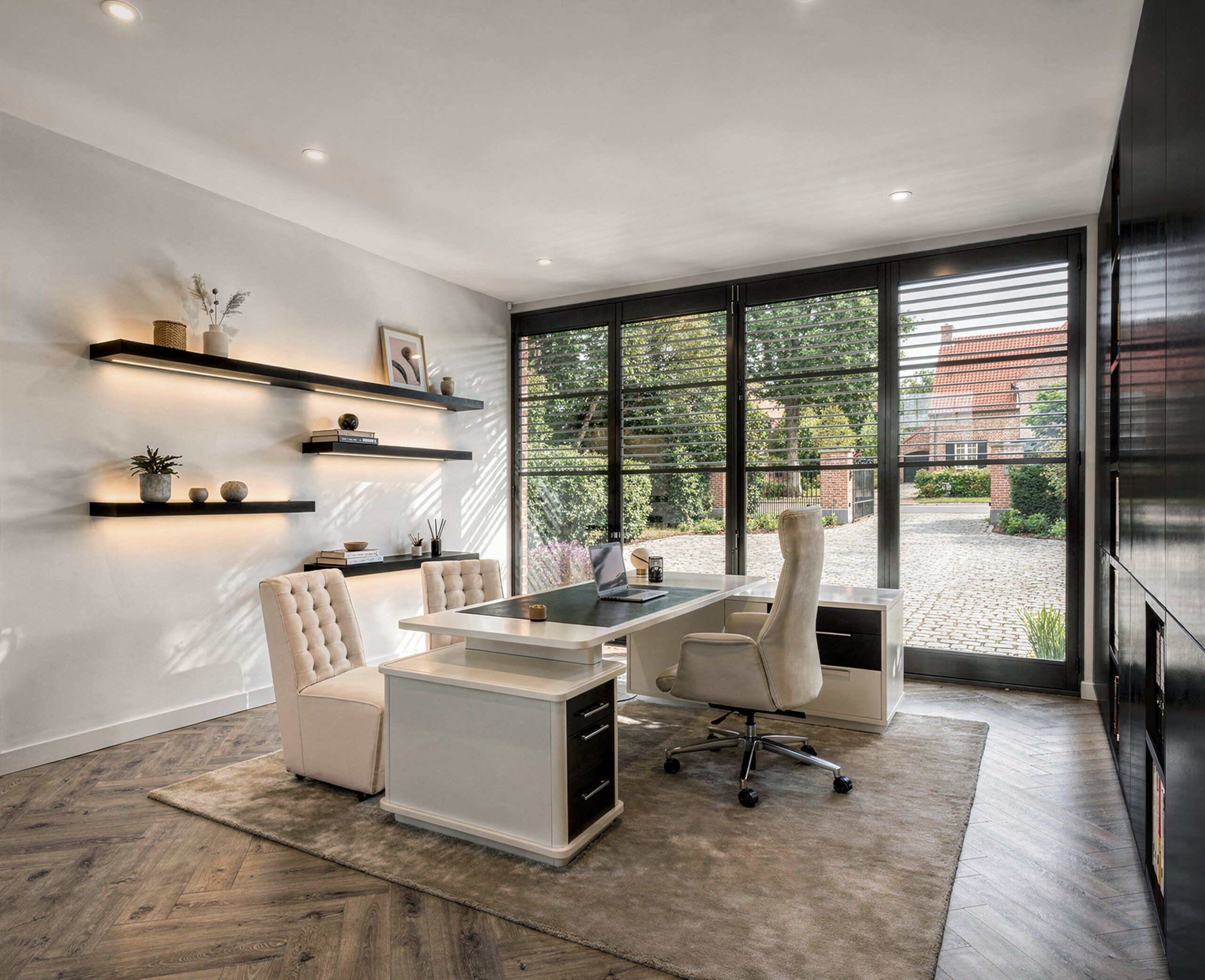
Room 04
A desk chair on castors needs a flat or short-pile rug; in a long pile the castors sink in. If you prefer something soft underfoot, choose a higher pile and add a hard protective mat under the chair.

Room 05
In a passageway the direction of the pile matters: lay the rug so that you walk with the pile, and it stays taut for longer and shows fewer footprints.
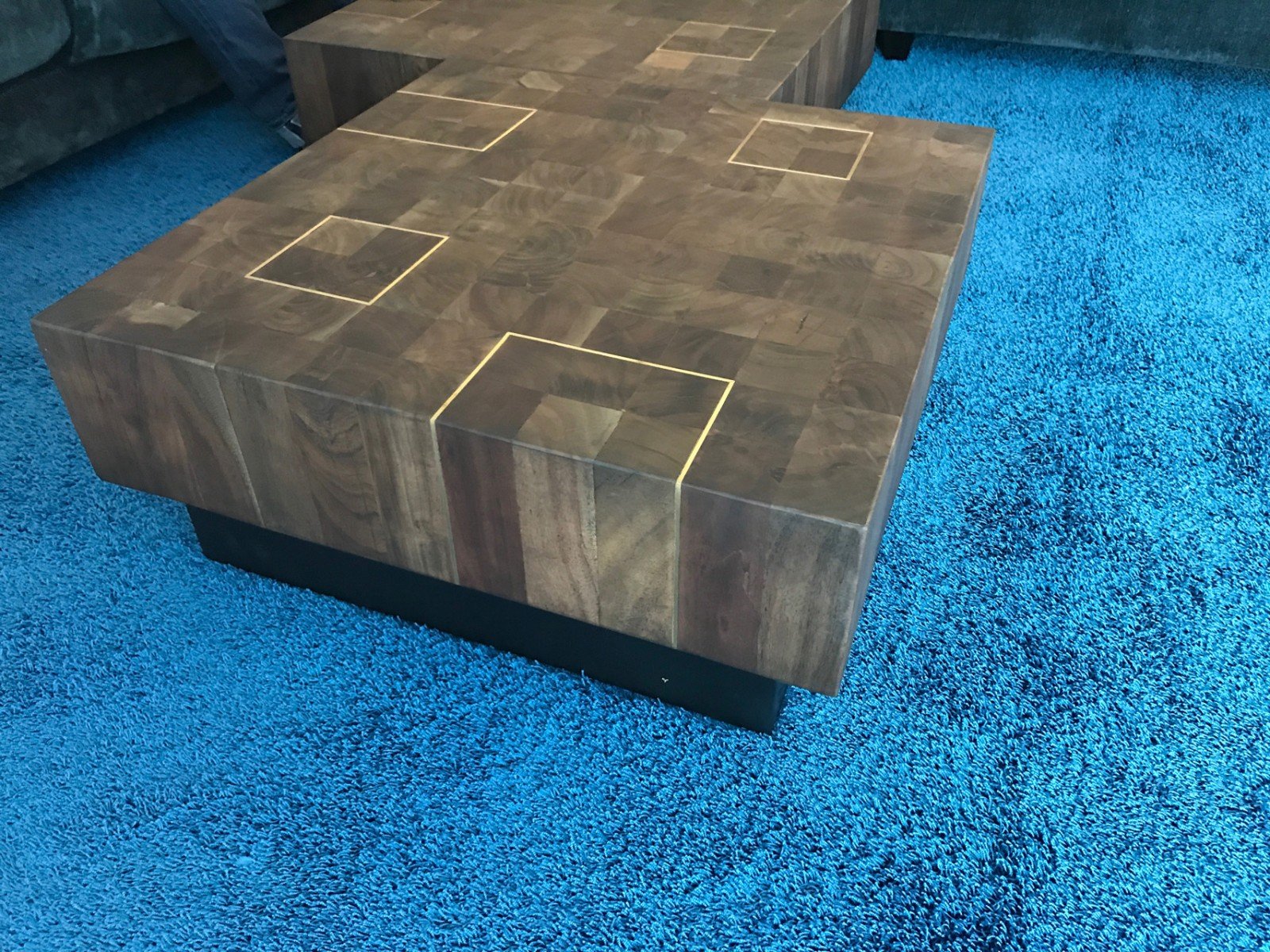
Room 06
Sometimes the rug is precisely the eye-catching piece. A saturated colour under a neutral sofa does more for a room than an extra piece of furniture, and it is also easier to replace later.
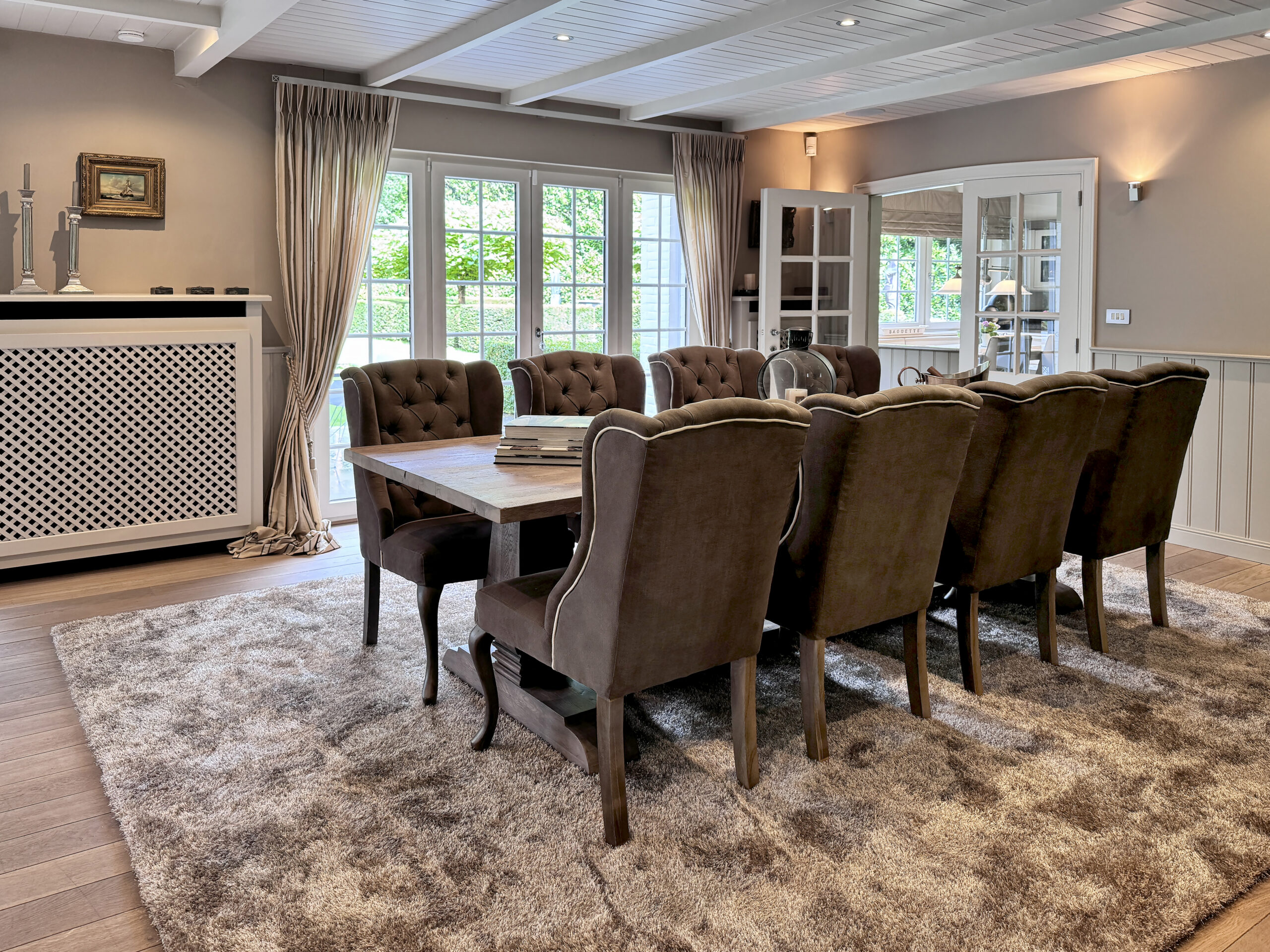 Our projects The rug determines how quiet a room sounds. A large expanse of textile swallows the reflection off a hard floor. In a room with a lot of glass and concrete that is often the difference between cosy and echoing.
Round, oval or cut to shape
Round works where the furniture stands in the round. Under a round dining table, in a bay window or under two swivel armchairs, a round rug reads more calmly than a rectangle with four corners that connect to nothing. We cut the circle to the diameter you want and bind it all around, so the edge frays nowhere.
Oval and non-rectangular shapes are possible too. An oval follows an elongated seating area or a corridor better than a rectangle. And if your room narrows off at an angle, or a fireplace or a radiator casing juts into it, we simply cut the rug around that obstacle. That is precisely where the difference with an off-the-shelf rug lies: that one you have to lay around the obstacle, or it rides over it.
A runner is a made-to-measure rug in the narrow. For a corridor, a staircase or the strip beside the bed we make runners in the same qualities and with the same edge finish. For a staircase the runner is measured tread by tread, because the nosing of each tread counts towards the length.
Materials
Wool, synthetic or silk
Wool is the classic and remains the benchmark. Wool springs back, absorbs moisture and releases it again, and soils more slowly than you would think because the fibre is naturally dirt-repellent. A wool rug sheds in the first weeks: that is loose fibre working its way out and it stops of its own accord. Wool also takes colour deeply and warmly, which makes the difference in a room with a lot of wood.
Synthetic yarns are by now barely distinguishable from wool. The better qualities are built from hollow, densely woven fibres that stand upright and are firmly anchored. Move a heavy cupboard or a sofa after years and the pile springs back, leaving no permanent imprint. They stand up better to sunlight, are easier to clean and are more attractively priced than wool, which makes them the logical choice in a family with children or pets.
Silk and viscose are there for the sheen, not for the walking route. Both catch the light and change colour depending on where you look from: no other fibre gives you that effect. They are sensitive to moisture and to pressure, though, so we prefer to use them as an accent, or blended with wool, and not in a corridor or under a dining table.
Plant fibres give structure, not softness. Sisal, jute and coir bring a coarse, natural texture indoors and suit a country or contemporary country interior well. They are hard underfoot, though, sensitive to stains and no friend of moisture, so rarely the right choice for a seating area where you walk barefoot.
The JAB rug collection
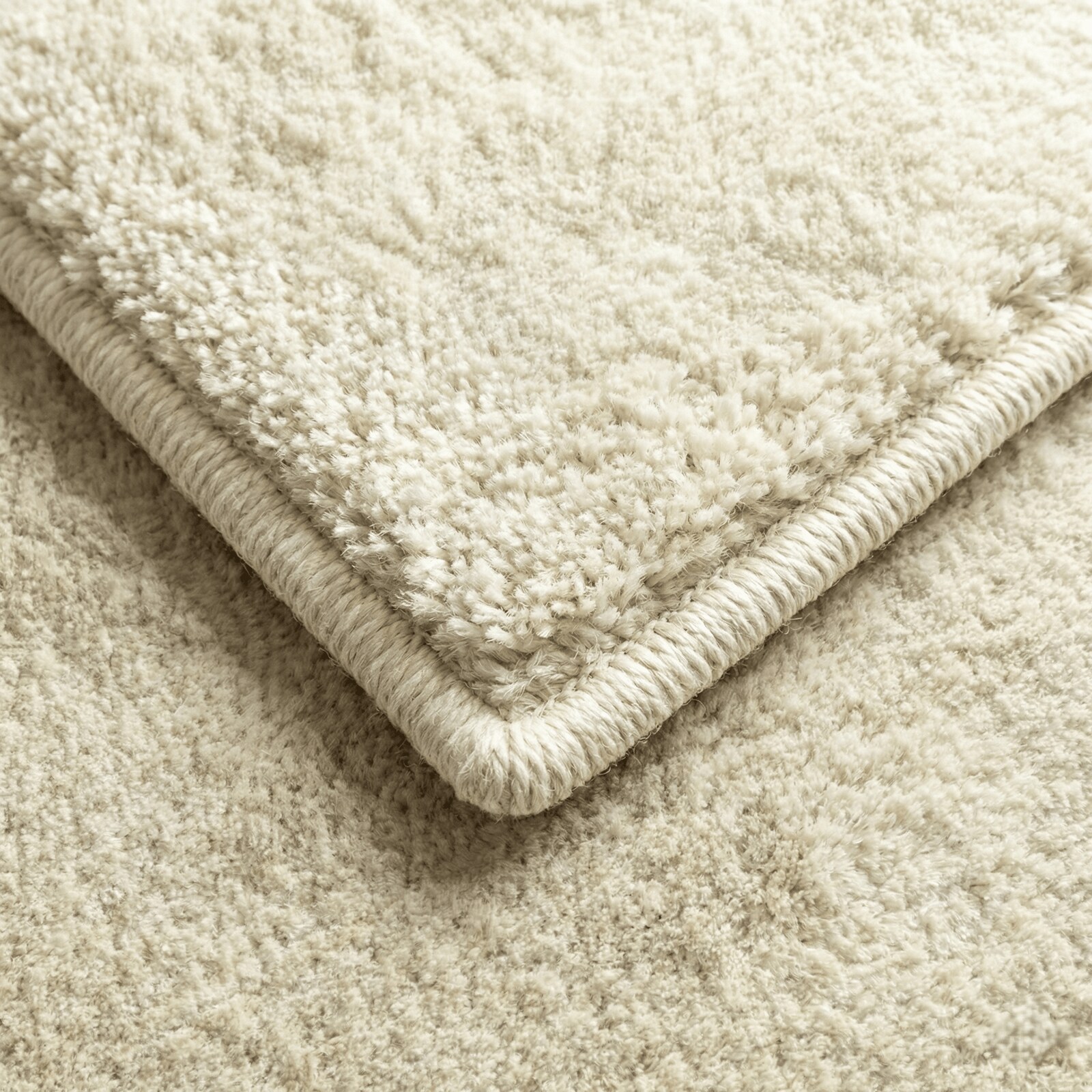
These are colour samples at full size: that way you see the difference in pile and sheen that disappears in a mood photograph. Each tile takes you to the full colour range of that quality in our webshop.
 JAB Anstoetz Infinity
25 colours, plain and smooth
JAB Anstoetz Infinity
25 colours, plain and smooth
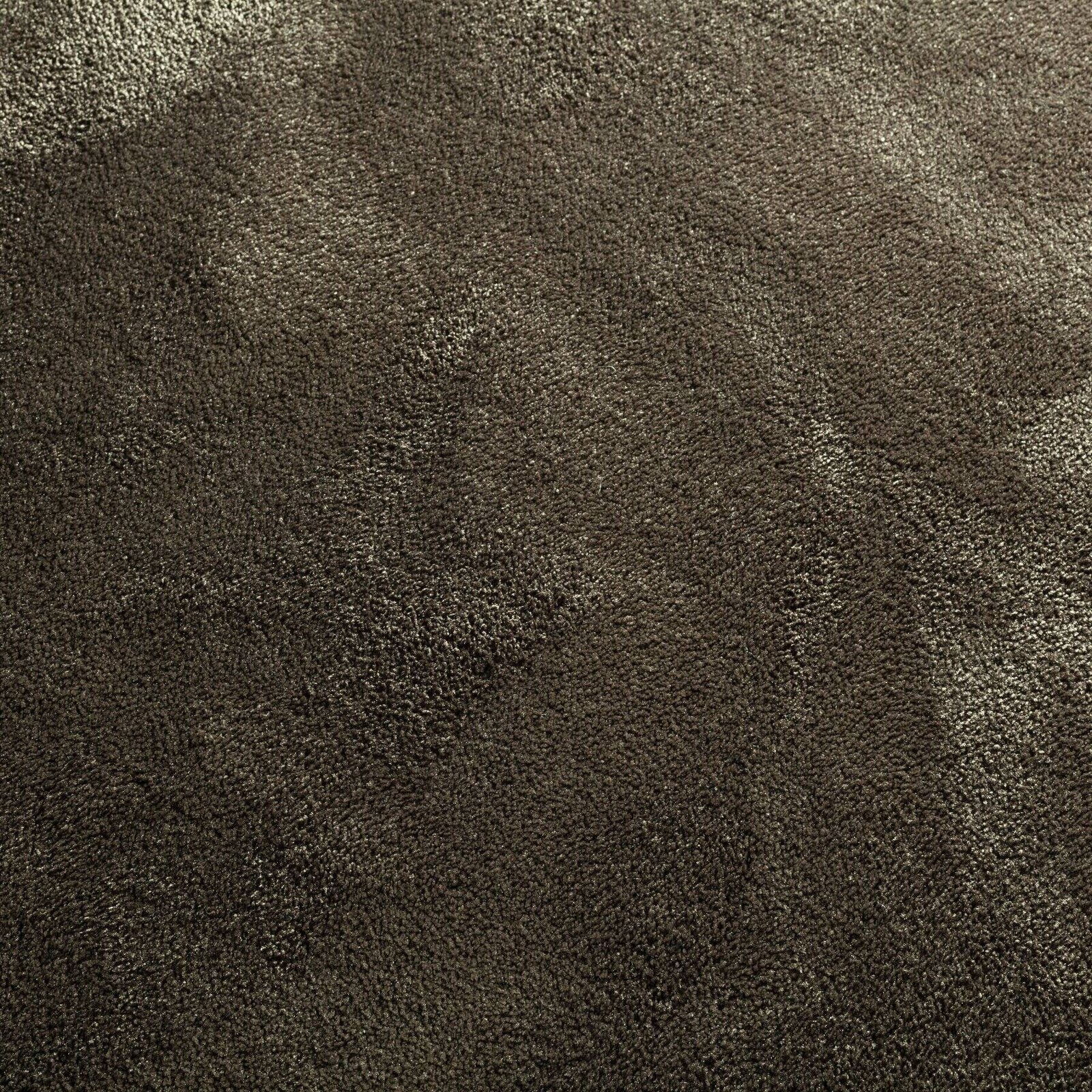 JAB Anstoetz Fame
17 colours, shifting sheen
JAB Anstoetz Fame
17 colours, shifting sheen
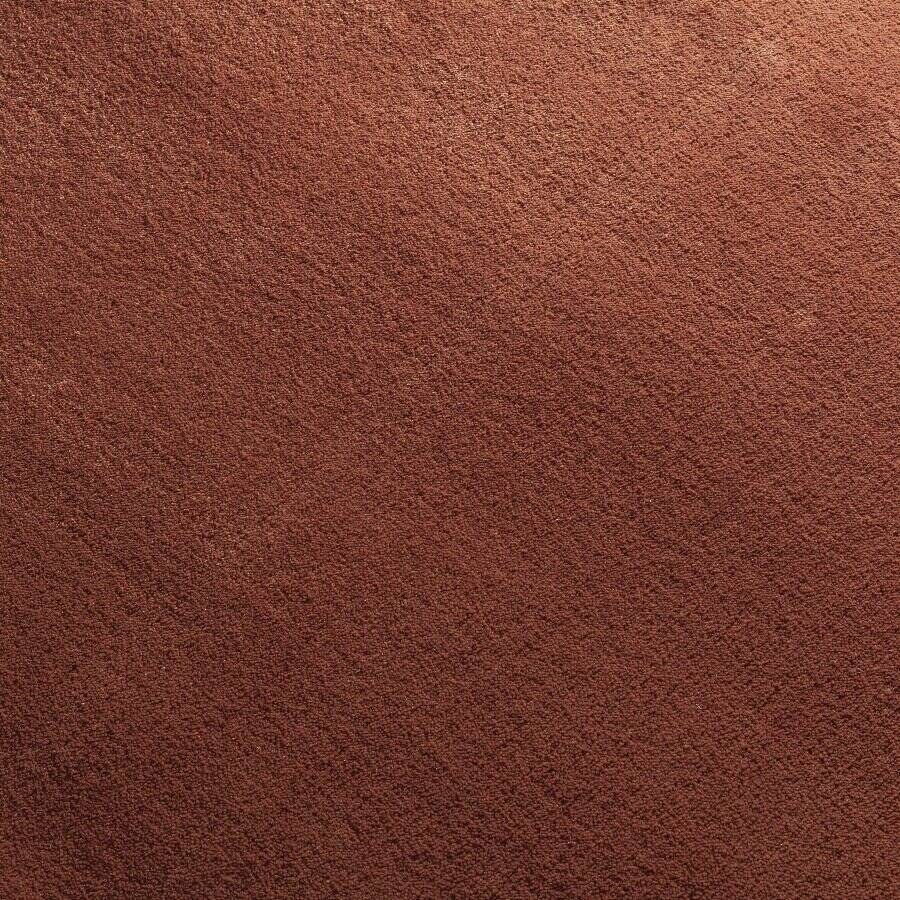 JAB Anstoetz Clarity
15 colours, even and matt
JAB Anstoetz Clarity
15 colours, even and matt
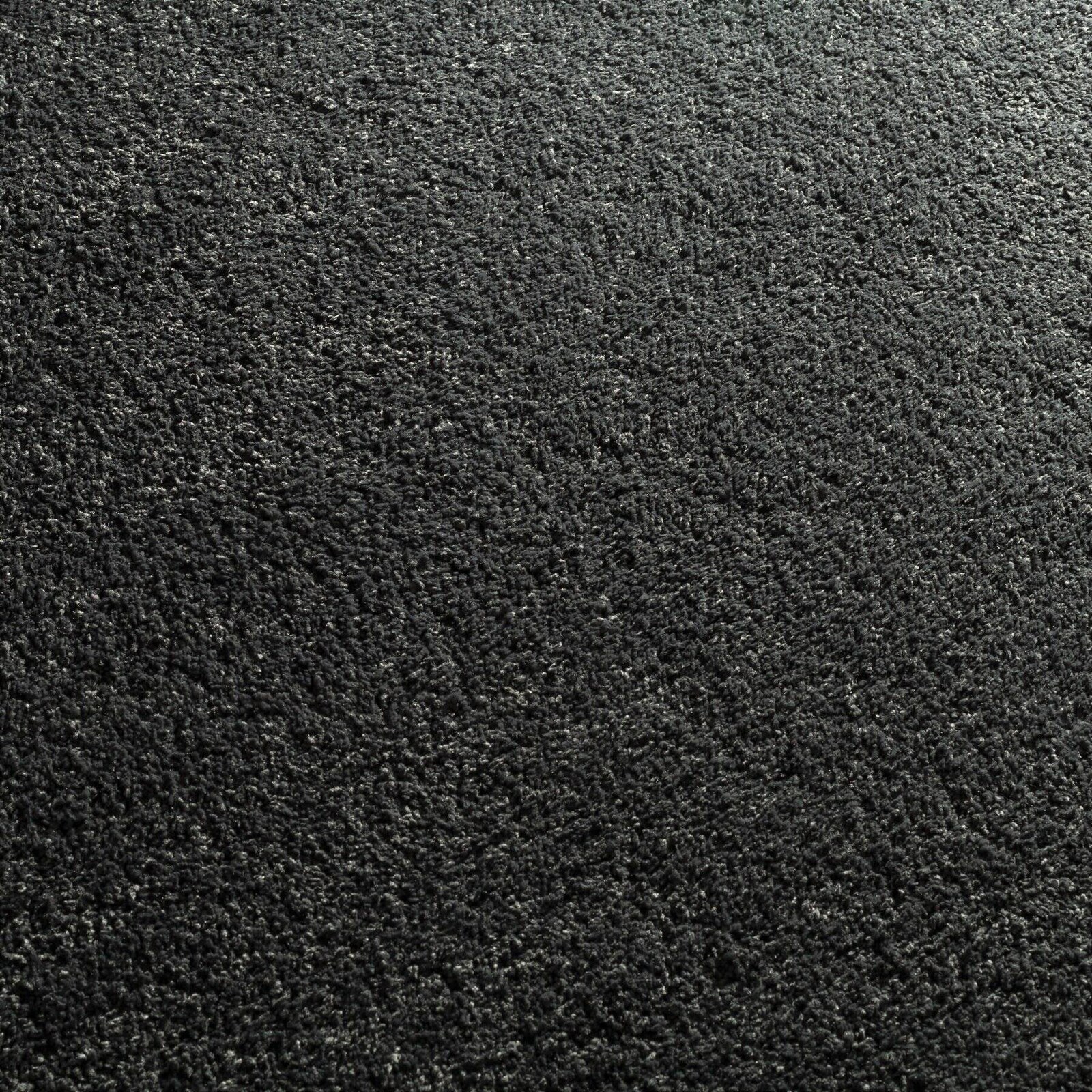 JAB Anstoetz Moonlight
15 colours, dense pile
JAB Anstoetz Moonlight
15 colours, dense pile
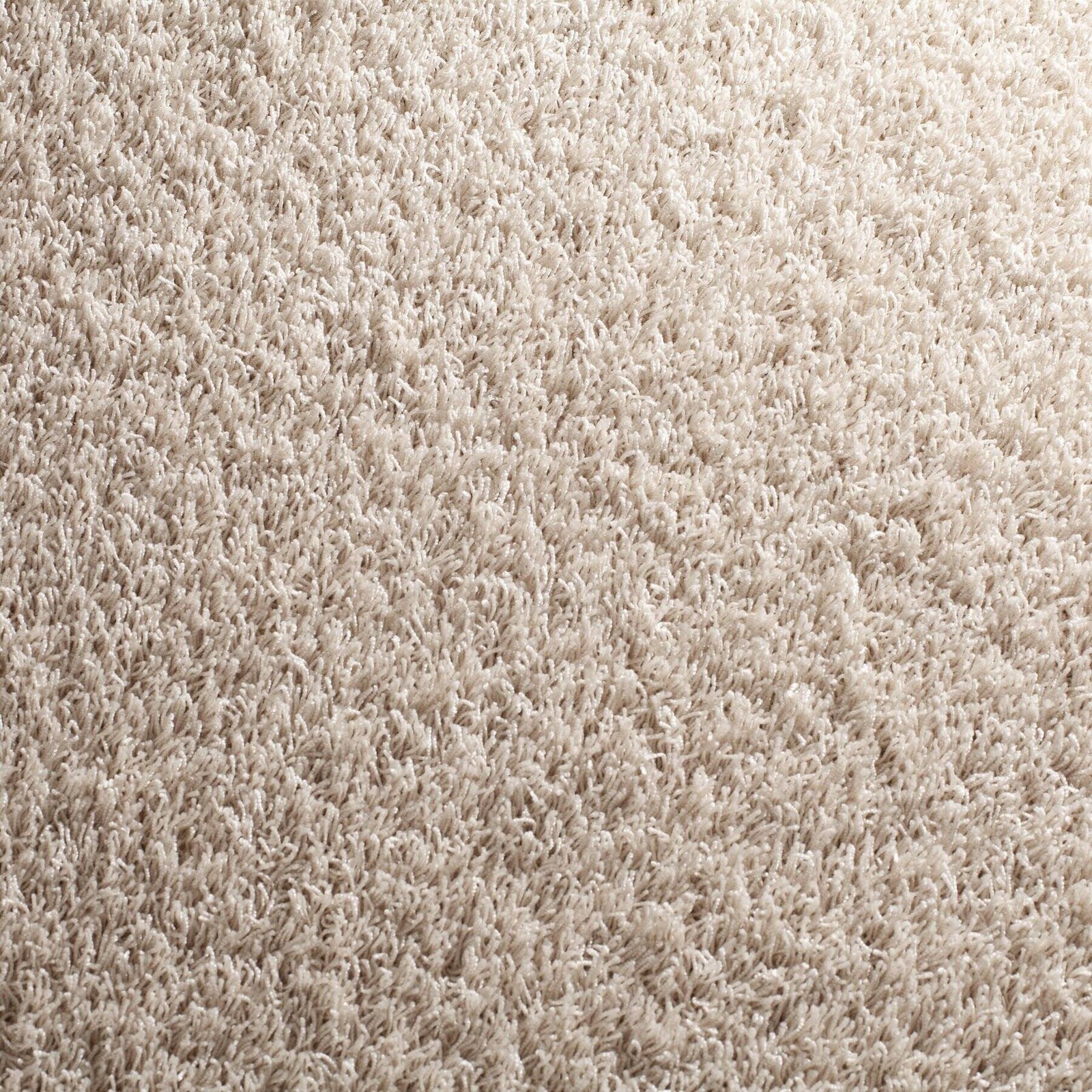 JAB Anstoetz Curly SD
13 colours, long curly pile
JAB Anstoetz Curly SD
13 colours, long curly pile
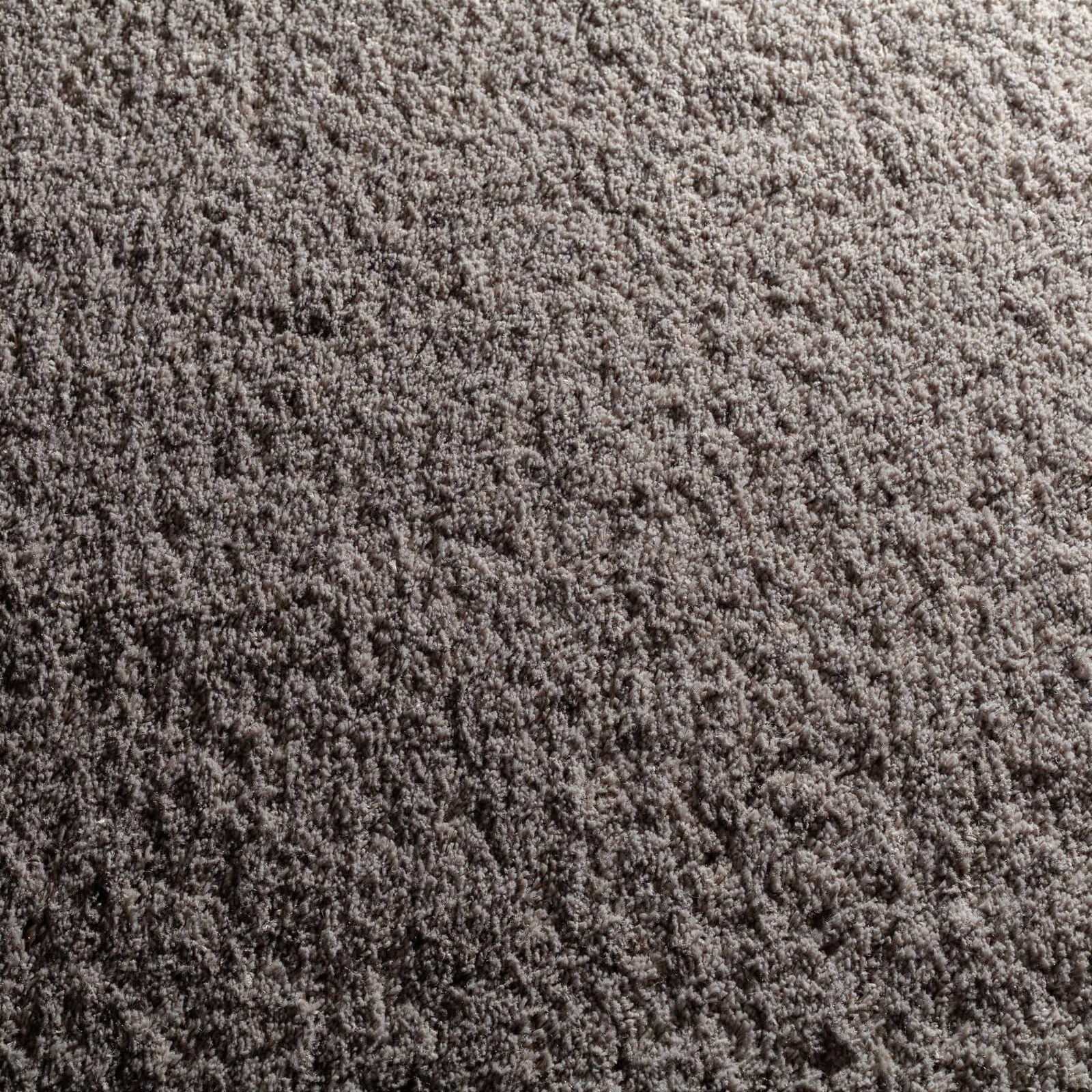 JAB Anstoetz Savanna
13 colours, deep pile and flecked
JAB Anstoetz Savanna
13 colours, deep pile and flecked
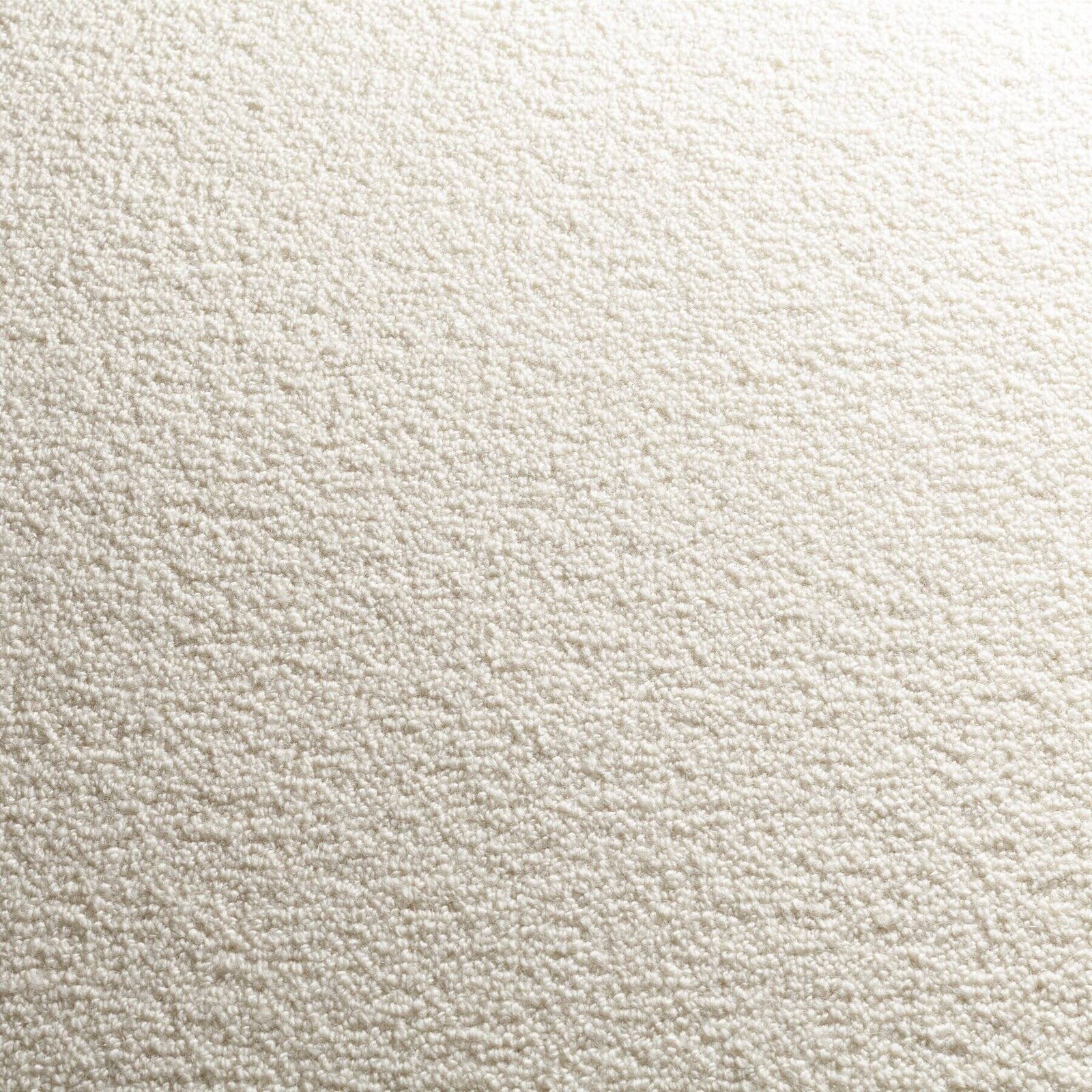 JAB Anstoetz Alpaca
4 colours, short dense pile
JAB Anstoetz Alpaca
4 colours, short dense pile
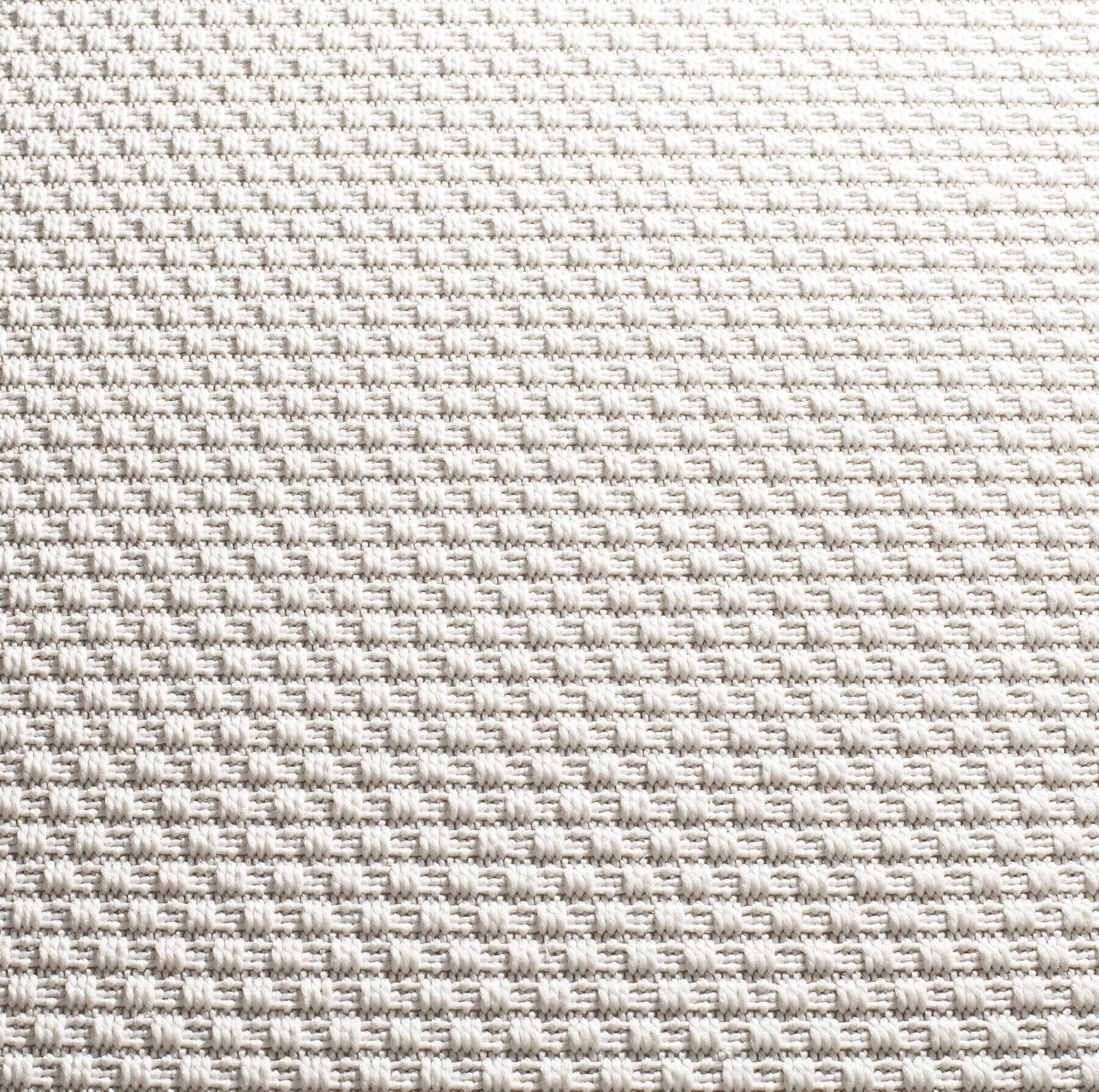 JAB Anstoetz Basket
3 colours, visible weave structure
JAB Anstoetz Basket
3 colours, visible weave structure
Pile height and construction
Pile height is a choice between soft and easy. A long pile feels luxurious and dampens the most sound, but holds crumbs and shows footprints. A short, dense pile looks crisper, vacuums easily and tolerates chair legs. Under a dining table short almost always wins; beside a bed or in a reading corner it may be long.
Hand-knotted, tufted or woven: that is the construction. In a hand-knotted rug every knot is placed into the warp by hand; that is the most durable and the most expensive method, and the only one where the pattern is visible on the back as well. In a tufted rug the loops are shot into a backing by machine and fixed at the back with a second layer. In a woven rug the pile is anchored in the weave itself, which gives a flatter and firmer whole.
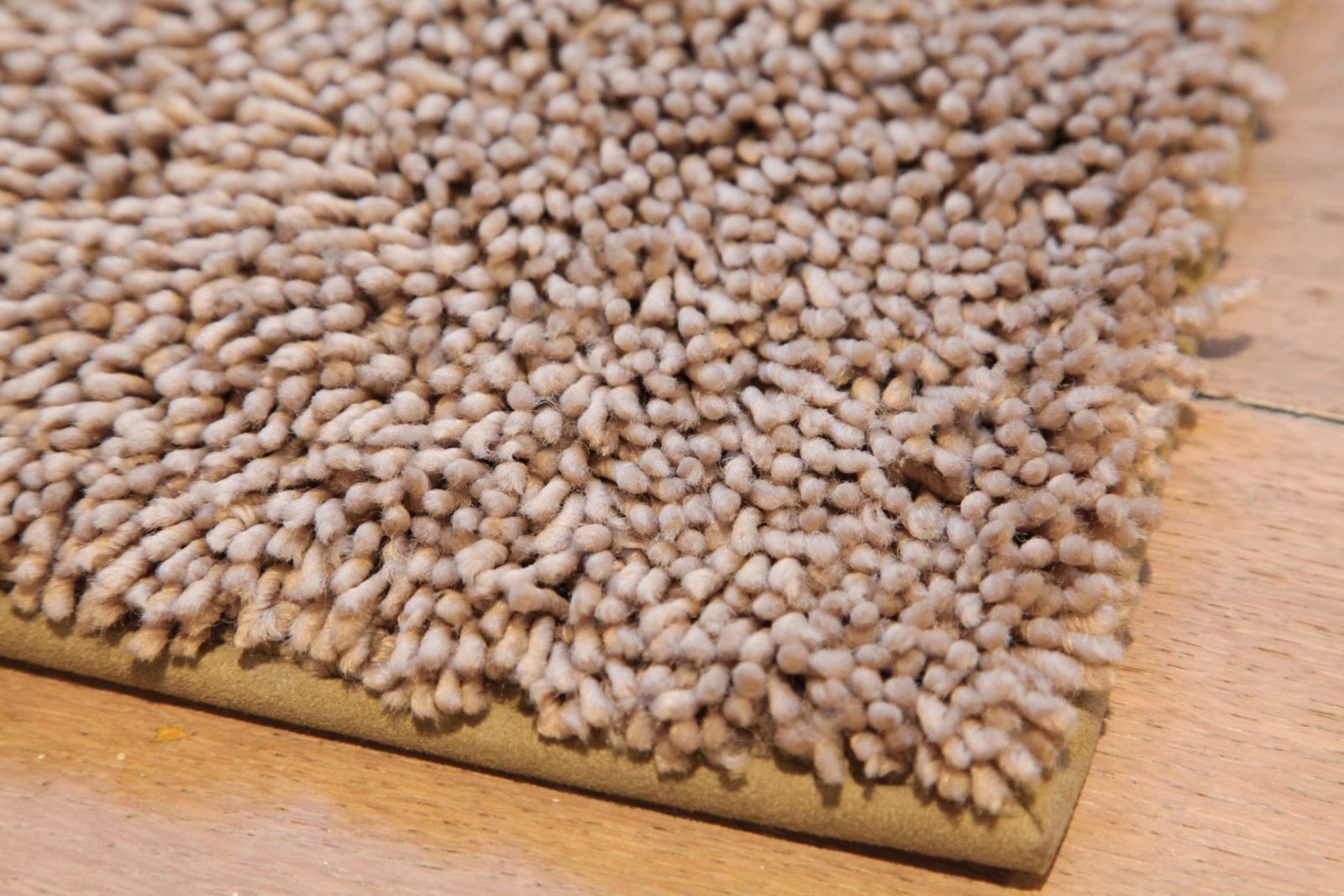
Loop or cut changes the look more than the colour does. If the loop stays closed you get a grainy, matt surface that reflects little light and wears extremely well. If the loop is cut open, the fibres stand free and a soft, lustrous pile appears that changes colour with the angle of the light. Many qualities combine both, which creates a pattern in the relief without any colour motif being needed.
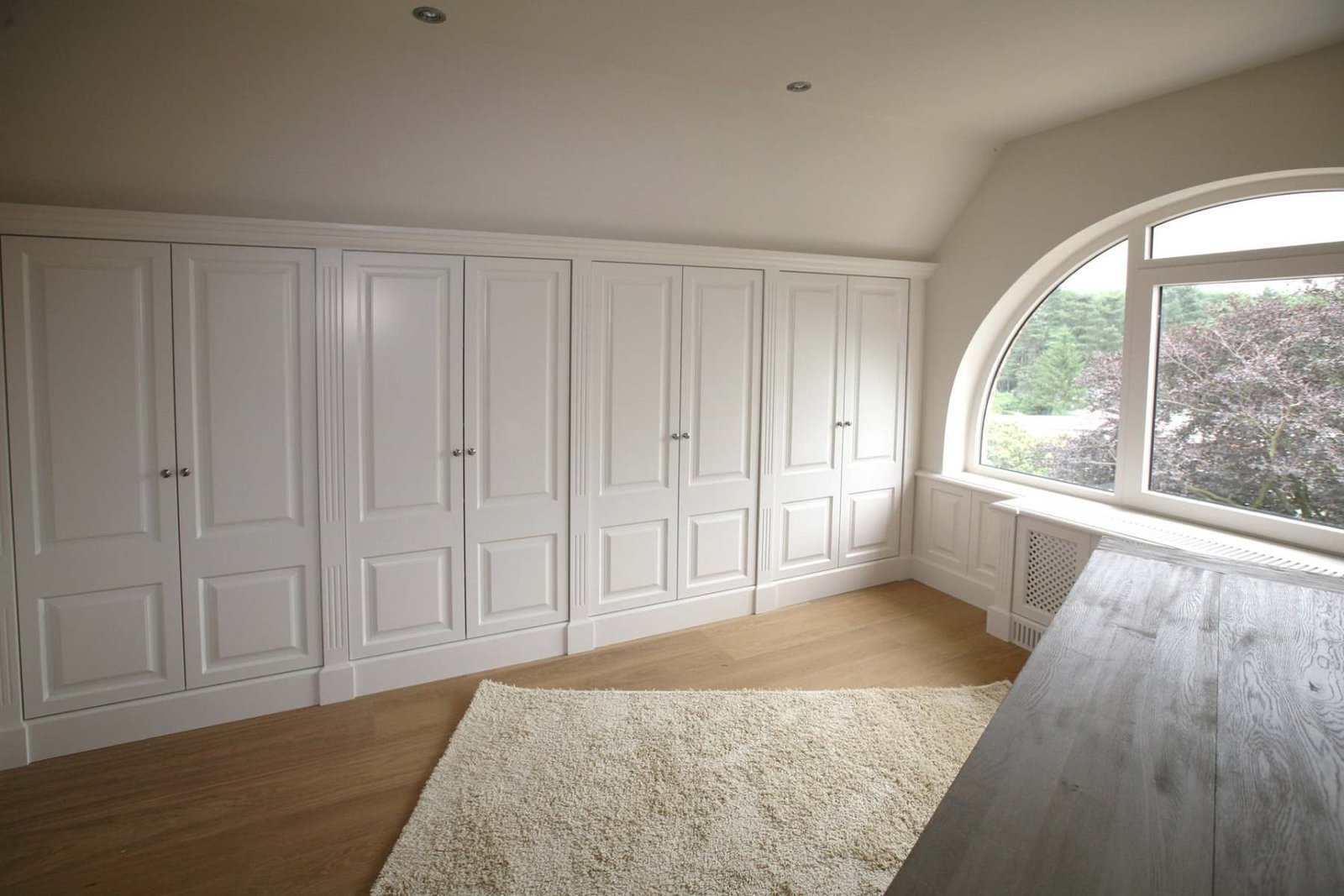
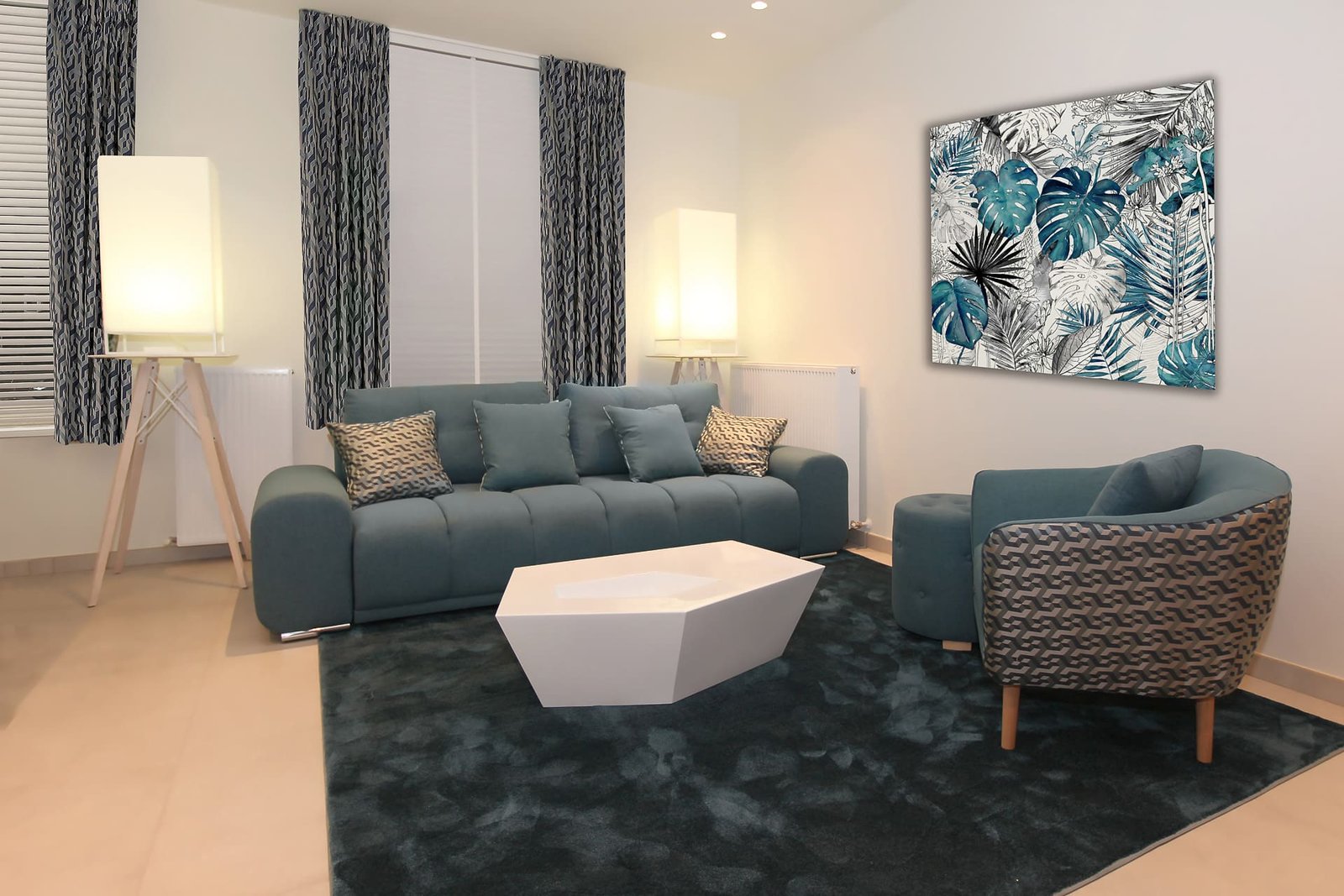

 Everything matched to each other The rug is chosen next to the curtain fabric. We lay the rug samples next to the fabric of your curtains and the upholstery of your furniture. Only once that palette is right do we choose the wall colour together.
The edge finish
Every cut edge has to be finished. Cut a rug to size and the backing lies open and the pile starts to come loose along the edge. So we bind every side: with a tape, with a folded and stitched edge, or with a folded band in a different material. That is also the moment at which you truly make the rug your own.
The width of the binding determines how pronounced it is. A narrow tape of about a centimetre disappears and lets the rug surface do the work. A wide band of several centimetres draws a clear line around the rug and works like a frame. In a room full of straight lines that framing effect can be exactly the resting point that was missing.
Cotton, linen, leather or nubuck. Cotton and linen tie in with the rest of the textiles and keep everything soft. Leather and nubuck give a crisp, furniture-like edge that goes well with a leather sofa or a dark wooden floor. You choose the colour tone on tone, or deliberately contrasting so the shape of the rug is sharply outlined.

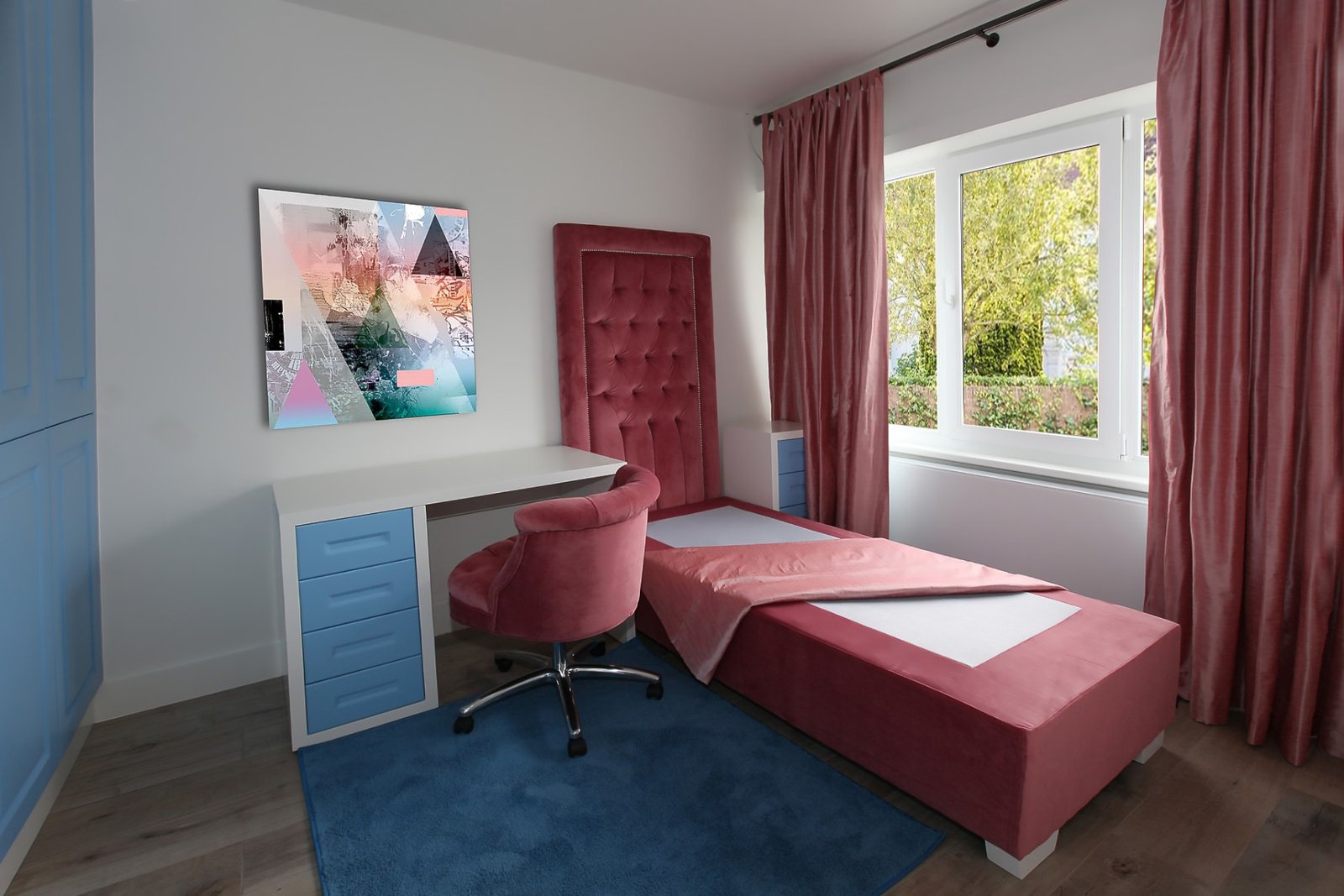
In every room
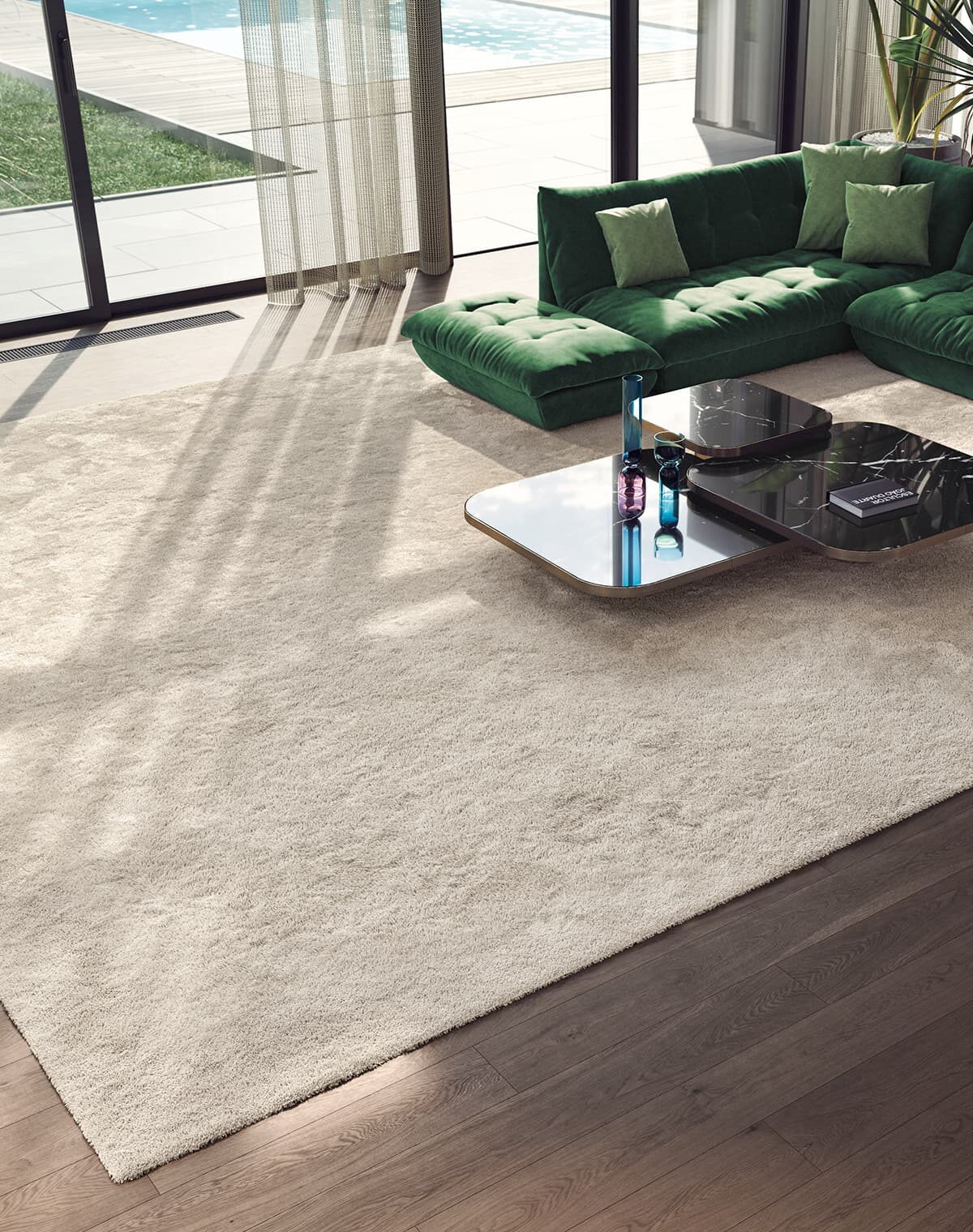
The same working method gives a different result in every room, because the size, the shape and the colour come from that room itself each time.


Price
What a made-to-measure rug costs
We calculate per rug, not per package. The price follows from the surface area, the quality you choose and the way the edge is finished. On the quotation those items appear separately, so you see what a wider leather binding or a higher pile costs you and can shift things yourself. No hidden costs, and nothing is ordered before you agree.
The design fee falls away when we carry out the interior. If you buy the rug and the rest of the interior from us, you pay nothing for the measuring, the drawing and the advice. The full arrangement is set out on rates and 3D.
The classes above are relative and are not prices: they only show where your choices push the cost. What your rug costs is set out item by item in the quotation after the measuring.
The 3D configurator
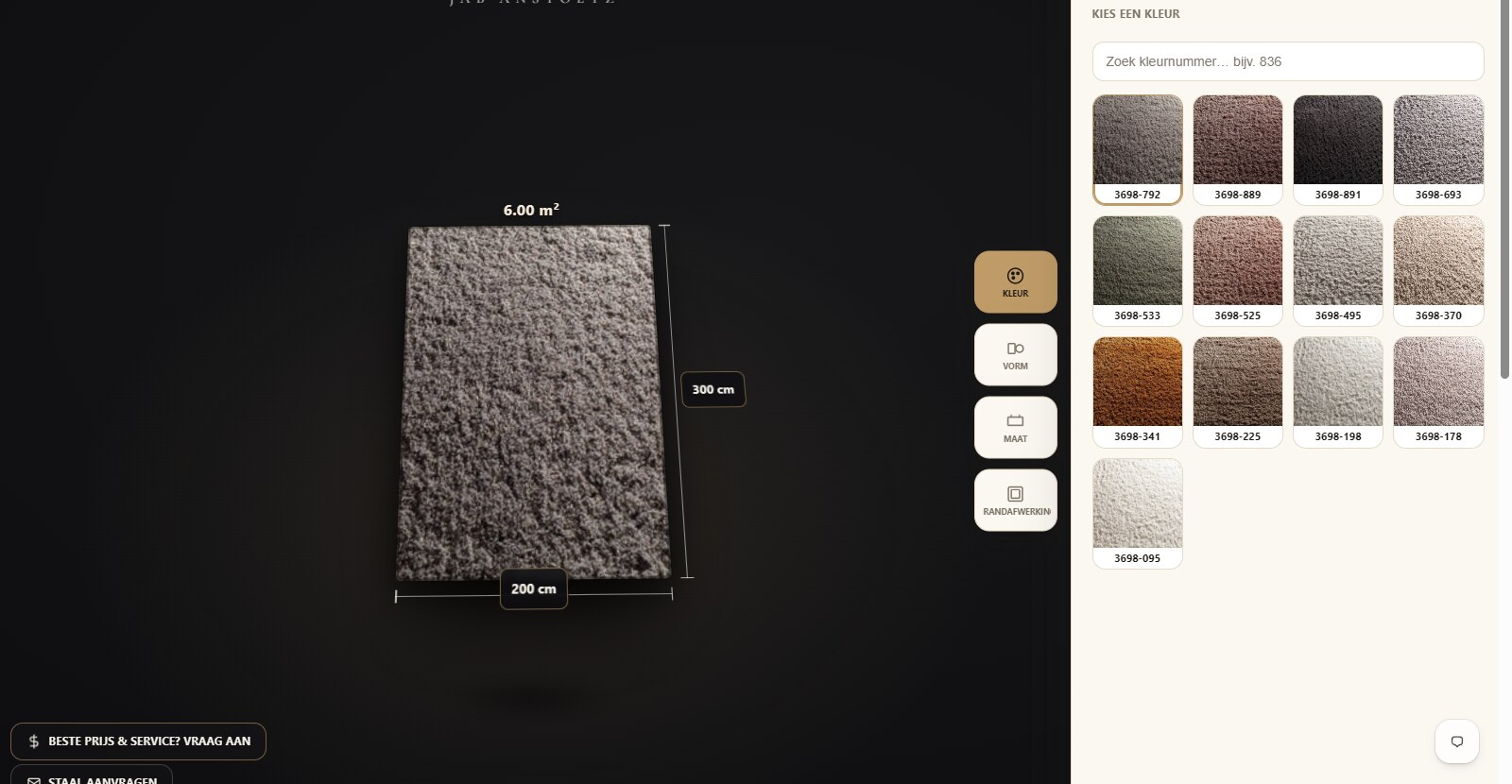
You see your rug before you order it. In our 3D configurator you first choose the quality, then the colour from the full range of that quality, then the shape and the size, and finally the edge finish. The rug turns on screen while you choose, with the dimensions and the surface area alongside. So you are not left guessing, a small swatch in hand, how a colour will look across six square metres.
You enter the size in centimetres. You are not tied to fixed formats: enter what you need, and the configurator calculates the surface area along with it. If you are hesitating between two sizes, enter them one after the other and compare straight away.
What you put together can be checked by us. From the configurator you request a physical sample or send us your combination. We check the size against your plan, because a room that narrows off at an angle or a door that swings over the rug is something a configurator does not see.
Ready-made from the webshop
This is the complete list, not a selection. As main distributor we have the entire JAB rug collection: 61 qualities and together 492 colours. Each quality below takes you to its own colour range in our webshop, where you see the shades side by side.
The photographs in the webshop are colour samples, not mood images. That is deliberate: you are not buying an existing rug here but a quality and a colour, which is then cut to your size and bound. Feel free to request a physical sample, or come and look in the showroom.
JAB Anstoetz Infinity
25 colours
JAB Anstoetz Fame
17 colours
JAB Anstoetz Clarity
15 colours
 JAB Anstoetz Kiss
15 colours
JAB Anstoetz Moonlight
15 colours
JAB Anstoetz Kiss
15 colours
JAB Anstoetz Moonlight
15 colours
 JAB Anstoetz Moto
15 colours
JAB Anstoetz Moto
15 colours
 JAB Anstoetz Mystic
15 colours
JAB Anstoetz Mystic
15 colours
 JAB Anstoetz Twinkle
14 colours
JAB Anstoetz Curly SD
13 colours
JAB Anstoetz Twinkle
14 colours
JAB Anstoetz Curly SD
13 colours
 JAB Anstoetz Essential
13 colours
JAB Anstoetz Essential
13 colours
 JAB Anstoetz Jamaica
13 colours
JAB Anstoetz Jamaica
13 colours
 JAB Anstoetz Plaza SD
13 colours
JAB Anstoetz Savanna
13 colours
JAB Anstoetz Plaza SD
13 colours
JAB Anstoetz Savanna
13 colours
 JAB Anstoetz Cosmic
10 colours
JAB Anstoetz Cosmic
10 colours
 JAB Anstoetz Galaxy
9 colours
JAB Anstoetz Galaxy
9 colours
 JAB Anstoetz Prestige
9 colours
JAB Anstoetz Prestige
9 colours
 JAB Anstoetz Relax
9 colours
JAB Anstoetz Relax
9 colours
 JAB Anstoetz Allure
8 colours
JAB Anstoetz Allure
8 colours
 JAB Anstoetz Cameo SD
8 colours
JAB Anstoetz Cameo SD
8 colours
 JAB Anstoetz Chill
8 colours
JAB Anstoetz Chill
8 colours
 JAB Anstoetz Cool
8 colours
JAB Anstoetz Cool
8 colours
 JAB Anstoetz Earth
8 colours
JAB Anstoetz Earth
8 colours
 JAB Anstoetz Hero
8 colours
JAB Anstoetz Hero
8 colours
 JAB Anstoetz Liberty
8 colours
JAB Anstoetz Liberty
8 colours
 JAB Anstoetz Nightfall
8 colours
JAB Anstoetz Nightfall
8 colours
 JAB Anstoetz Ocean SD
8 colours
JAB Anstoetz Ocean SD
8 colours
 JAB Anstoetz Powder
8 colours
JAB Anstoetz Powder
8 colours
 JAB Anstoetz Shadow SD
8 colours
JAB Anstoetz Shadow SD
8 colours
 JAB Anstoetz Sky
8 colours
JAB Anstoetz Sky
8 colours
 JAB Anstoetz Twilight SD
8 colours
JAB Anstoetz Twilight SD
8 colours
 JAB Anstoetz Wind
8 colours
JAB Anstoetz Wind
8 colours
 JAB Anstoetz Yak
8 colours
JAB Anstoetz Yak
8 colours
 JAB Anstoetz Amaze
7 colours
JAB Anstoetz Amaze
7 colours
 JAB Anstoetz Bay
7 colours
JAB Anstoetz Bay
7 colours
 JAB Anstoetz Cocoon
7 colours
JAB Anstoetz Cocoon
7 colours
 JAB Anstoetz Glamour
7 colours
JAB Anstoetz Glamour
7 colours
 JAB Anstoetz Luna
7 colours
JAB Anstoetz Luna
7 colours
 JAB Anstoetz Mask
7 colours
JAB Anstoetz Mask
7 colours
 JAB Anstoetz Punto
7 colours
JAB Anstoetz Punto
7 colours
 JAB Anstoetz Loop
6 colours
JAB Anstoetz Loop
6 colours
 JAB Anstoetz Noon
6 colours
JAB Anstoetz Noon
6 colours
 JAB Anstoetz Pearl
6 colours
JAB Anstoetz Pearl
6 colours
 JAB Anstoetz Divine
5 colours
JAB Anstoetz Divine
5 colours
 JAB Anstoetz Dot
5 colours
JAB Anstoetz Dot
5 colours
 JAB Anstoetz Elm
5 colours
JAB Anstoetz Elm
5 colours
 JAB Anstoetz Fjord
5 colours
JAB Anstoetz Fjord
5 colours
 JAB Anstoetz Morning
5 colours
JAB Anstoetz Morning
5 colours
 JAB Anstoetz Night
5 colours
JAB Anstoetz Night
5 colours
 JAB Anstoetz Zoom
5 colours
JAB Anstoetz Alpaca
4 colours
JAB Anstoetz Zoom
5 colours
JAB Anstoetz Alpaca
4 colours
 JAB Anstoetz Nebula
4 colours
JAB Anstoetz Nebula
4 colours
 JAB Anstoetz Oasis
4 colours
JAB Anstoetz Oasis
4 colours
 JAB Anstoetz Tobago
4 colours
JAB Anstoetz Basket
3 colours
JAB Anstoetz Tobago
4 colours
JAB Anstoetz Basket
3 colours
 JAB Anstoetz Dreamer
3 colours
JAB Anstoetz Dreamer
3 colours
 JAB Anstoetz Goat
3 colours
JAB Anstoetz Goat
3 colours
 JAB Anstoetz Sol
3 colours
JAB Anstoetz Sol
3 colours
 JAB Anstoetz Trinidad
3 colours
JAB Anstoetz Trinidad
3 colours
 JAB Anstoetz Rocca
2 colours
JAB Anstoetz Rocca
2 colours
 JAB Anstoetz Sands
2 colours
JAB Anstoetz Sands
2 colours
 JAB Anstoetz Stone
2 colours
JAB Anstoetz Stone
2 colours
Options
Everything that is possible
None of this is automatically included in every rug; it depends on your space and your budget. Say so during the measuring, and we will draw it in so you see straight away what it means.
Option 01
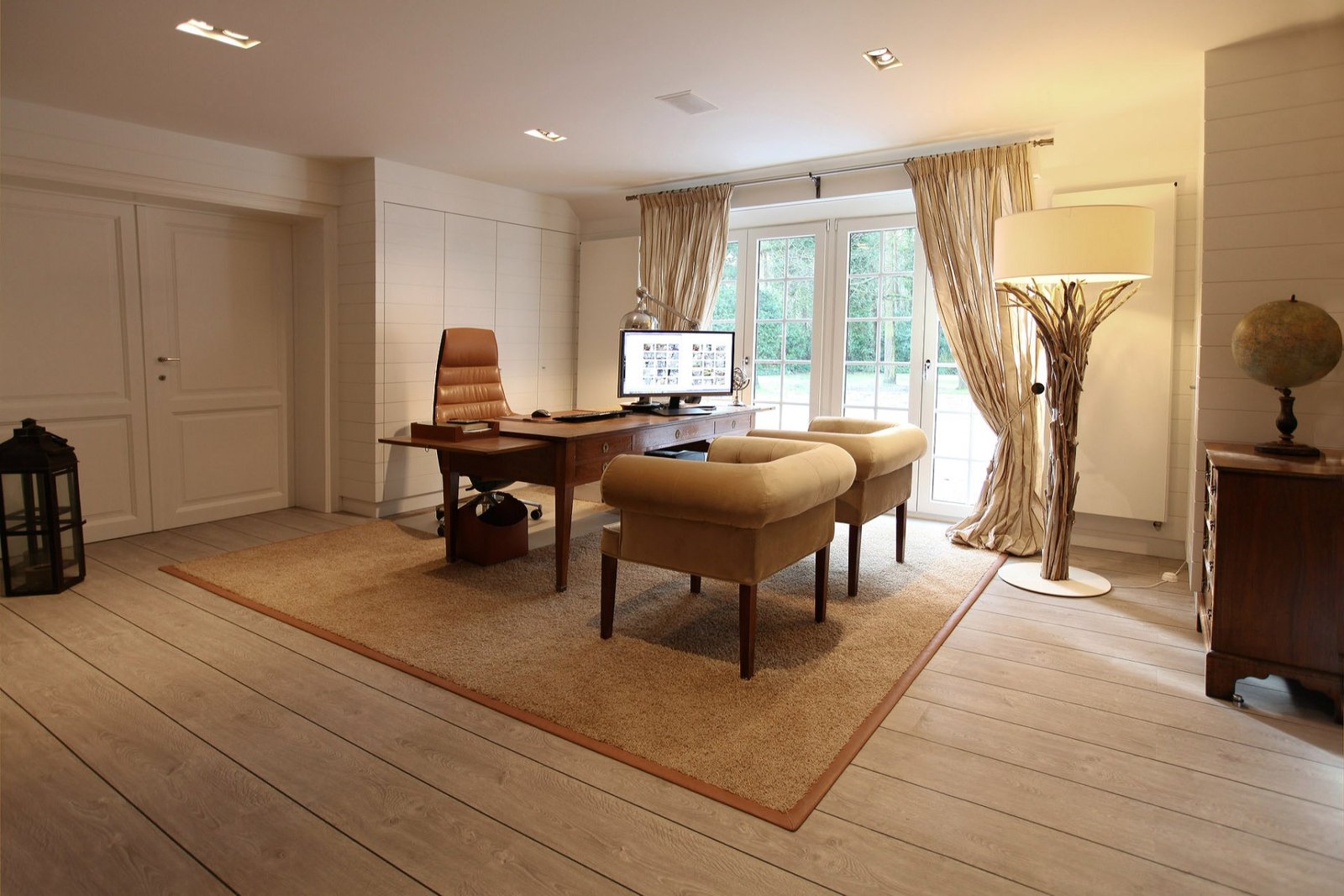
A frame of a few centimetres around the rug in a second colour. That sharpens the shape and lets you bring back an accent colour from the room without the whole surface taking on that colour.

Option 02
In a bedroom or a narrow room there is often only a precise strip left. Cut to size, the rug fits there without your having to push it under a cupboard or let it curl up.

Option 03
A seating area with a corner sofa often calls for a format you find nowhere as standard. One made-to-measure rug reads more calmly than two separate rugs sliding about next to each other.
Option 04
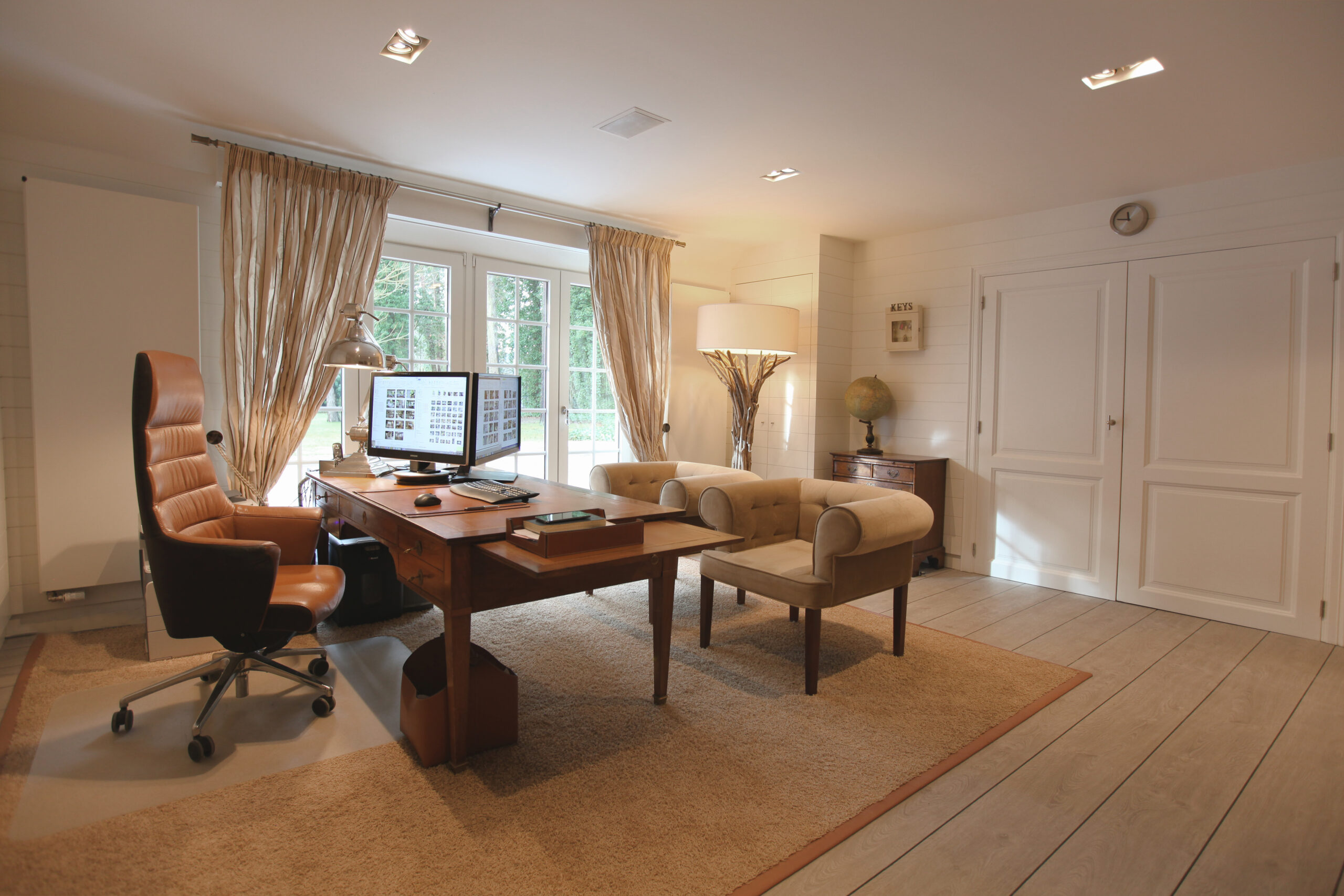
If you want the rooms to hang together, you order the same quality in different sizes and possibly in a second shade. That is only possible if you have each room made to measure.
Option 05
For large spaces it is worth working wall to wall with widths of four or five metres. That gives one continuous surface without edges, and works out cheaper per square metre.

Option 06
Your own colour field, a division into blocks or a motif in two pile heights is among the possibilities. That calls for more drawing beforehand and a longer execution, but afterwards it exists nowhere else.
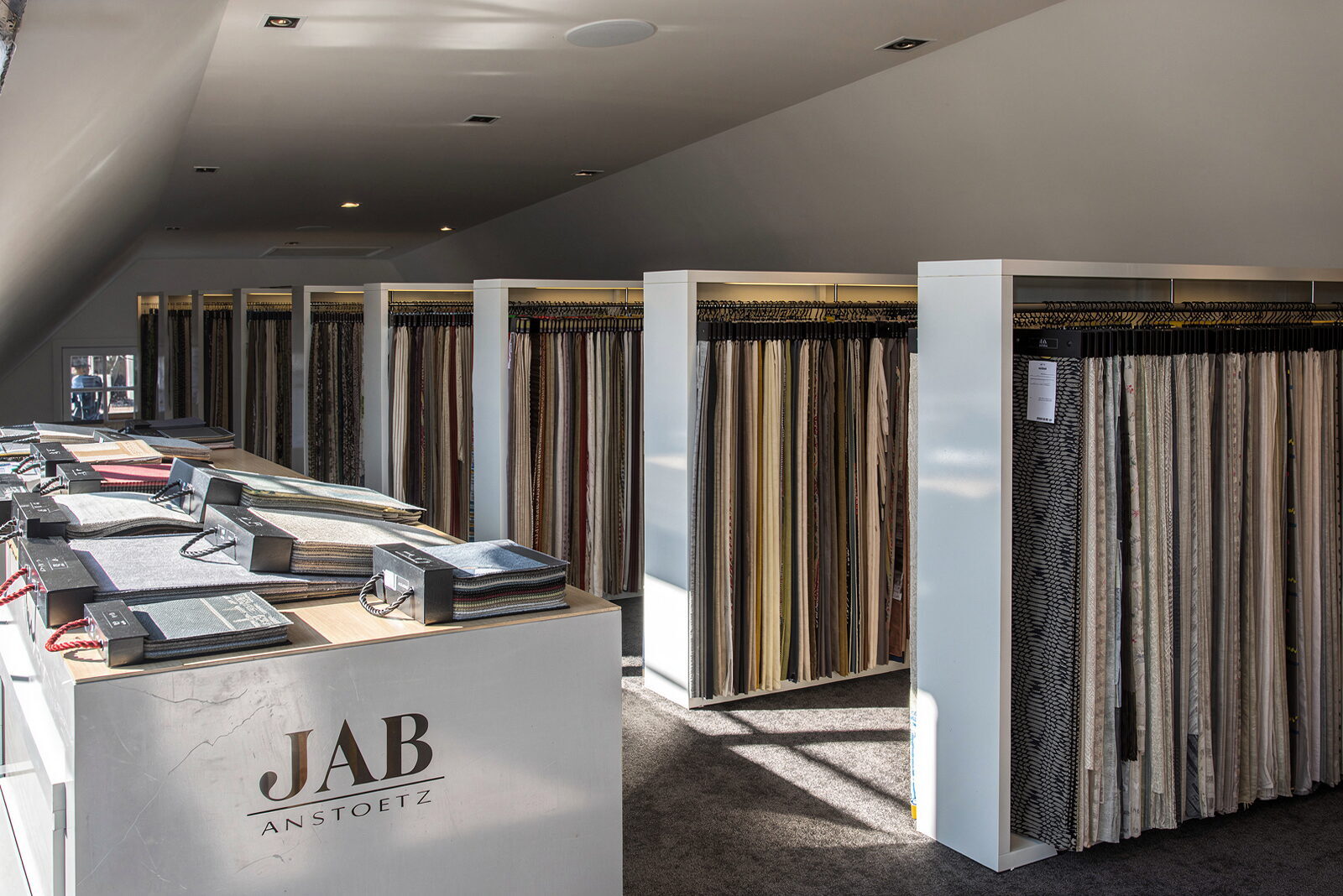 Viewing samples Colour is judged next to your own floor. In our showroom in Kapellen the rug samples, the curtain fabrics and the wood samples lie together. Cannot make it? We come to you with the samples.
Care and stains
Vacuuming is ninety per cent of the care. What wears a rug out is not the walking but the sand that settles at the base of the pile and scours the fibre like sandpaper with every step. Vacuuming regularly in the direction of the pile keeps that away. With a long pile, set the brush higher or switch off the rotating brush, otherwise you pull fibres loose.
With a stain the first minute counts. Take up liquid by blotting with a white cloth, from the edge towards the middle, and do not rub: rubbing pushes the stain deeper into the pile and damages the fibre. Let solid dirt dry first and break it away before you vacuum. Use as little water as possible, and certainly no soap that foams, because soap residue attracts fresh dirt afterwards.
Every fibre asks for something different. Wool tolerates neither bleach nor hot water; lukewarm water and a neutral product usually do. Synthetic yarns tolerate far more, including machine cleaning. Silk and viscose are best treated professionally, because those stains mark as soon as they get wet.
Prevention makes the biggest difference. A doormat at every outside door keeps most of the sand out, felt pads under chair and table legs prevent indentations and a non-slip underlay keeps the rug in place so no creases form. Turn a rug that lies in the sun half a turn now and then, and it will fade evenly.

Execution
How we work

We call round, measure the room and note the walking lines, the doors and what is staying put. That conversation is free of charge and commits you to nothing.
The size and the shape are drawn onto your floor plan, with the furniture in place. That way you see in advance how much floor is left all around.
We bring the colour samples along and lay them next to your floor, your sofa and your curtain fabric, in daylight. Never under shop lighting alone.
You receive a quotation in which the quality, the surface area, the binding and the laying appear separately. Nothing is ordered until you agree.
The rug is cut to your size and bound in the chosen material, including curved edges and cut-outs.
Our own team brings the rug, lays it and finishes the joins. Anything that does not look as agreed, we put right.
Underfloor heating and acoustics
A rug works perfectly well over underfloor heating. What matters is the heat transmission of the whole: the rug and the underlay together must not hold the heat back. So choose a pile that is not too thick and a thin, heat-permeable underlay, or leave the underlay out. A thick rubber mat under a deep-pile rug is the combination you do want to avoid.
Let the heating get used to the temperature gently. Turn the underfloor heating down when you lay a new rug and build it up over a few days. That way the weave does not pull and the rug stays flat. We tell you during the measuring which qualities are suitable in your case.
For acoustics, surface area matters more than thickness. If you suffer from echo in a room with a hard floor, plenty of glass and little textile, you gain most from a large rug. A small rug in the middle of a large room is barely audible. Combine it with curtains in a heavy fabric and with shutters or venetian blinds, and the difference is immediately audible.


Where we work
Our showroom is in Kapellen, but we come to you. We measure on site, samples in hand, because colour and size are judged in your own room and in your own light. We work throughout Flanders and Brussels, and regularly in the Netherlands and Luxembourg.
The rugs you see on this page lie all over the country. In Antwerp, Knokke, Ghent, Brussels, Hamont, Schoten, Overijse, Sint-Niklaas and Beerse, in ordinary homes just as much as in penthouses and offices. The method is the same every time: measure, draw, lay out samples, cut and install.
The rug is rarely the only thing. People often renew the curtains, the poles and tracks or the tiebacks at the same time. That makes sense, because the fabrics and the colours are then matched in one go. If it concerns a whole house, take a look at our complete interior.
More than rugs
Everything you see here, we draw and install ourselves. Click through to the room or the service you are looking for.
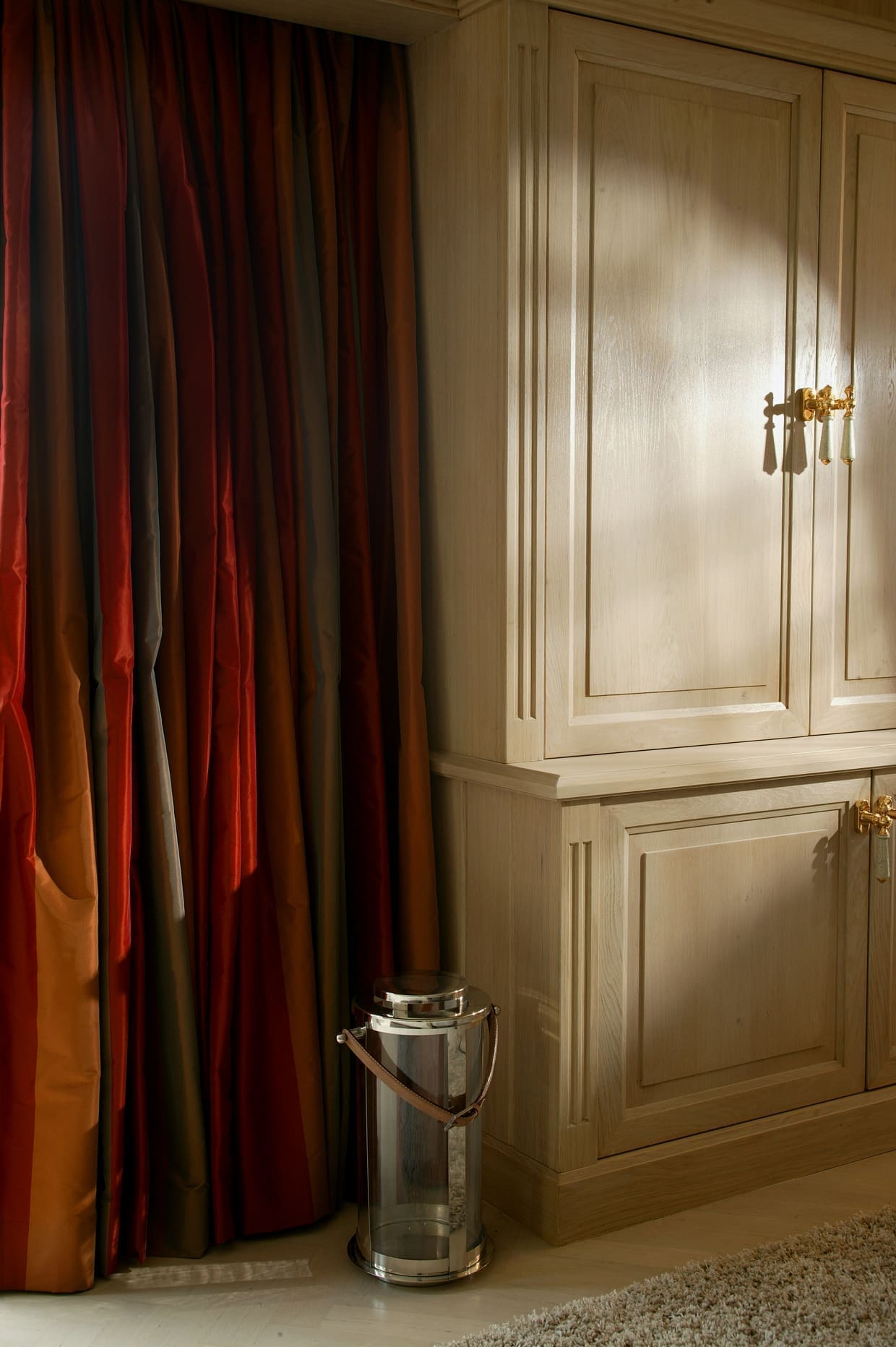 Curtains
Measured, sewn to size and installed by us.
View
Curtains
Measured, sewn to size and installed by us.
View
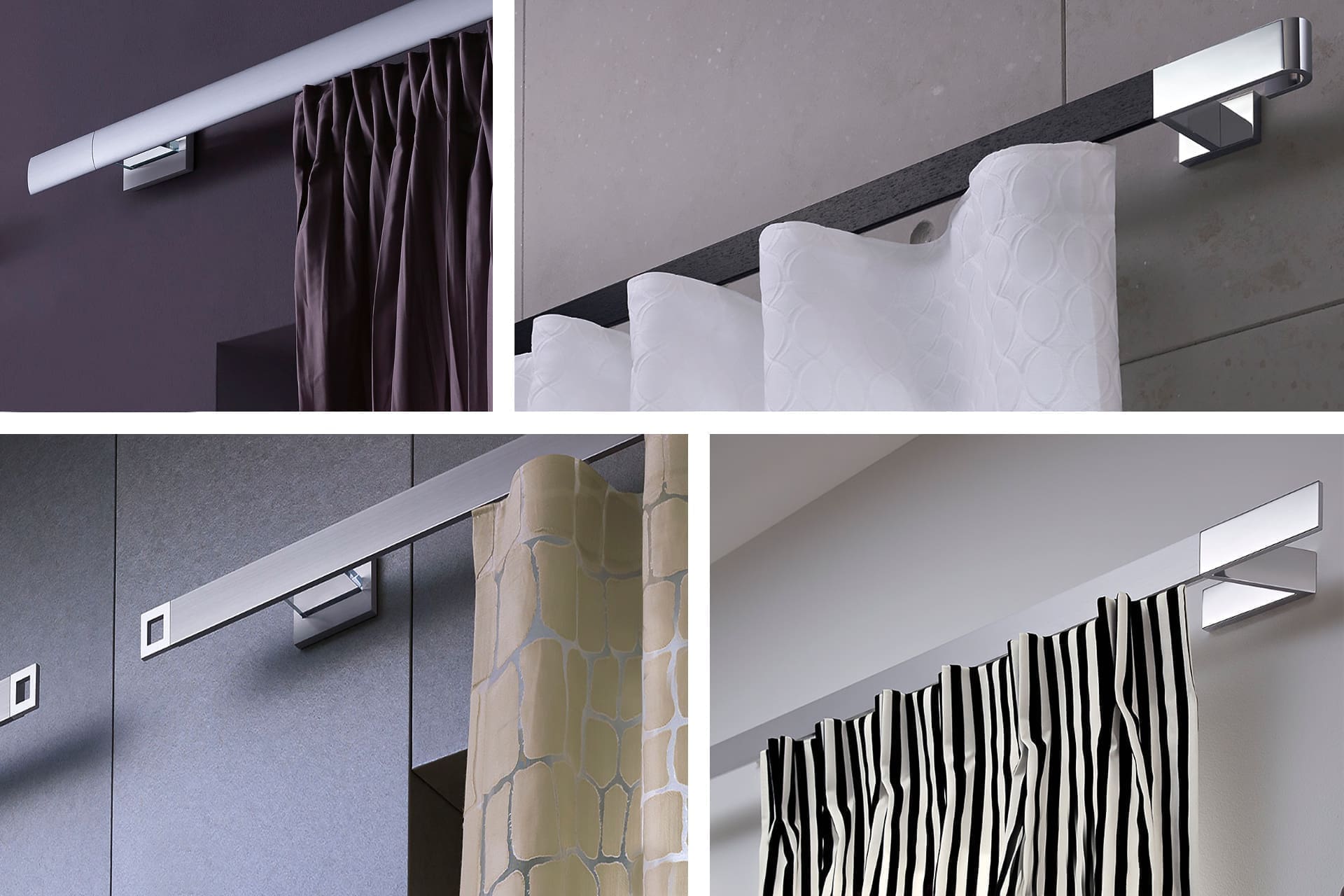 Poles and tracks
The fixing that suits the fabric and the window.
View
Poles and tracks
The fixing that suits the fabric and the window.
View
 Tiebacks
The detail that gives a curtain its shape.
View
Tiebacks
The detail that gives a curtain its shape.
View
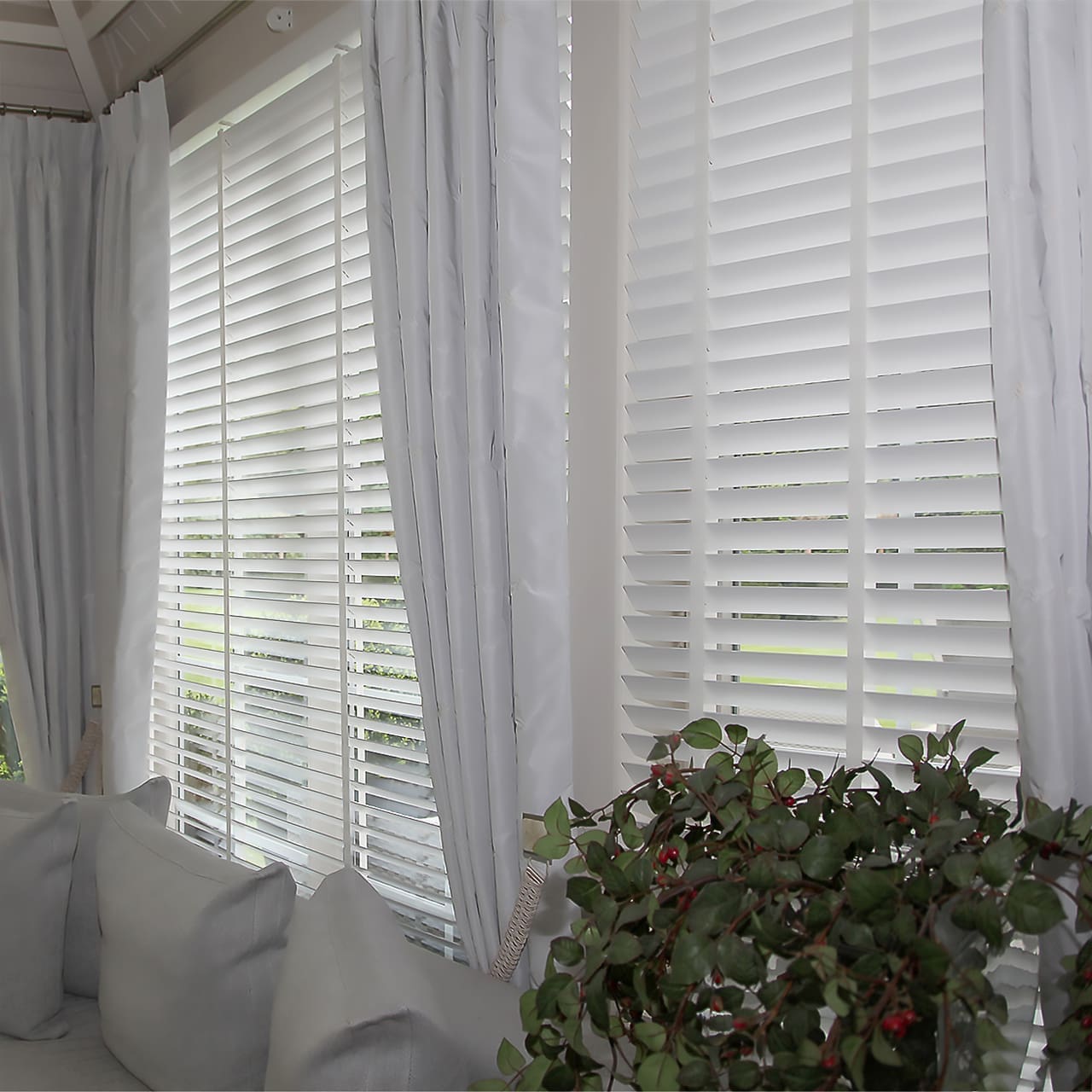 Shutters and blinds
Controlling light without losing the view.
View
Shutters and blinds
Controlling light without losing the view.
View
 Living rooms
Sofa, cabinets and light as one whole.
View
Living rooms
Sofa, cabinets and light as one whole.
View
 Dining room
Table, chairs and light in the right proportion.
View
Dining room
Table, chairs and light in the right proportion.
View
 Bedrooms
Bed, cabinetry and lighting as one whole.
View
Bedrooms
Bed, cabinetry and lighting as one whole.
View
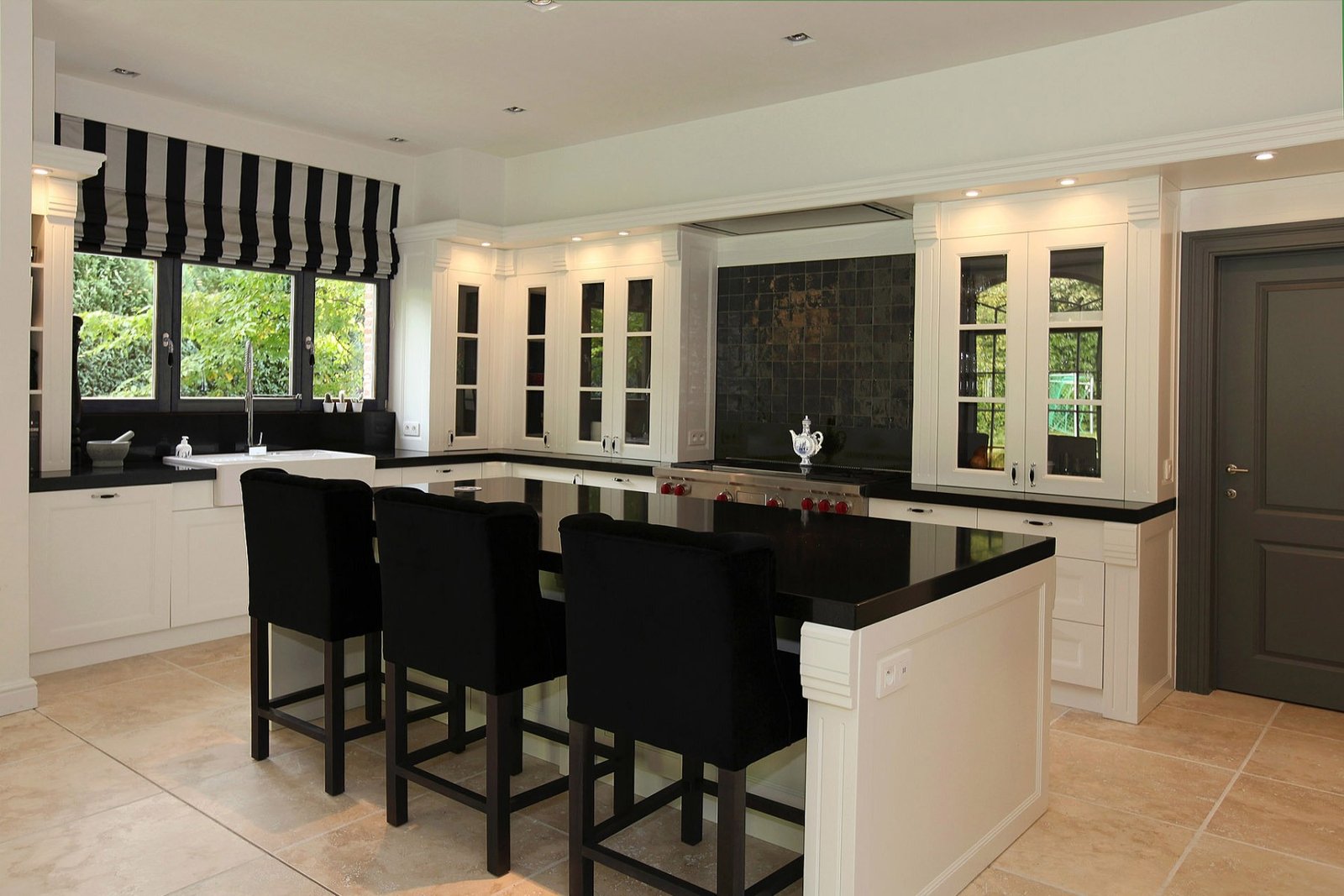 Bespoke kitchens
Layout, doors and worktop in one plan.
View
Bespoke kitchens
Layout, doors and worktop in one plan.
View
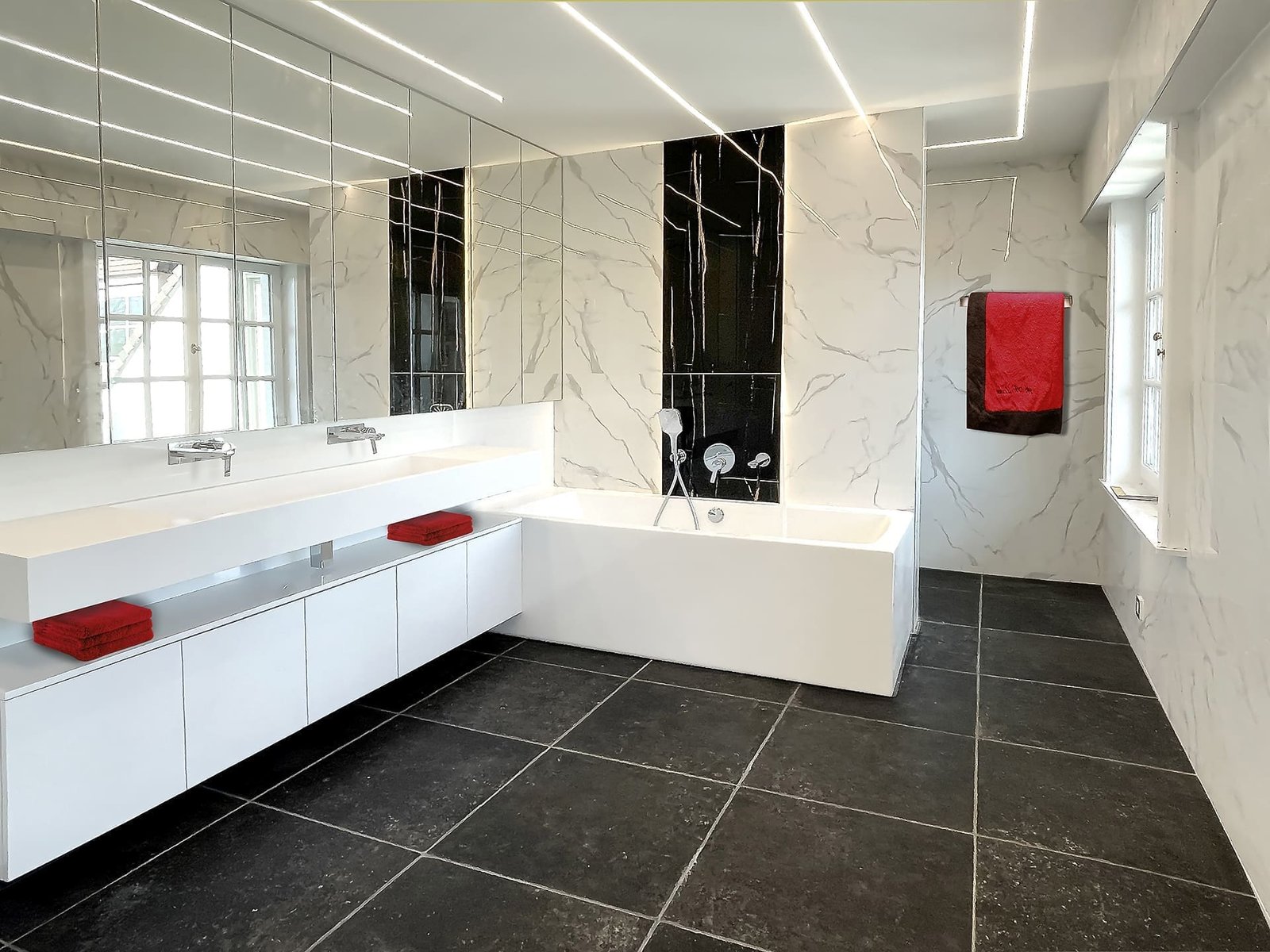 Bathrooms
Vanity unit, sanitary ware and tiles in one plan.
View
Bathrooms
Vanity unit, sanitary ware and tiles in one plan.
View
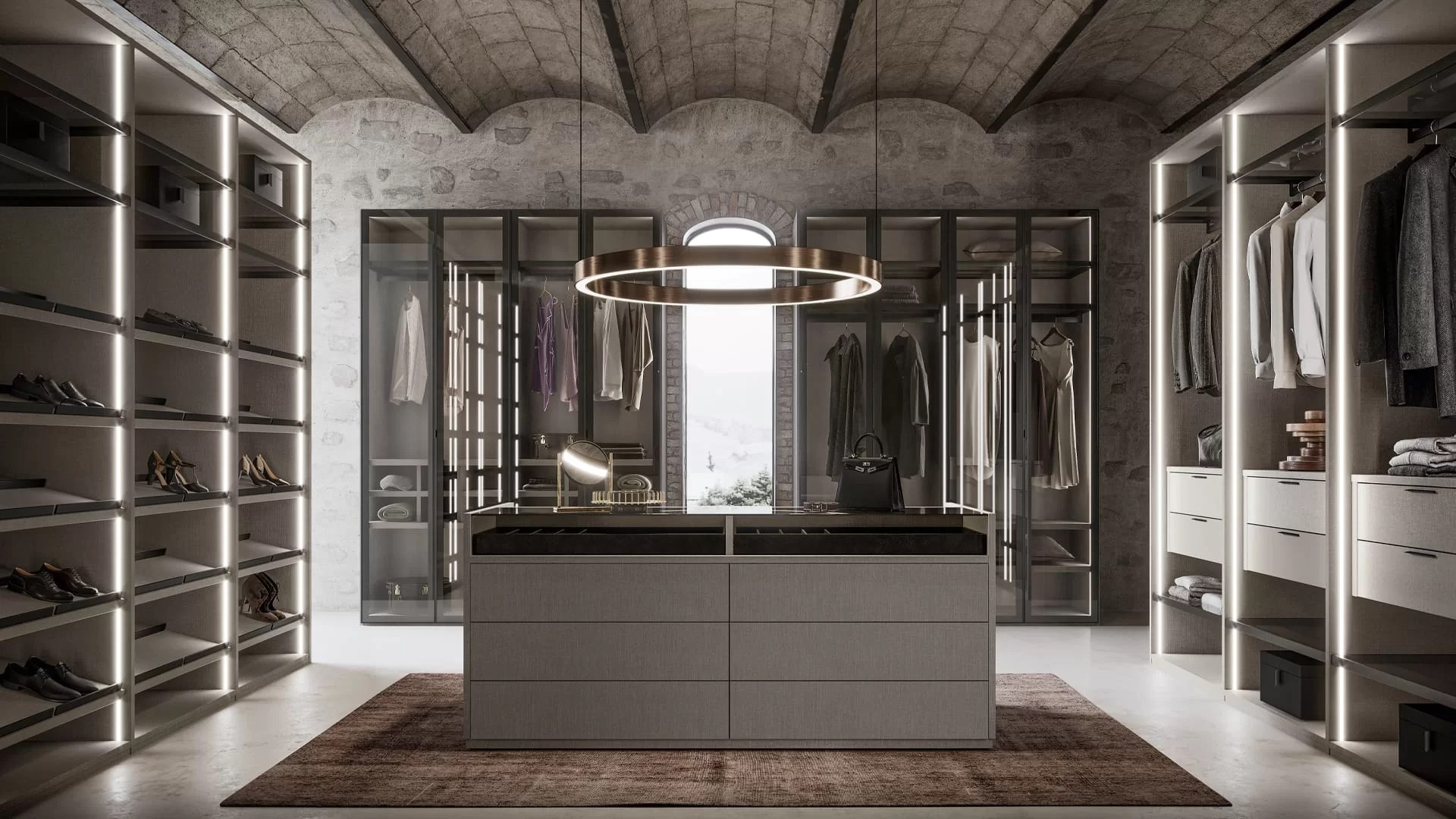 Dressing room
Laid out around your wardrobe, right down to the drawer.
View
Dressing room
Laid out around your wardrobe, right down to the drawer.
View
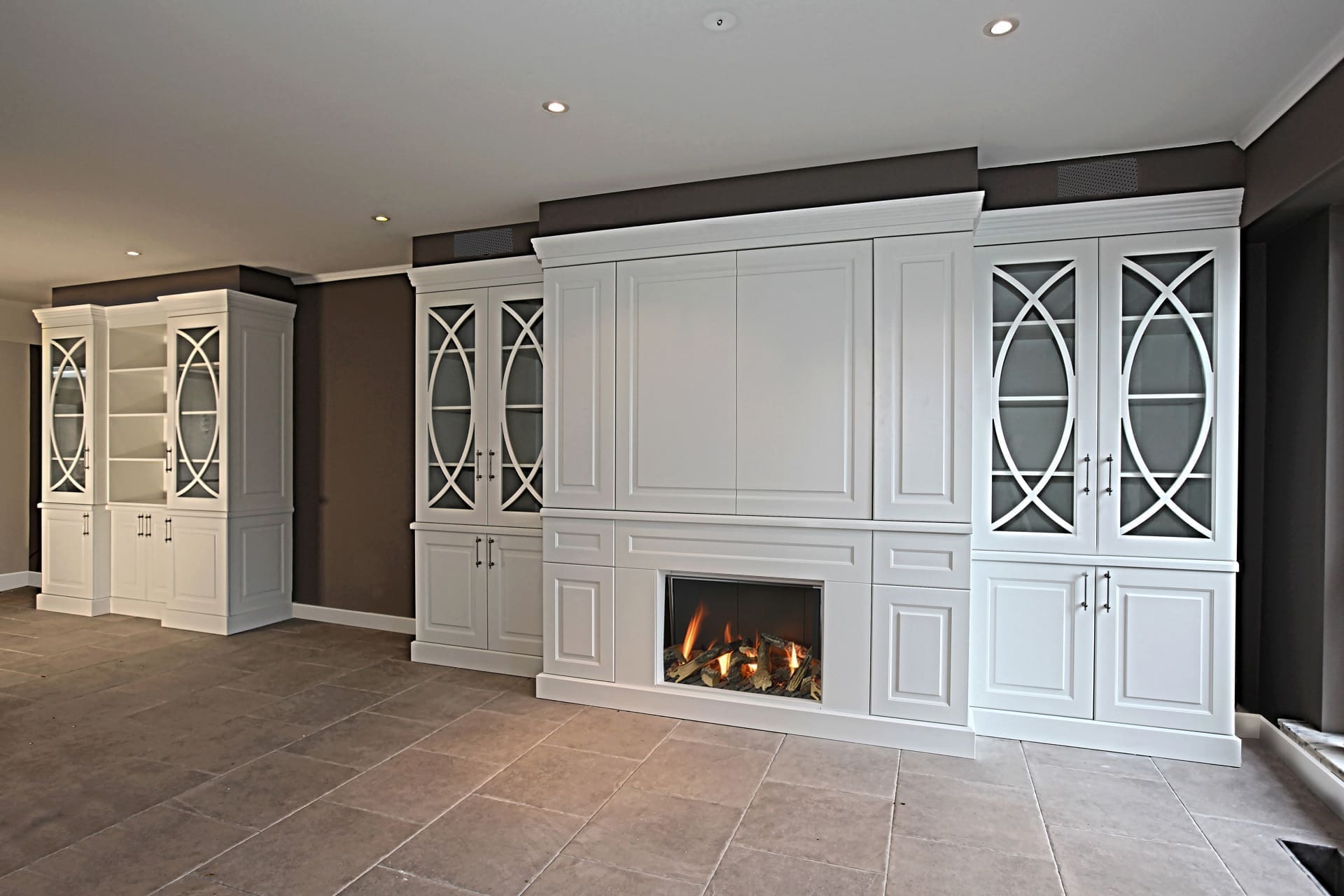 Bespoke cabinetry
Alcoves, corners and chimney breasts nobody else manages to fill.
View
Bespoke cabinetry
Alcoves, corners and chimney breasts nobody else manages to fill.
View
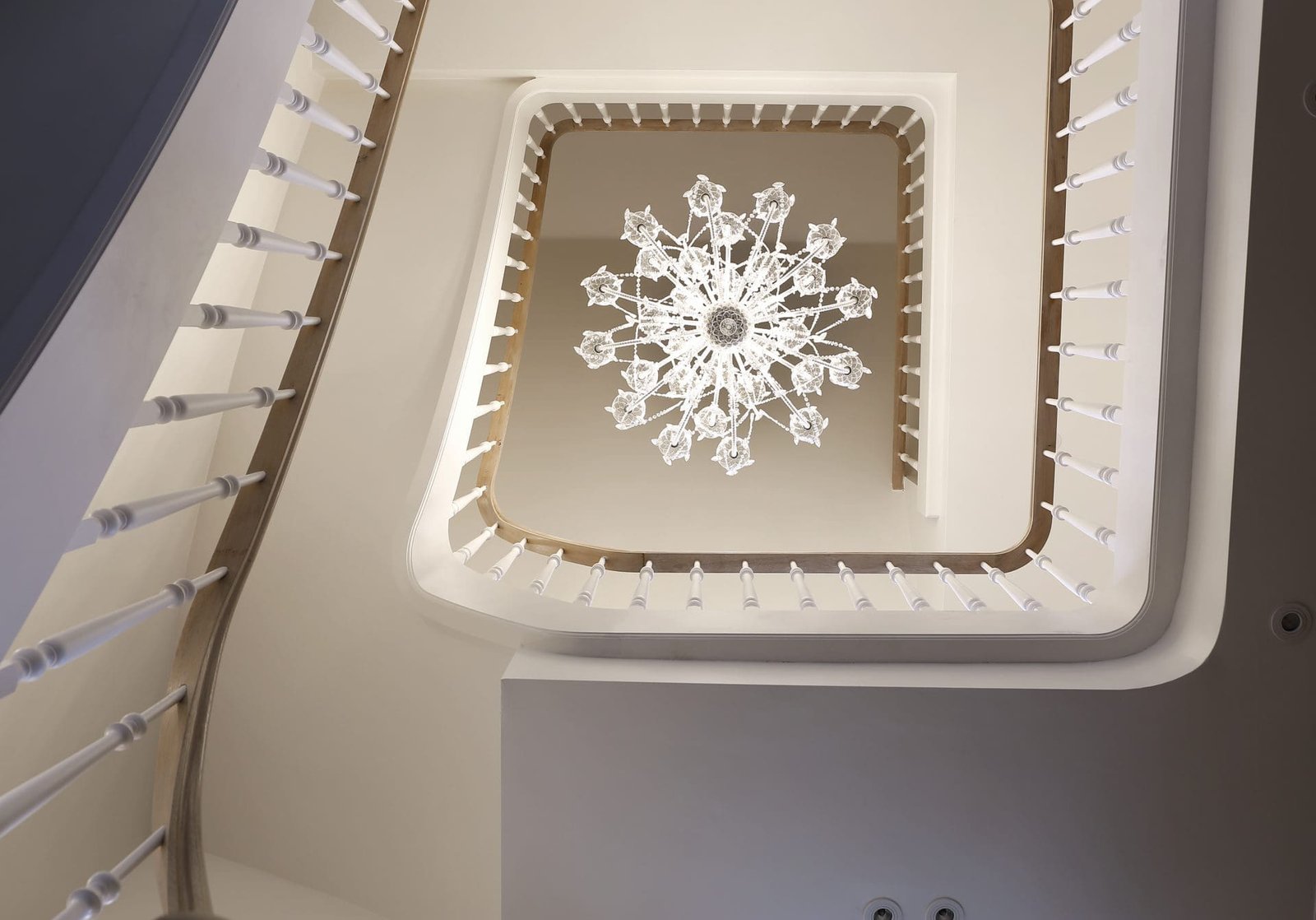 Lighting
Light per zone, separately switched and dimmable.
View
Lighting
Light per zone, separately switched and dimmable.
View
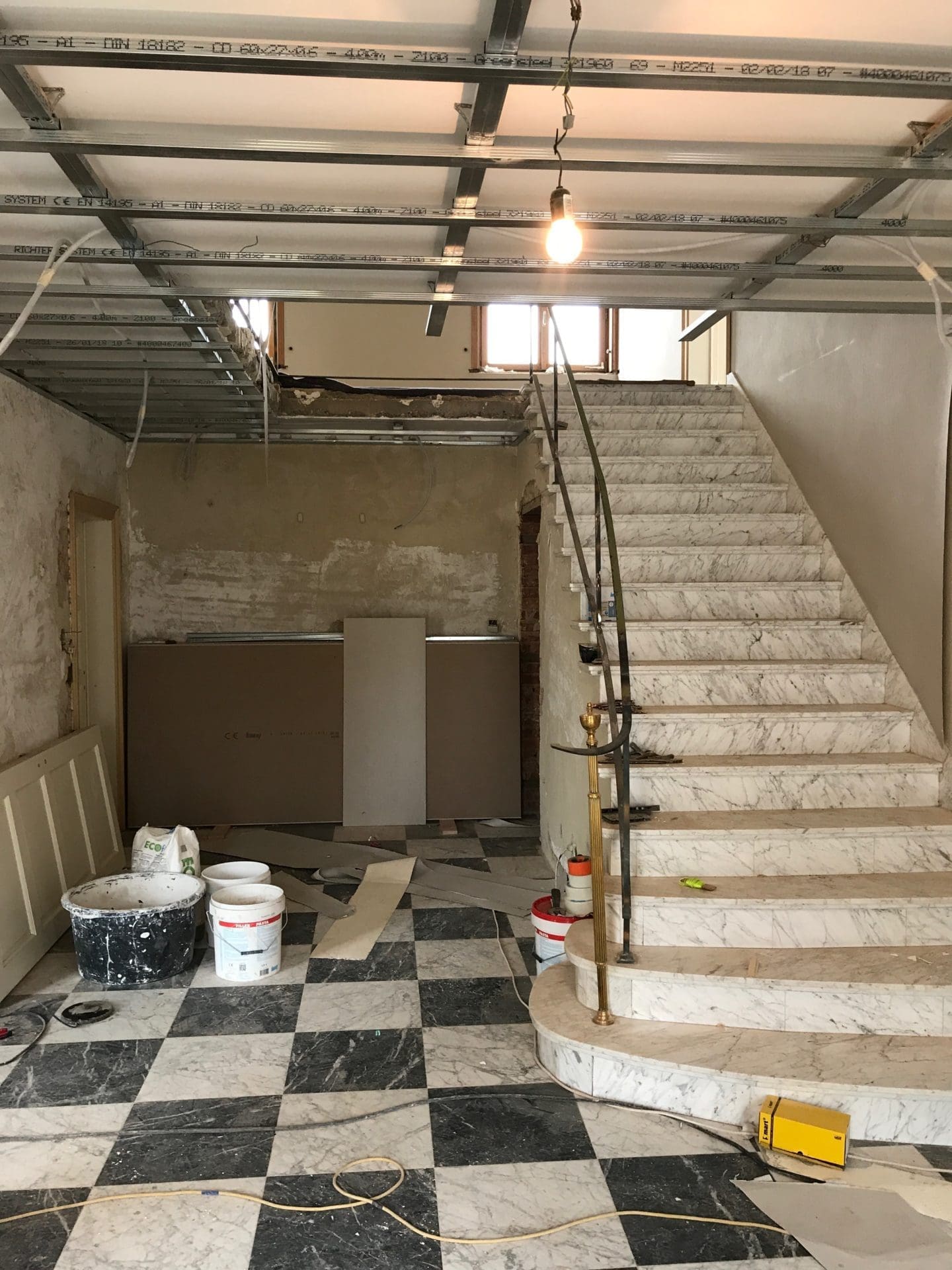 Renovation
From shell to finish, with one point of contact.
View
Renovation
From shell to finish, with one point of contact.
View
 Complete interior
The entire home in one design and one schedule.
View
Complete interior
The entire home in one design and one schedule.
View
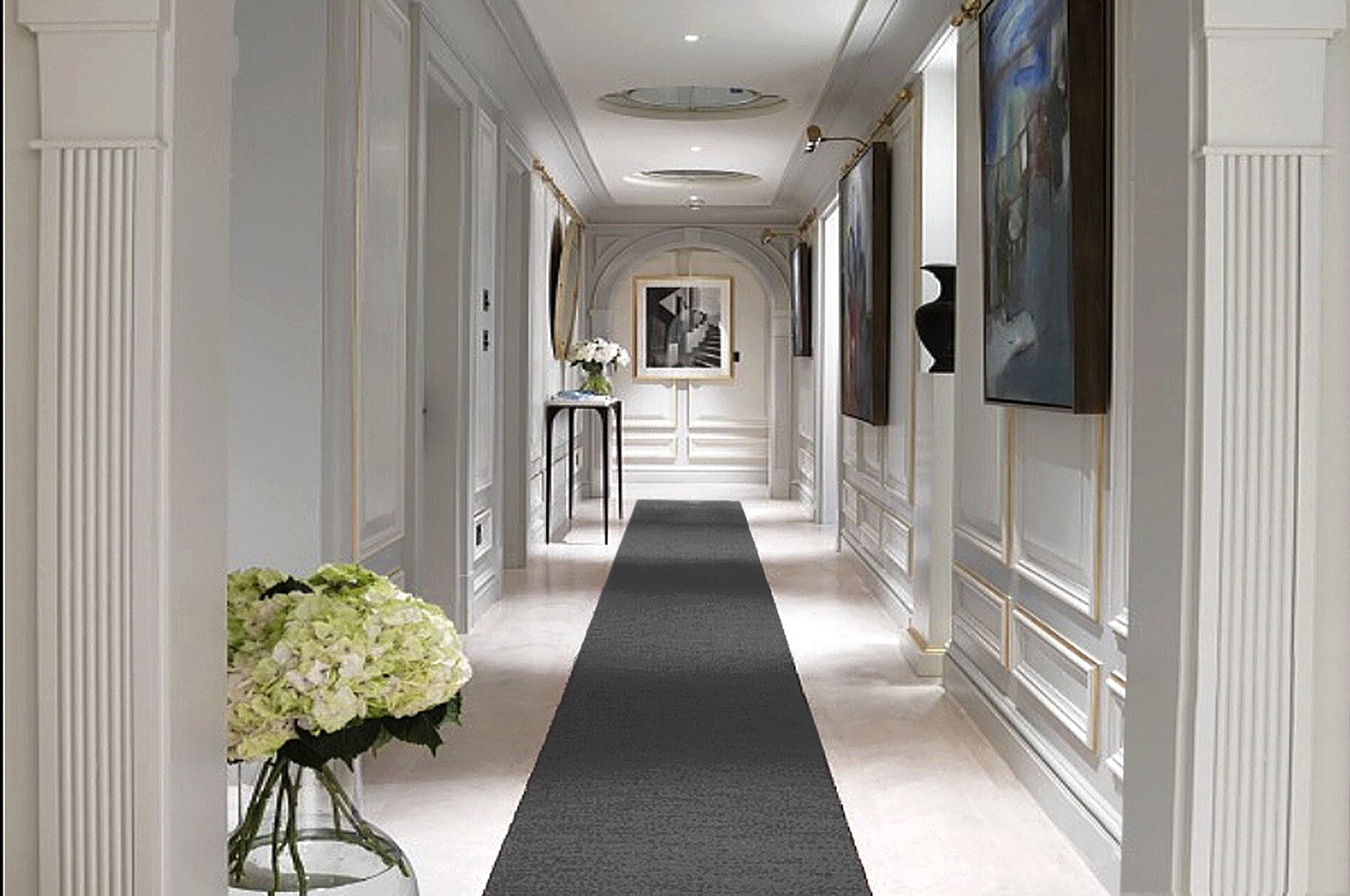 Hotel interiors
Rooms and a lobby that stand up to daily use.
View
Hotel interiors
Rooms and a lobby that stand up to daily use.
View
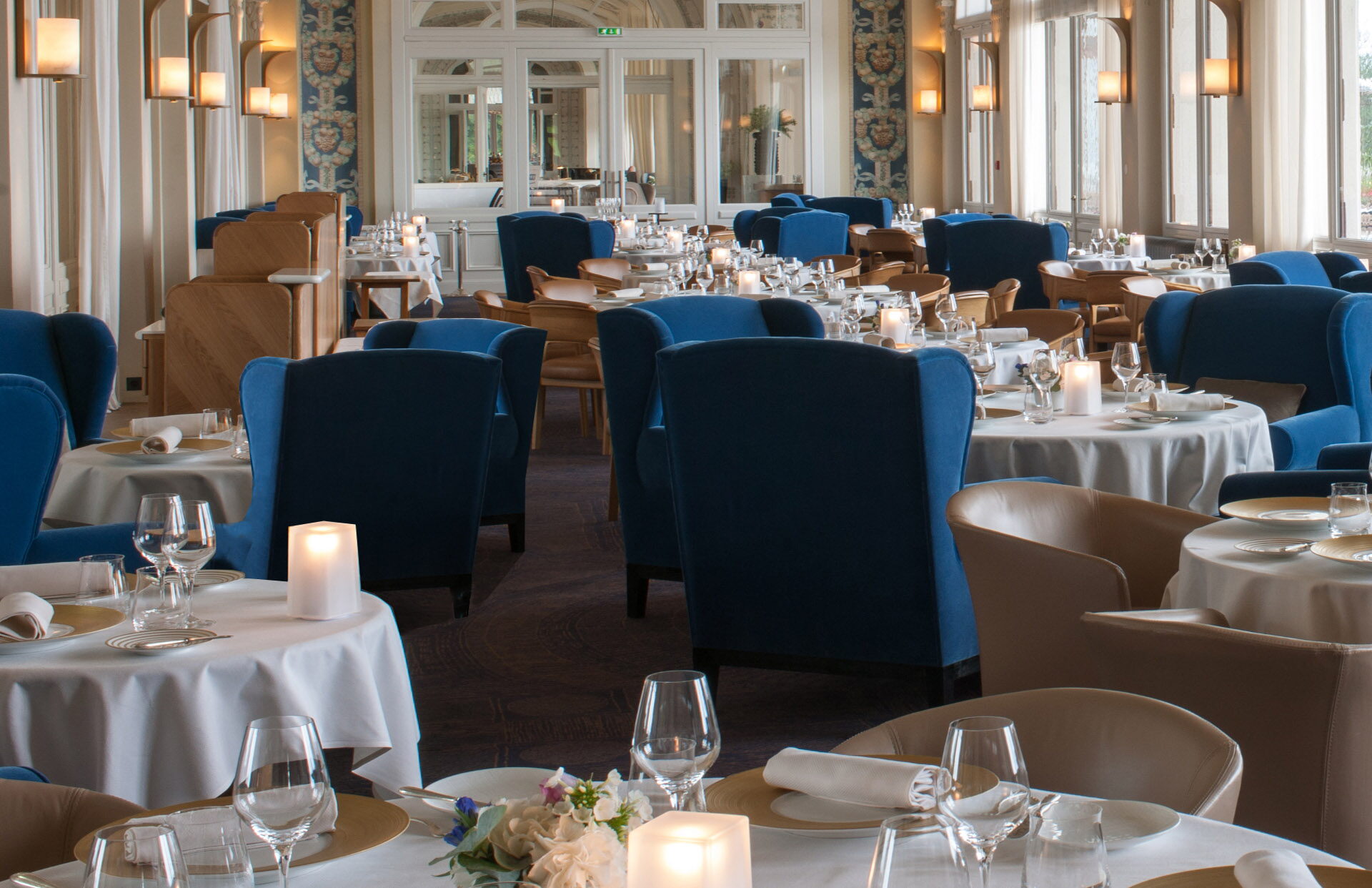 Restaurant interiors
Atmosphere, acoustics and durability considered together.
View
Restaurant interiors
Atmosphere, acoustics and durability considered together.
View
A rug is not a piece of furniture you add. It is the floor the rest of the room stands on.
Why Marcotte Style
More than five hundred clients and fifteen hundred designs later, we know which quality holds up where and which one lies flat after two years.
If we carry out the interior, you pay nothing for the measuring, the drawing and the advice.
The full range, not a selection: more than sixty qualities in almost five hundred colours, bought directly without middlemen.
We deliver and lay ourselves. No subcontractor you do not know and cannot reach afterwards.
Rug, curtains, upholstery and lighting are chosen together, so that colour and texture add up across the whole room.
That is the rating clients give us. Anything that is not right at handover, we come and put right.
Questions
Frequently asked questions

That depends on the surface area, the quality and the edge finish. A ready-made rug from our own collection is in a completely different bracket from a wool rug made to measure with a wide leather binding. At the first conversation you learn free of charge what order of magnitude your project falls into; after that comes a quotation in which quality, surface area, binding and laying appear separately.
Allow a band all around the table on which a chair pushed back still stands completely. Take only the size of the tabletop and the rear legs will go over the edge every time and the chair will tip. We draw the size onto your floor plan so you see it in advance.
They may, but they need not. There are three workable solutions: everything entirely on the rug, only the front legs on it, or the rug entirely within the seating area without touching the furniture. What does not work is a rug that is too small for the seating area: it starts to float like a stain in the middle of the room.
Yes. Do watch the heat transmission of the whole: the rug and the underlay together must not hold the heat back. Choose a pile that is not too thick and a thin, heat-permeable underlay, and build the temperature up over a few days with a new rug. We tell you during the measuring which qualities are suitable in your case.
Wool springs back, regulates moisture, takes colour deeply and is naturally dirt-repellent, but it is dearer and more sensitive to bleach and hot water. The better synthetic yarns now come close to that feel, hold their colour better in the sun, are easier to clean and are more attractively priced. In a family with children or pets most people choose synthetic.
That is normal and temporary. During manufacture loose fibres remain in the pile; they come out in the first weeks when you vacuum. The rug does not get any thinner for it and it stops of its own accord.
Blot the stain immediately with a white cloth, from the edge towards the middle, and do not rub: rubbing pushes the stain deeper into the pile. Let solid dirt dry first and break it away before you vacuum. Use as little water as possible and no foaming soap, because soap residue attracts fresh dirt afterwards. With silk or viscose it is best to call a professional.
Yes. Round, oval, or cut around a fireplace, a radiator casing or a sloping wall: anything you can draw on the plan, we can cut. Every cut edge, including a curved one, is bound afterwards.
Yes. A stair runner is measured tread by tread, because the nosing of each tread counts towards the length. We make it in the same qualities as the loose-laid rugs and bind it in the material you choose.
In a hand-knotted rug every knot is placed into the warp by hand: that is the most durable and most expensive method, and the pattern is visible on the back as well. In a tufted rug the loops are shot into a backing by machine and fixed at the back. In a woven rug the pile is anchored in the weave itself, which gives a flatter and firmer result.
Because they are not existing rugs but qualities and colours that are cut to your size and bound. So the price follows from your surface area, your quality and your edge finish. You put your rug together in the 3D configurator and then request a quotation; the ready-made rugs from our own collection can be ordered directly.
Yes. You can request a physical sample from the 3D configurator, drop by our showroom in Kapellen, or have us come to you. We then bring the samples along and lay them next to your floor, your sofa and your curtain fabric, in daylight. That is the only honest way to judge colour.
Yes. We work throughout Flanders and Brussels, and regularly in the Netherlands and Luxembourg. Our own team comes on site to measure, deliver and lay.
Request a personalised quote
From a single runner to rugs throughout the house. Send us the dimensions of your room or a photograph of the space, and we will know straight away what we are talking about.
Book a conversation
Pick where and when it suits you. We confirm within one working day.