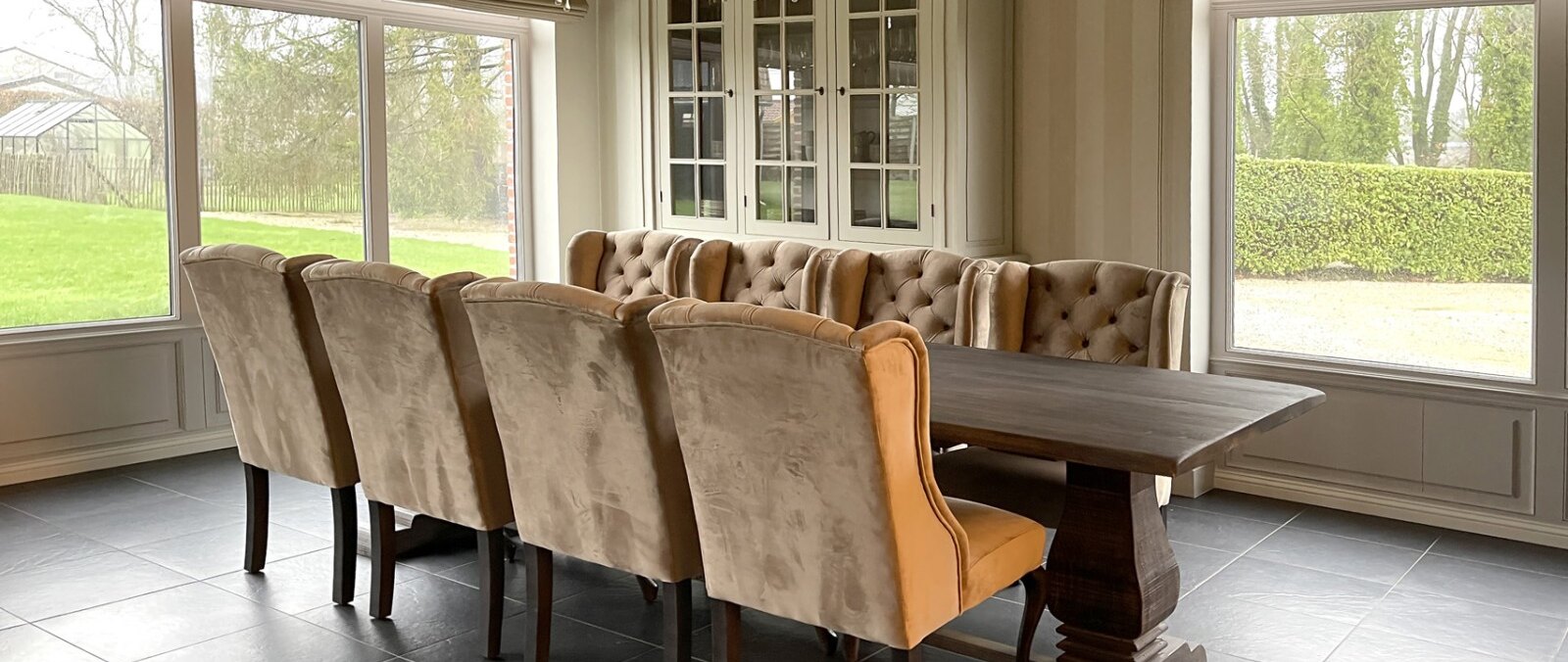
Tables at Marcotte Style
Bespoketables
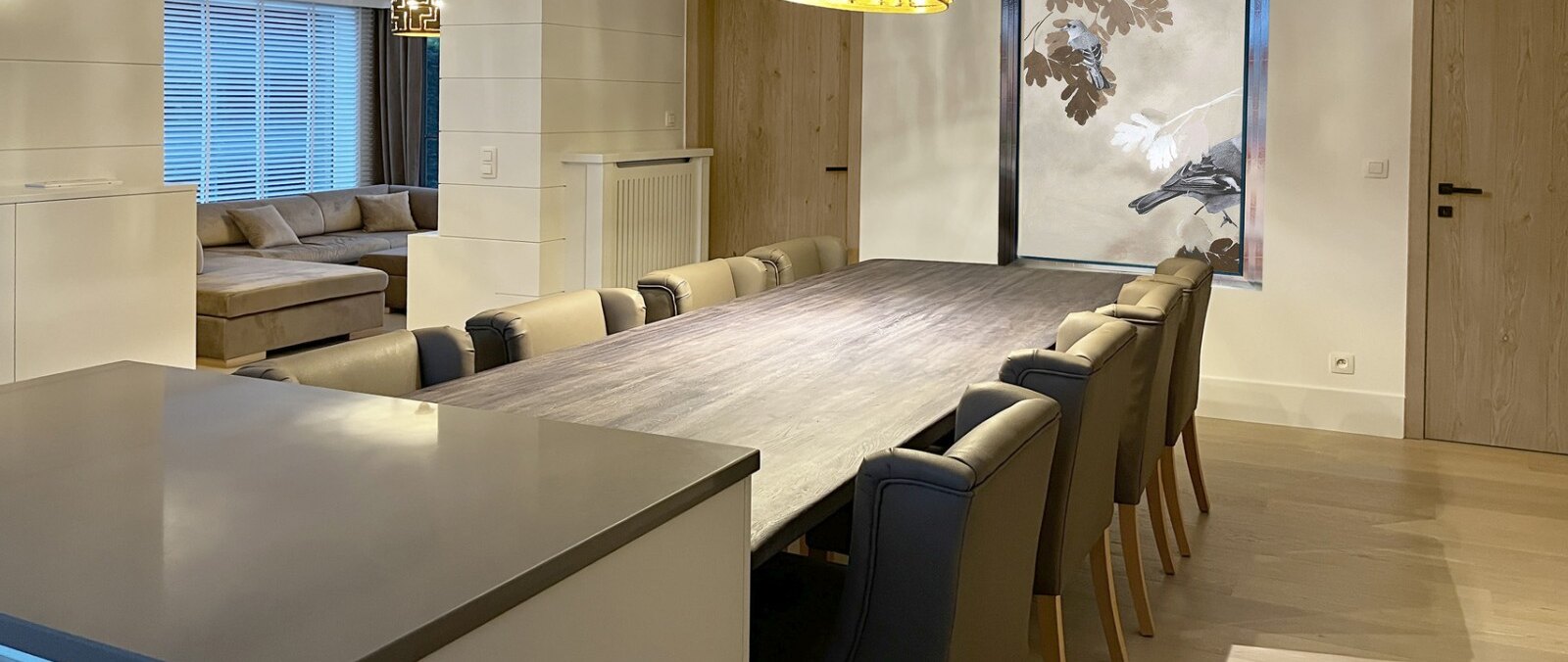
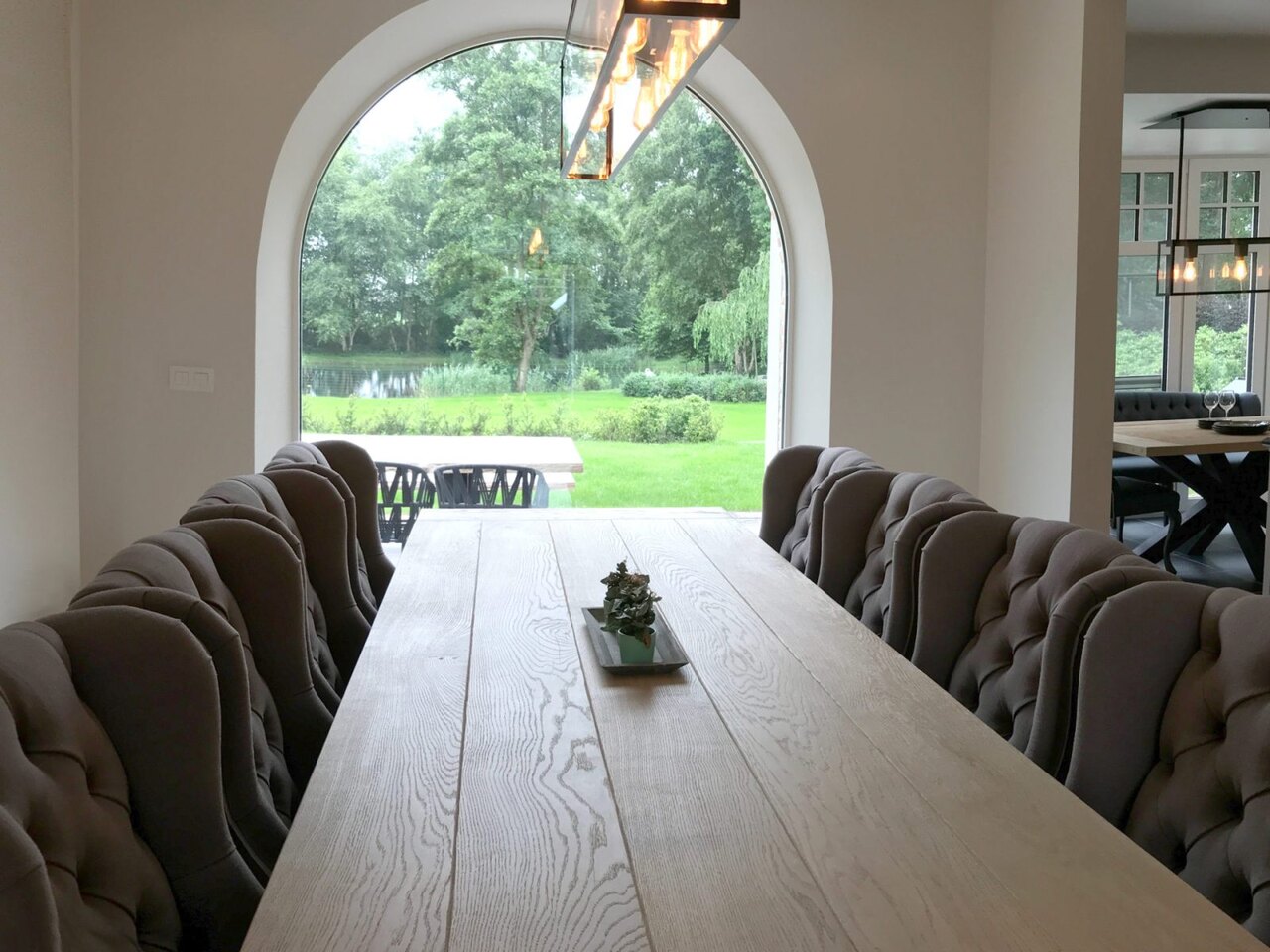
A dining table is almost always chosen on its top and almost never on the walking space around it. Yet it is the latter that decides whether you can move around it comfortably. We draw the room first, then the table. Everything you see here comes from homes we have furnished.
The walking space sets the table
Behind a chair pulled up to the table, someone still has to be able to pass. Allow ninety centimetres between the table edge and the wall or cabinet, and a hundred where the route is really used. What is left is your table size.
That is why a table is made to measure rather than bought: a top of 240 by 100 fits where 260 by 110 does not, and you only see that difference once the chairs are there. So we draw the chairs into the plan as well, pulled out.
- Ninety to a hundred centimetres clear behind a chair pulled up, measured to the wall or the cabinet
- The top to the centimetre no standard sizes, so the table follows the room
- Chairs drawn in too pulled out, because that is how the table actually stands
- Lighting on the axis of the top drawn into the lighting plan, not drilled afterwards
Why the base is set inwards
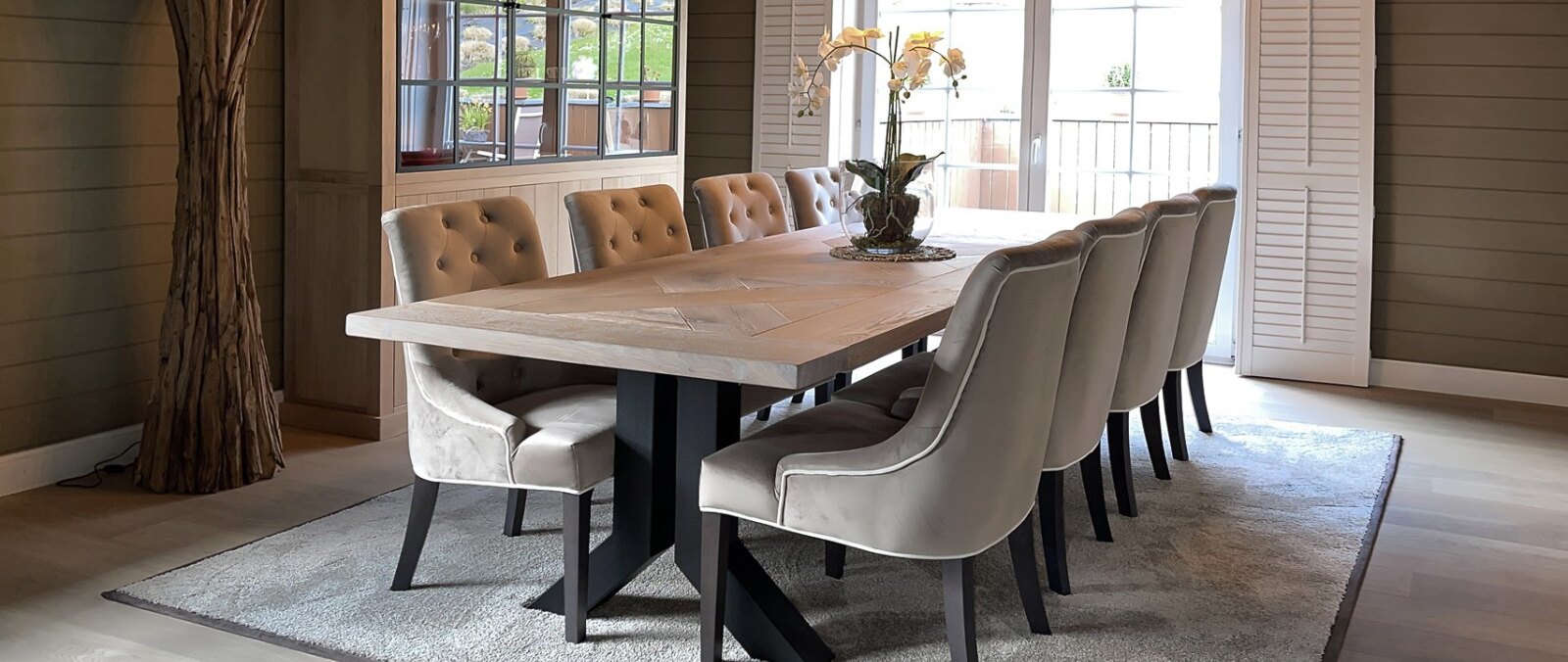
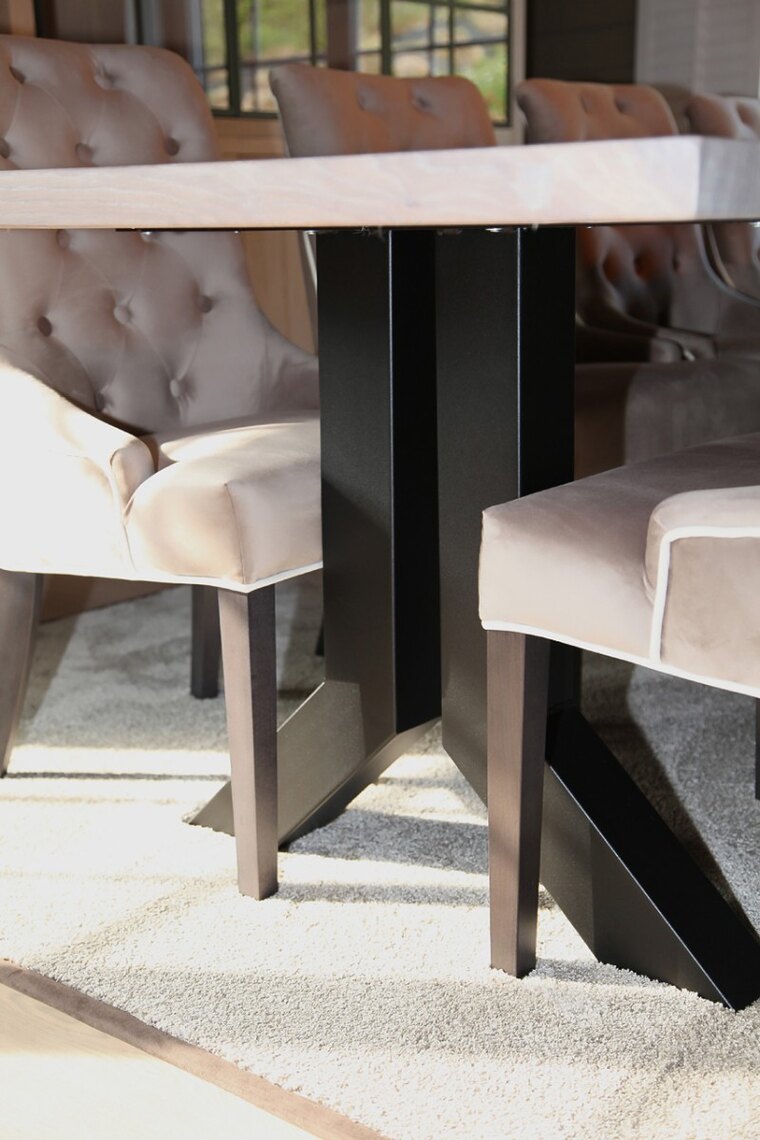
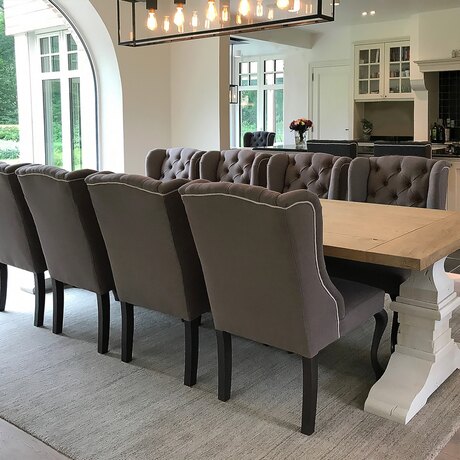
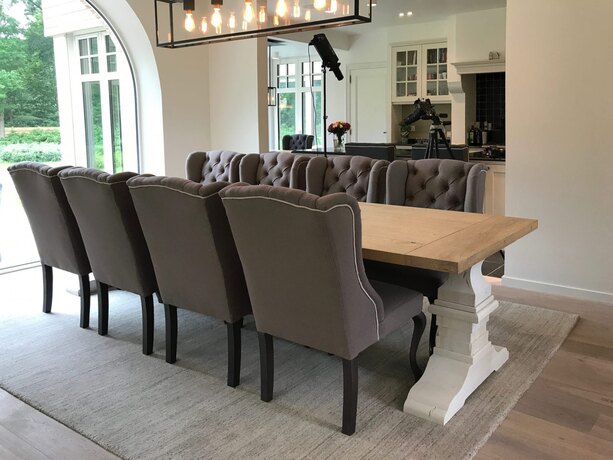
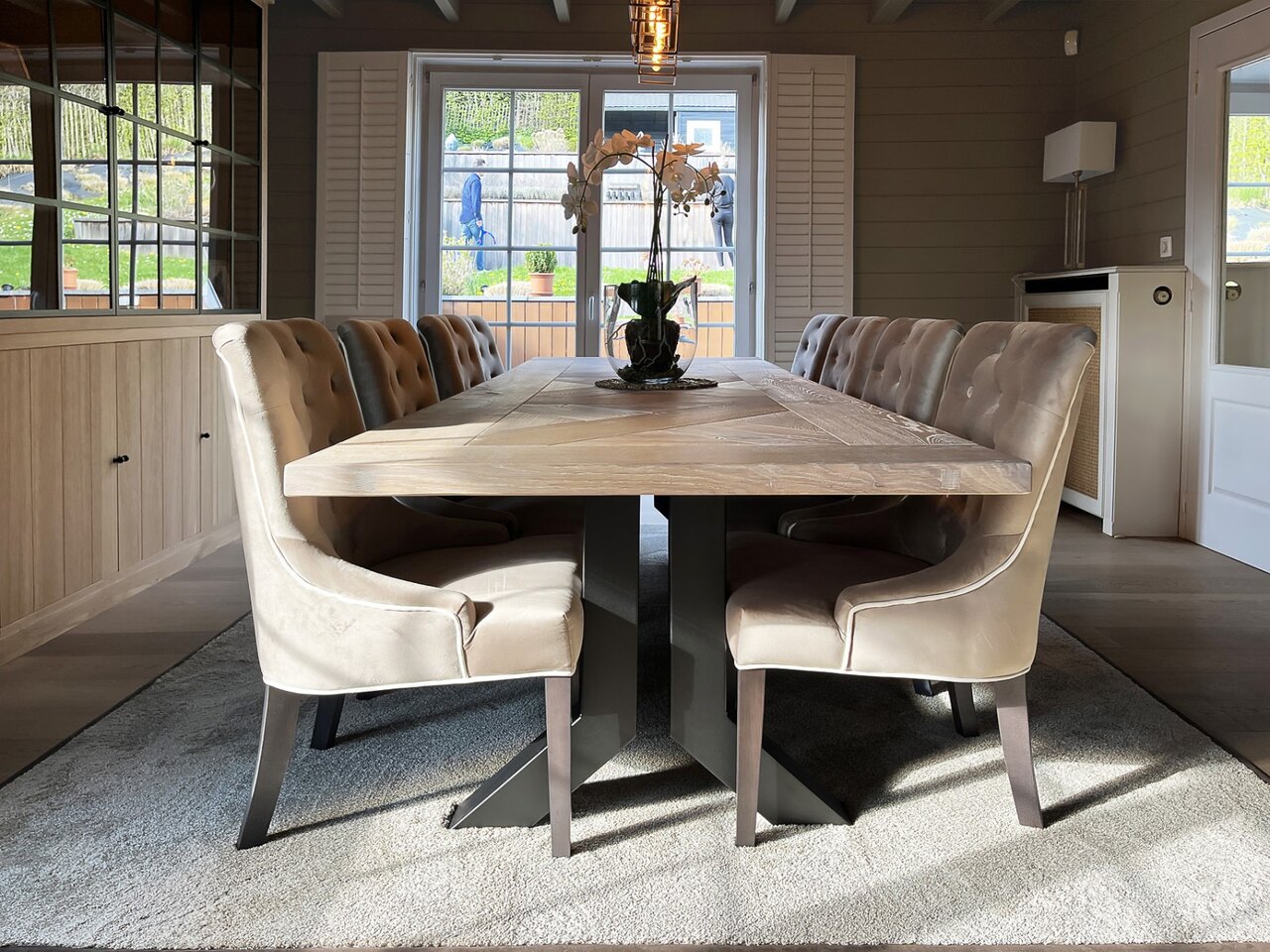
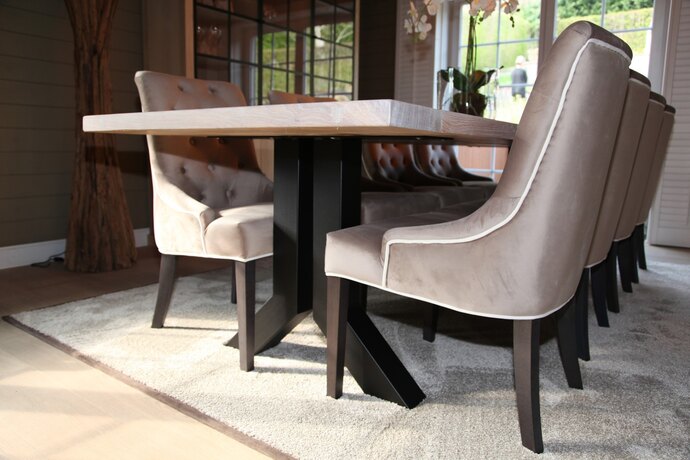
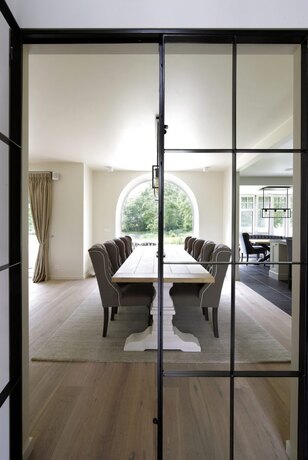
The cross base here is deliberately set inwards, not out at the corners. That lets someone pull up at the head of the table without a leg between their knees, and lets the chairs in the middle push back freely. On a table for ten or more, that is the difference between eight usable places and ten.
The top in solid oak
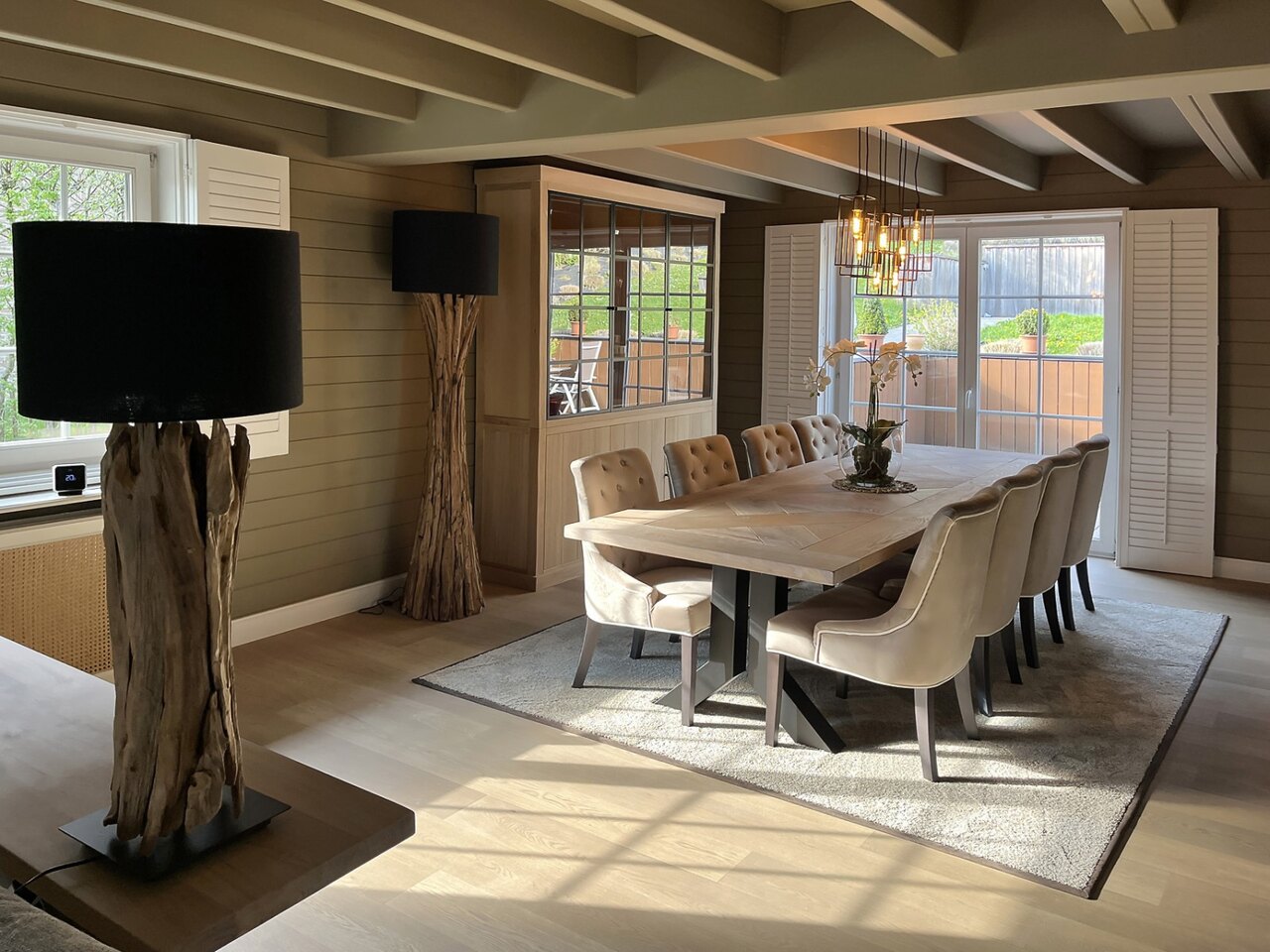
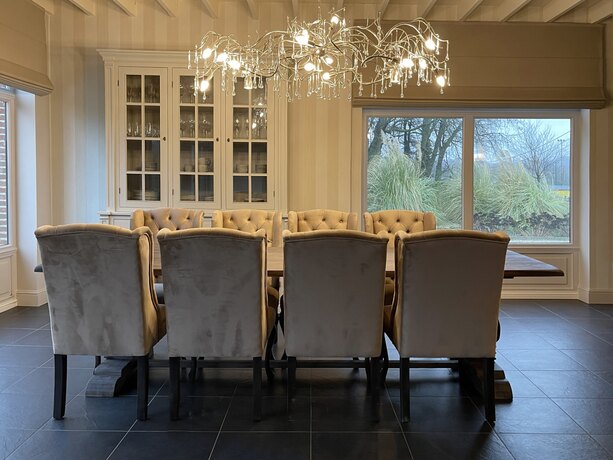
We make the tops in solid oak, including on tables for ten or sixteen people. Solid means the top can be sanded back after years: scratches and rings come out, and the table starts again.
The thickness is a choice, not a standard. A top of four centimetres reads light and modern, eight centimetres reads heavy and hand-made. In a small room thin works better; in a large space a thin top disappears.
- Solid oak can be sanded back, so scratches and rings are not the end
- Thickness to choose from a light top of four centimetres to eight centimetres solid
- Oiled or stained matt lacquer over the stain where use is heavy
- Straight or planed edge the edge decides whether the top reads clean or hand-made
The same top, other homes
What is settled before anything is made
Three things on paper before you decide.
- 01A first design on your roomA design based on your space, your taste and your budget, with photorealistic 3D. Twelve revisions are included, so a table may change size three times before anything is made.
- 02No design feeIf you carry out the work with us, you pay no fee on the design. The plan, the drawings, the 3D and the specification are part of the work.
- 03One point of contactThe same person from the first conversation to the delivery. We draw and design, the tables are made to measure for you by fixed makers in Europe, directly and without middlemen, and our own team puts them in place.
The base: cross, monastery or steel
The base decides how many people can really sit down. A cross base in lacquered steel leaves the most legroom. A monastery base in painted timber reads heavier and suits a country interior, but takes space away at the head of the table.
Four separate legs are the most honest choice in a small room: they stay out of the way as long as nobody sits on a corner. From eight places up they become precisely the problem.
- Cross base in lacquered steel the most legroom, including at the head of the table
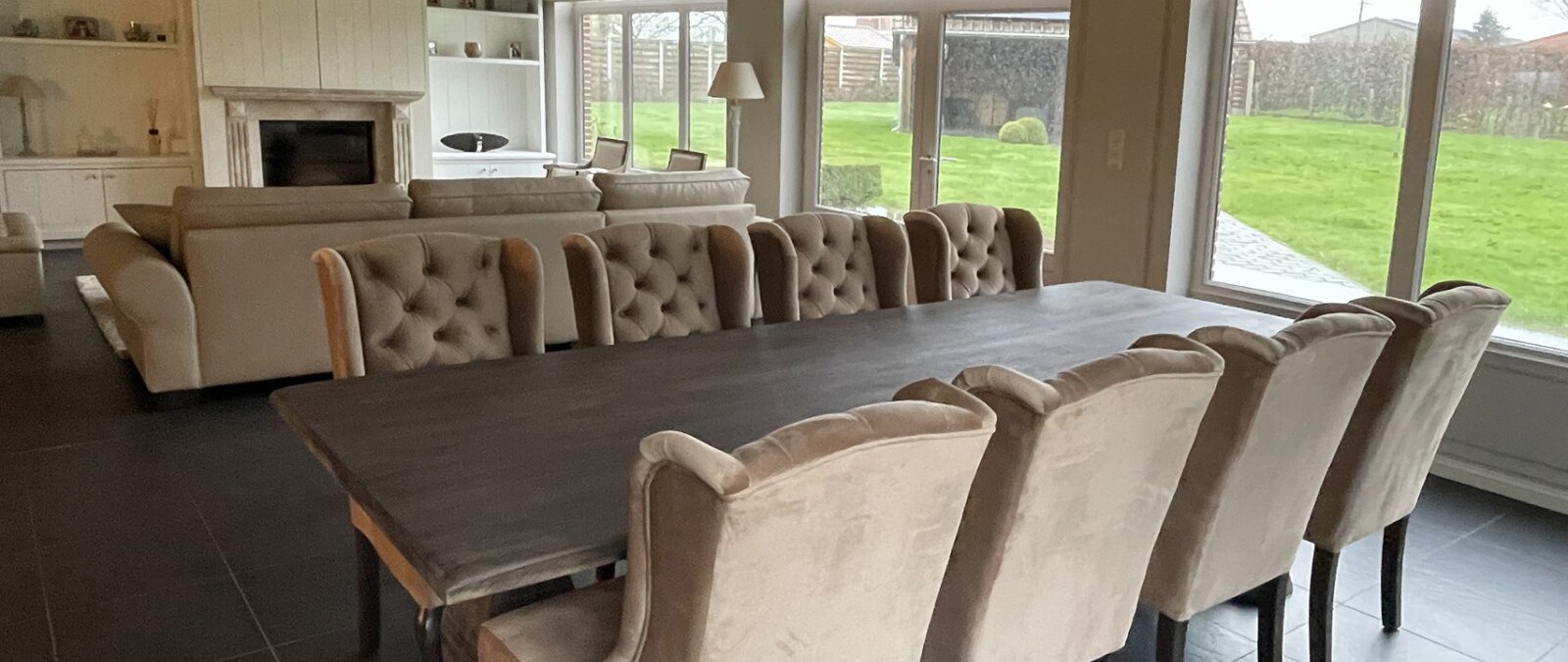
- Monastery base in painted timber a heavier look, suits panelling in the same lacquer
- Four separate legs only on smaller tables, otherwise someone always sits against a leg
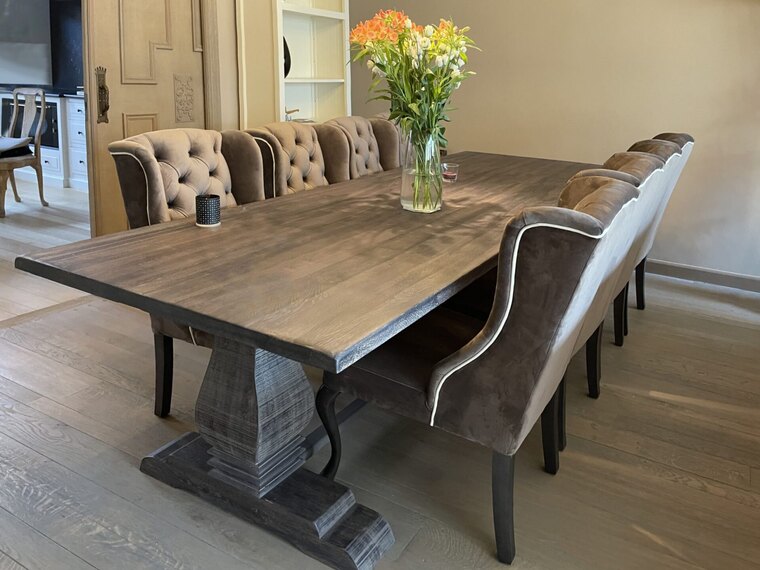
The monastery base, and what it costs in places
A monastery base looks handsome and costs you two places. At each head end the leg is in the way, so whoever sits there sits at an angle. That is no objection if the table is for six and eight rarely sit down; it is one if you eat with ten. We say so beforehand, not on delivery.
The order of things
First the light, then the top
A pendant that is not on the axis of the top shows every day. That is why the position of the table is settled before anything is drilled.
The light above a dining table hangs on the axis of the top, not on the axis of the room. That seems obvious until the table shifts half a metre because a cabinet is added. So we fix the table position on the electrical plan, together with floor sockets if the table stands free in the space.
The same goes for the height. A light hangs about seventy-five centimetres above the top: low enough to light the table, high enough to still see the person opposite. That is a dimension that belongs on the plan, not in the fitter's head.
Round and oval
A round table is the best answer in a square room and in a bay window. Everyone sees everyone, there are no head ends, and there is always room for one more. Above about a metre and a half across, though, the conversation becomes too wide and you sit far apart.
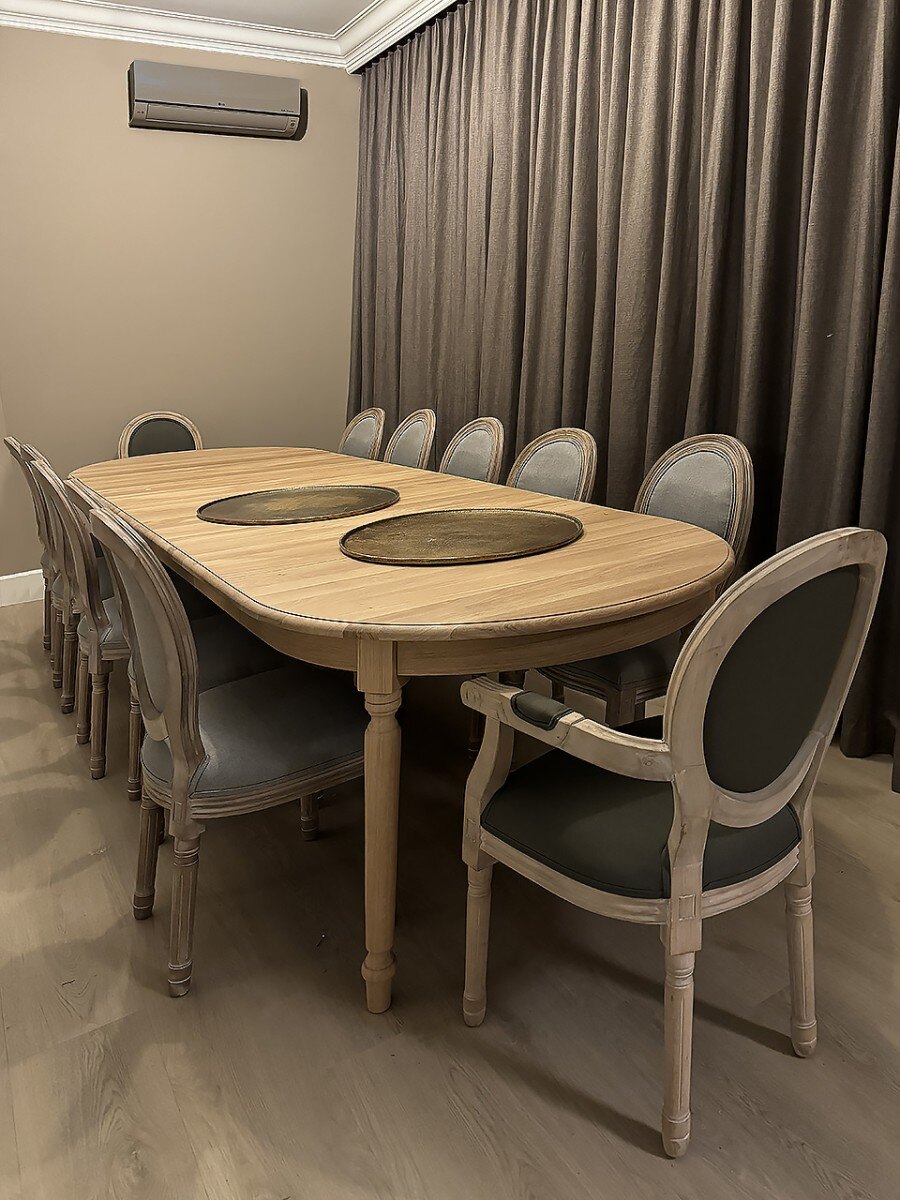
An oval top combines the two: the length of a rectangle without the sharp corners that stick into a walkway. In a narrow room that is often the only size that fits.
- Round up to about 150 cm beyond that the distance across becomes too great
- Oval in a narrow room the length of a rectangle without corners in the walkway
- A central pedestal no legs at the corners, so chairs can be added anywhere
Country: the table within the room
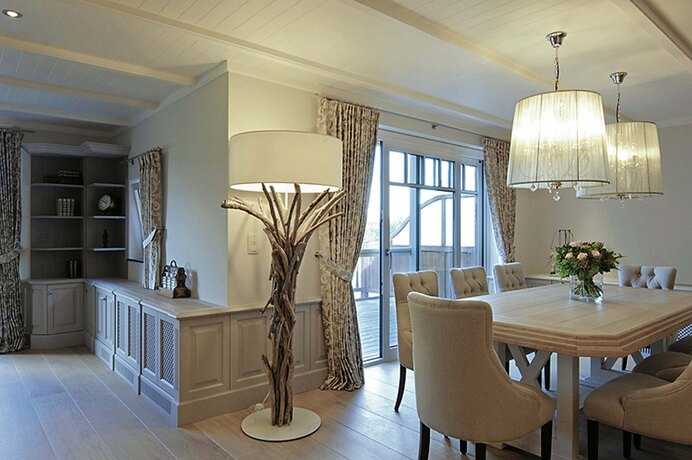
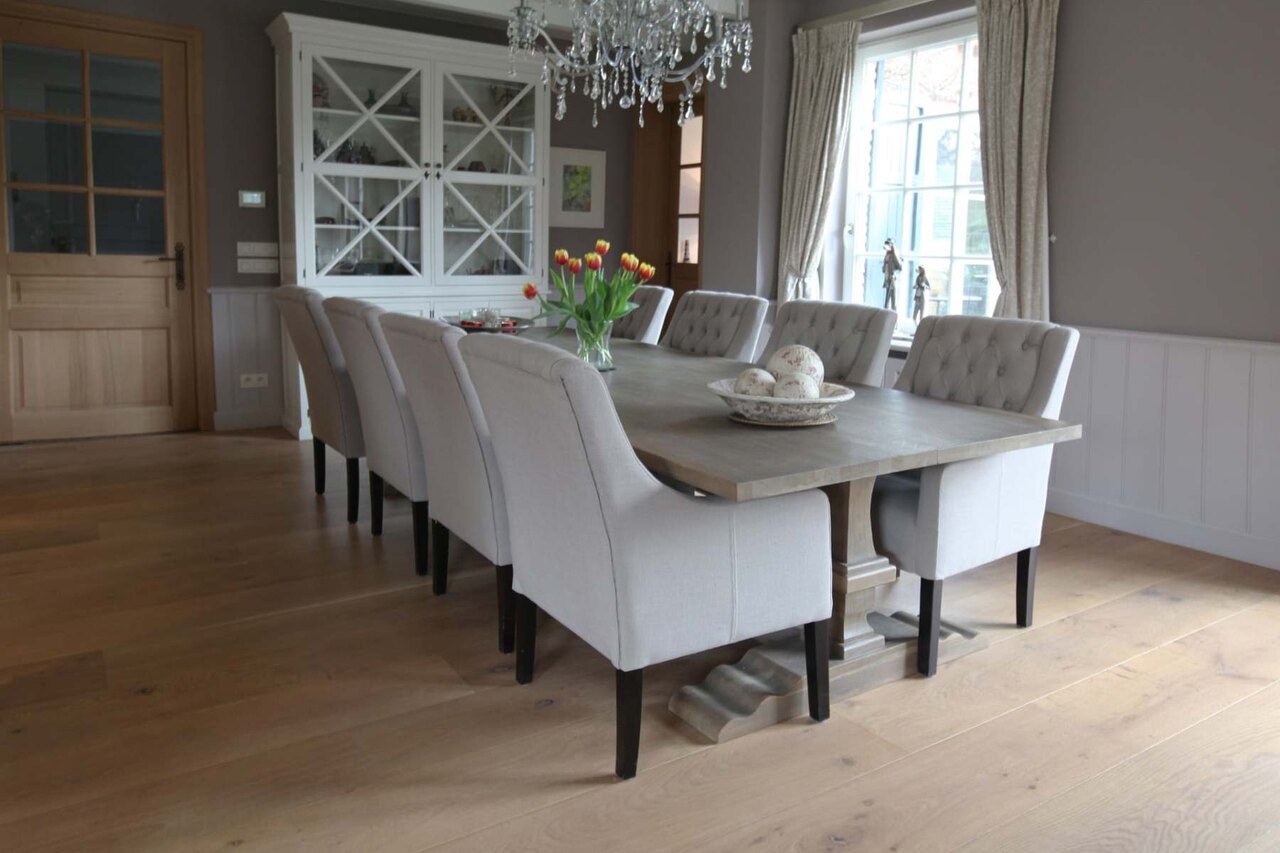
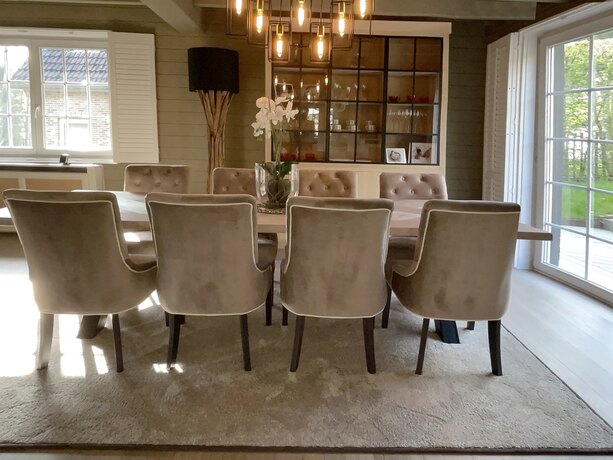
In a country interior the dining table rarely stands alone. It belongs to the cabinet behind it, to the panelling and to the floor, and that only works if those things are chosen together. An oak top beside a painted cabinet in the same tone reads calmly; the same table beside a cabinet in another timber reads as two purchases.
We specialise in country style, but the same table can just as easily be modern or classical. The dimensions and the build-up stay the same; the base, the edge and the finish change.
- The cabinet behind chosen with it in the same lacquer or the same timber as the table
- Solid timber, veneer or lacquered MDF chosen per project according to room, use and budget
- All 2050 NCS lacquer colours and far more door models than the range shown here
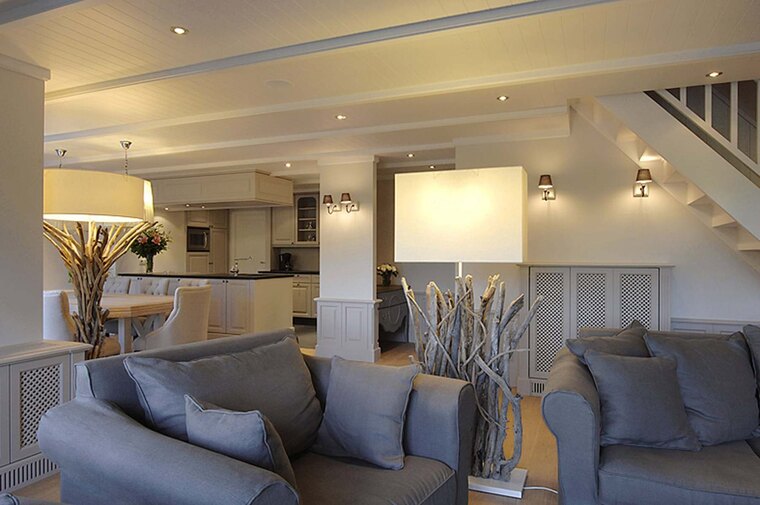
When the dining area is not a room
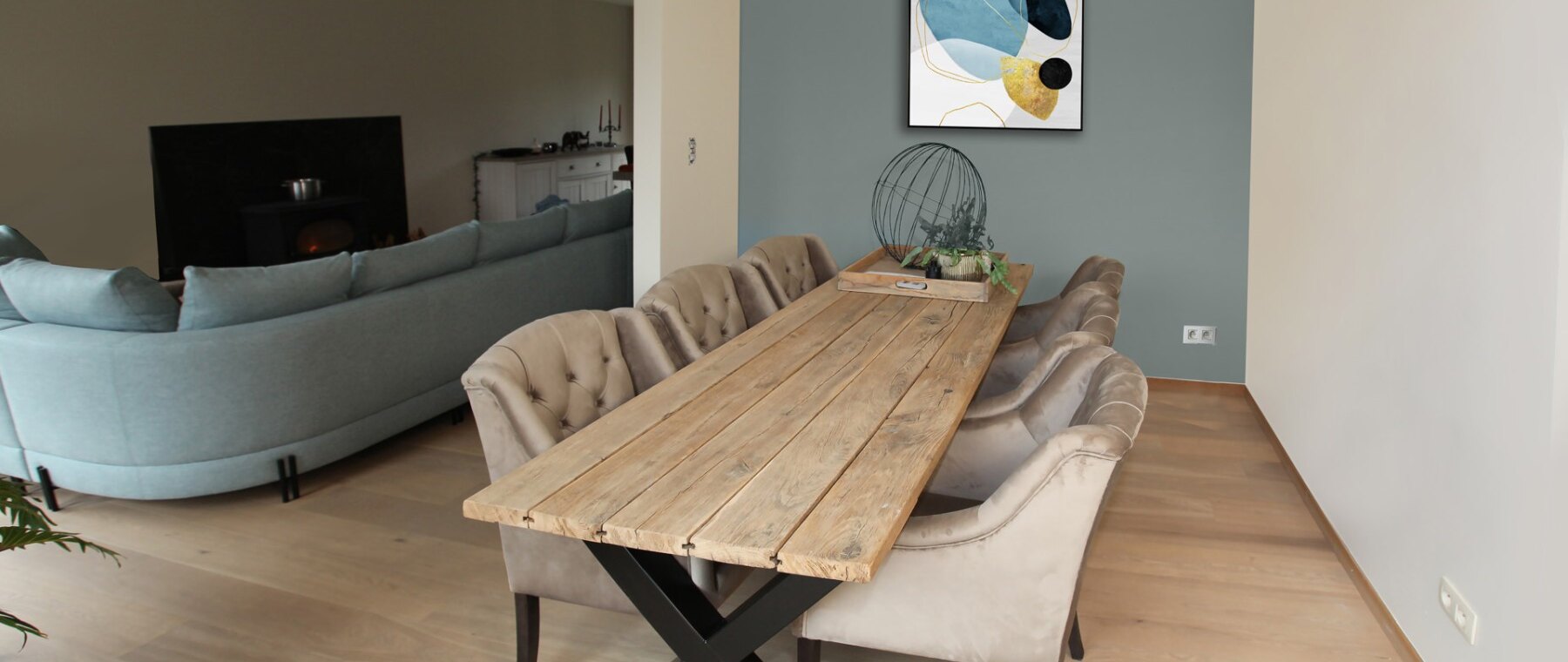
In an apartment or an open living space the dining area is a zone, not a room. The table then does double duty: it separates the kitchen from the seating area and it has to look right from three sides. A top with the same edge all round and a base that looks wrong from no angle are not luxuries there but conditions.
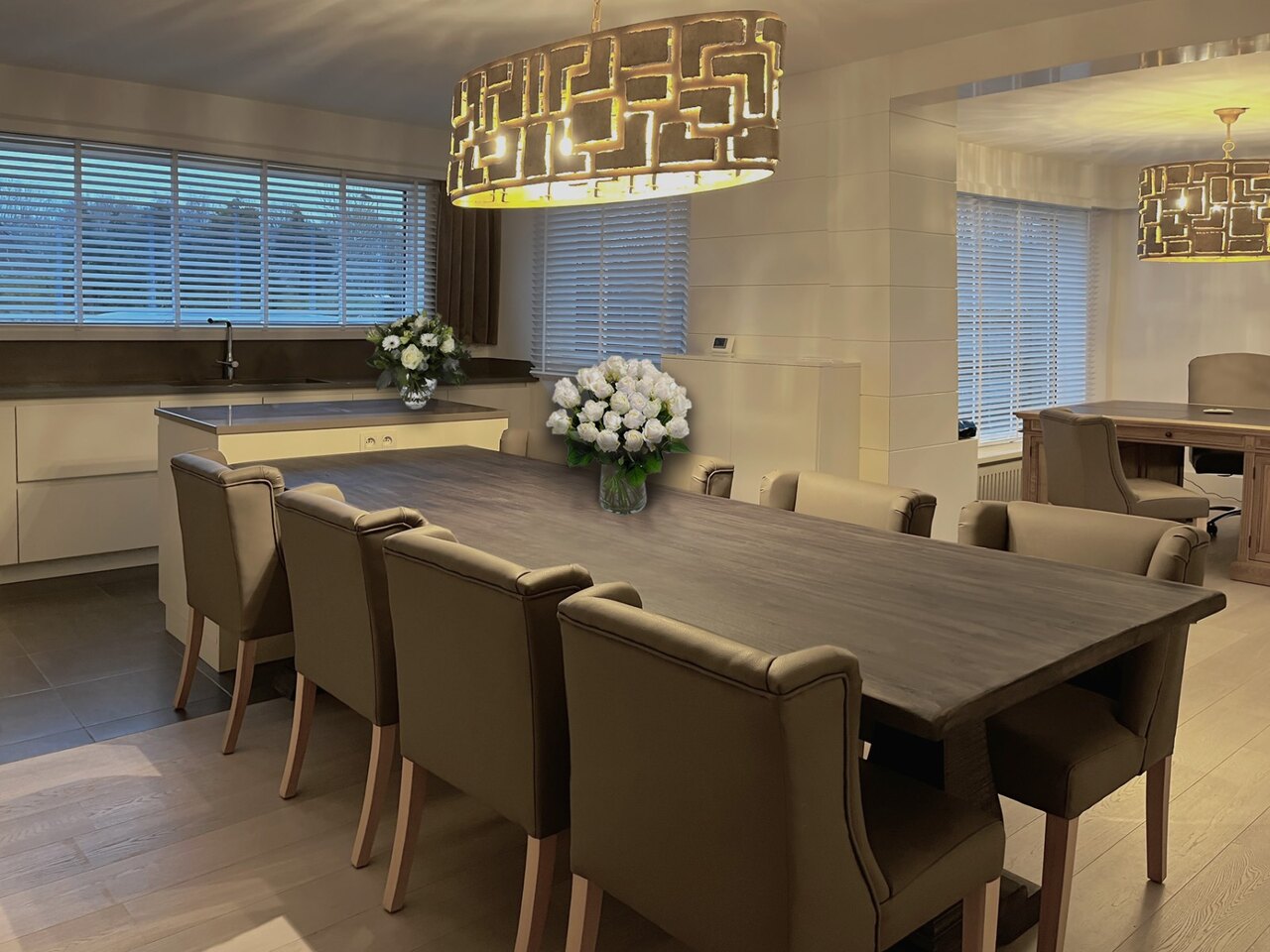
Beside the kitchen island
More and more often the table connects straight onto the kitchen island. That saves space and it works, provided the heights are right: a worktop sits at ninety centimetres, a table at seventy-five. Putting the two in one plane means one of them is wrong.
We solve that with a table that pulls up against the island at its own height, or with bar stools made to measure against the height of the finished worktop. For that dimension we charge no surcharge.
- Table at 75, worktop at 90 two heights, so no continuous plane
- Bar stools made to measure against the height of the finished top, at no surcharge
- Pulled up or free the table can meet the island or stand apart from it
More from the same series
Next
Bring the dimensions of the room
Choosing a table size goes fastest with a plan, or even a sketch with the walls on it. In the showroom in Kapellen the oak samples, the stains and the bases stand side by side, so you can compare the thickness and the edge. We also come to you, because that is where the room in question is.
If you do not yet know how many places you need: allow sixty centimetres per person along the long side, and count Christmas Eve.